
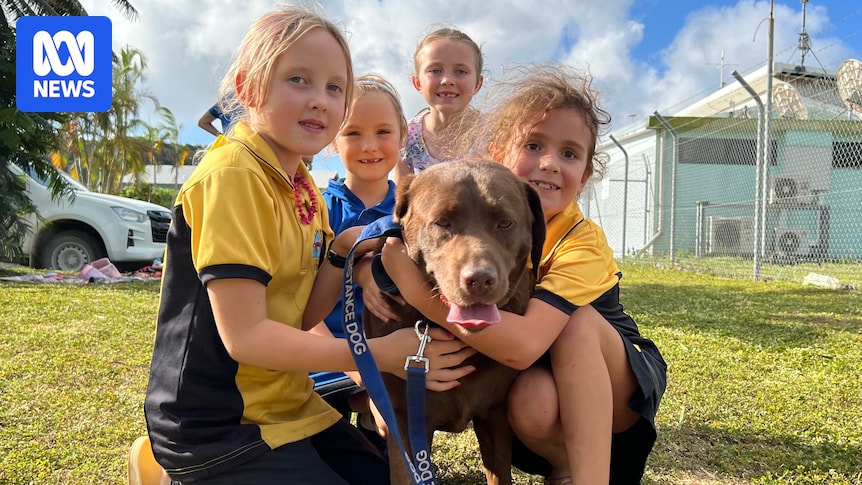
Busses stop and children come running when Shiloh, the last dog on Christmas Island, takes a walk.
Stranded on the remote island more than 1,500 kilometres north of mainland Western Australia, the chocolate labrador faces no shortage of adoration.
Years ago, wild dogs were eradicated from the island and no domestic dogs have been allowed in since to protect the island’s unique wildlife.
But five-year-old Shiloh was a special case and came to the island as an approved assistance dog.
When her owner moved back to the mainland, expensive relocation costs and lengthy quarantine restrictions meant she was left behind.
Tanya Sehonwald says Shiloh belongs to the Christmas Island community. (ABC Pilbara: Alistair Bates)
Support coordinator Tanya Sehonwald now cares for Shiloh and describes her as a “community dog”.
“Shiloh stays with us,” she says. “I’m bit like her guardian but she belongs to the community.”
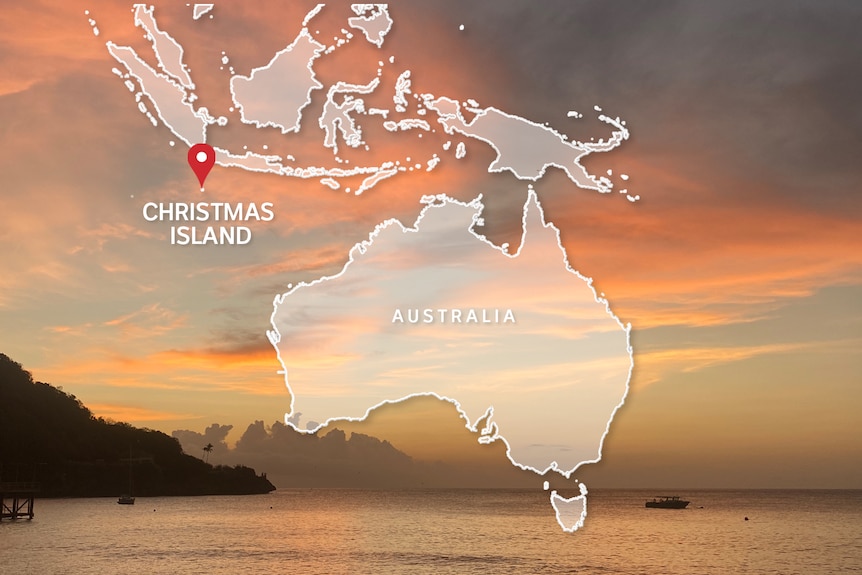
(ABC News: Sharon Gordon)
Each morning, children stick their heads out of car windows on their way to school, singing out to their beloved furry friend.
“I hear this little voice in the distance: ‘Shiloh!’ — not Tanya — ‘Shiloh!'” Ms Sehonwald said.
She said some people were still surprised to see a dog on the island.
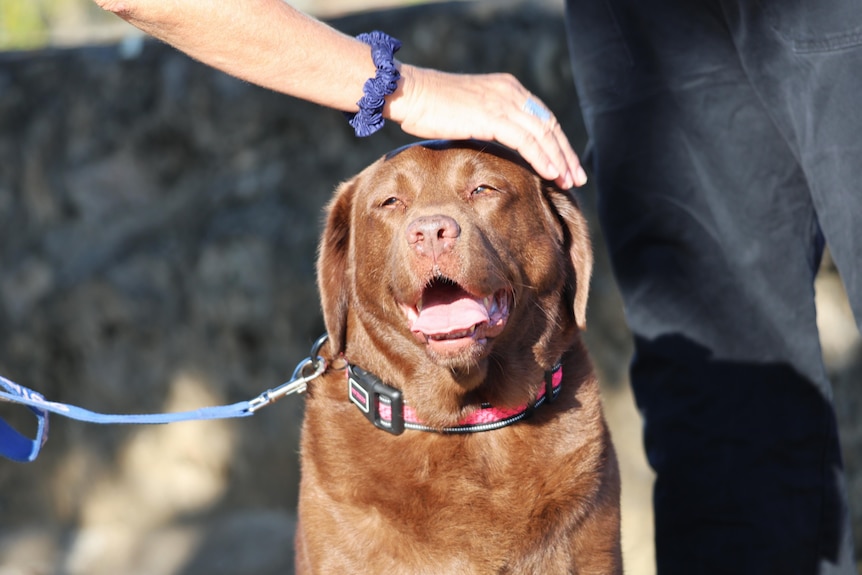
Shiloh may be the last dog to ever live on the island. (ABC Pilbara: Alistair Bates)
“I thought everyone knew that she was the only dog on the island, but there are still people that stop their car when I’m out walking with her and say, ‘Where’s this dog from? How did you get it? Can I have a pat?'” Ms Sehonwald said.
“It has quite a lovely effect on the community.”
Emotional support
The remote island is home to species of birds, reptiles and mammals that cannot be found anywhere else on the planet.
But the choice of pets is limited to chickens, lizards and cats under strict domestic laws.
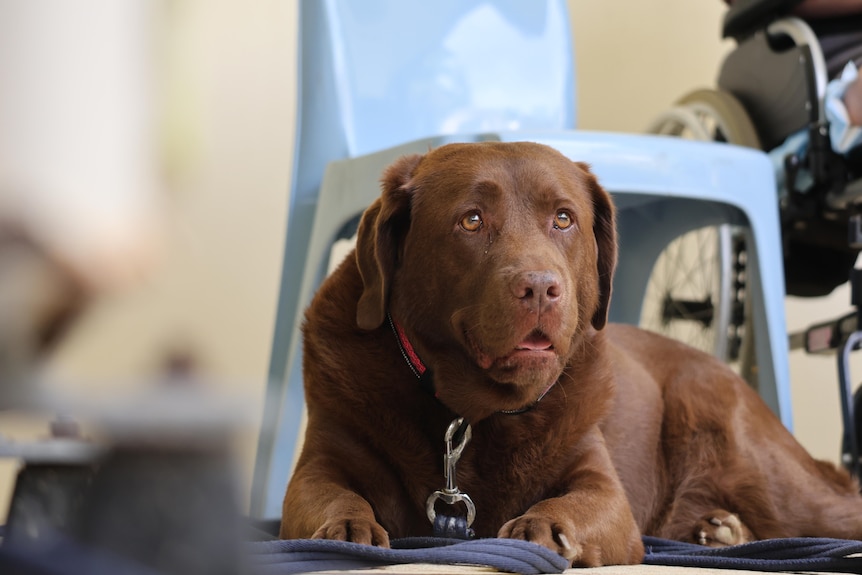
Shiloh visits the Senior Citizens’ Club each week to brighten the day for the island’s older residents. (ABC Pilbara: Alistair Bates)
“It is really difficult for a lot of people who come for work who maybe have to leave their dog or their cat behind,” Ms Sehonwald said.
“There’s a real need on the island [for] emotional support animals, and Shiloh fits that bill.”
A dog-walking roster allows residents such as Neesha Copley and Dan Graham the chance to pamper Shiloh, which is something they have missed since moving to the island four years ago.
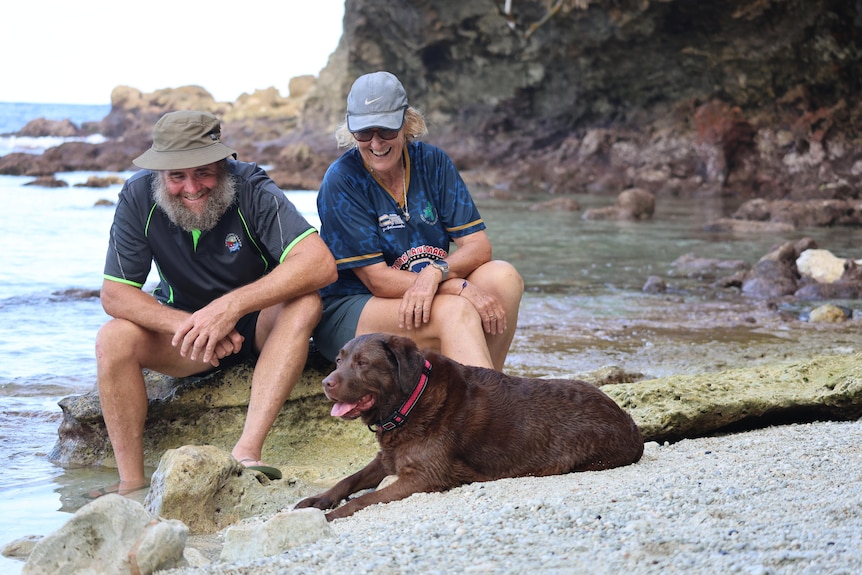
Dan Graham and Neesha Copley are part of a dog-walking roster for Shiloh. (ABC Pilbara: Mietta Adams)
“We’ve always had dogs, and … they are always so happy to see you,” Ms Copley said.
“It’s the unconditional love … she’ll sit here with us, she’ll cuddle up to you, she gives you those big eyes.
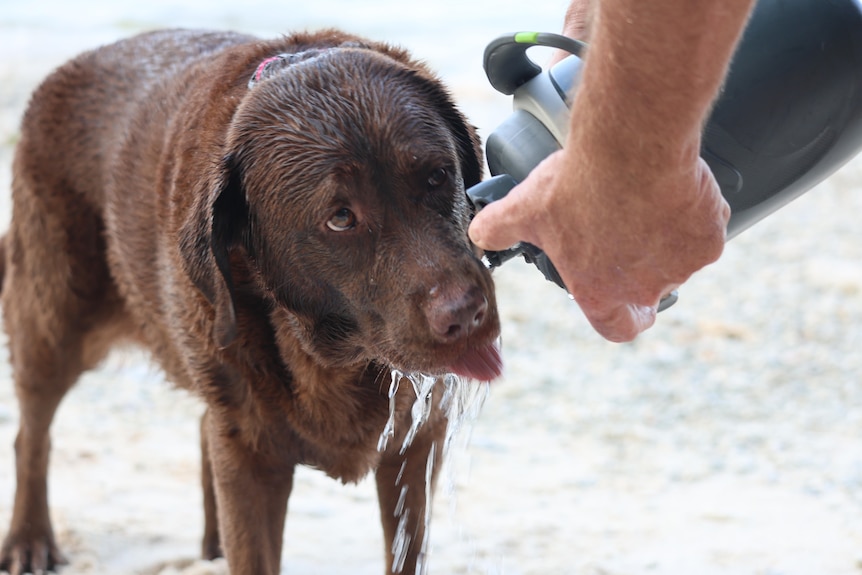
All the attention can be thirsty work. (ABC Pilbara: Mietta Adams)
“Being given the opportunity to spend time with her and take her out just feels super, super lucky.”
A friend to the island’s ‘dog man’
Uncle Tan, 88, is known as the famous “dog man” on the island, and once had seven dogs before they were sent to Malaysia.
Ratu Razad, who helps run the Senior Citizens’ Centre, said Mr Tan was happier during Shiloh’s weekly visits.
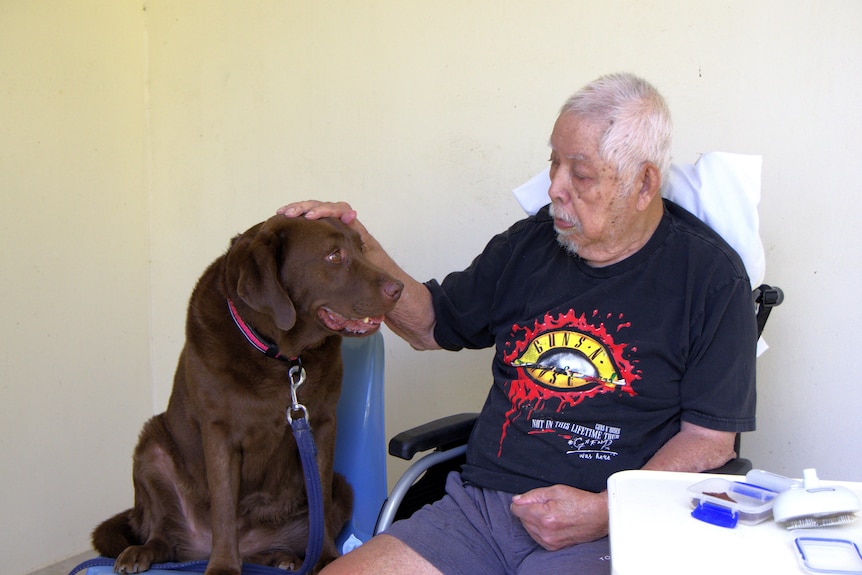
Mr Tan is known as “dog man” on the island and enjoys his regular visits from Shiloh. (ABC Pilbara: Alistair Bates)
“It’s Uncle Tan’s highlight of the week, because he loves two things: bingo and dogs,” Ms Razad said.
“It really does brighten your mood.”
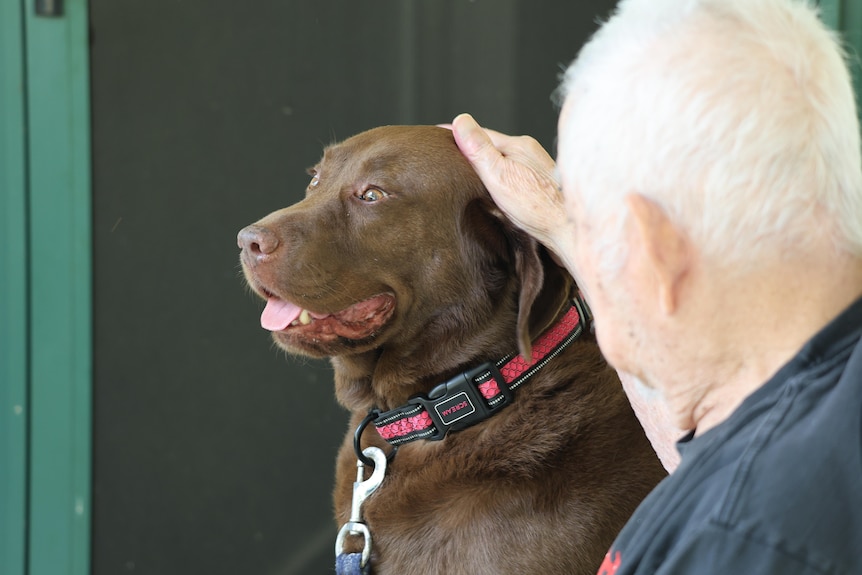
Mr Tan spoils Shiloh with pats, scratches and treats. (ABC Pilbara: Alistair Bates)
While Shiloh is adored by many, those walking her avoid parts of the island where the presence of a dog may not be wanted.
Almost a quarter of the 1,700 people who live on the island identify as Islamic, making it the largest religious group on the island.
Revered and reviled, cats in the crosshairs on Christmas Island
“We are a fiercely multicultural community here, and our Islamic friends have some concerns about dogs,” Ms Sehonwald said.
“I am quite mindful of where she goes, what she does, and ensuring people have a choice to withdraw and not have to face Shiloh if they don’t want to.”
Last dog
Shiloh will likely be the last dog to ever live on Christmas Island.
That is because the island has limited flight capacity to transport animals and any animals moving to the mainland need to quarantine for three months in Melbourne.
But Ms Sehonwald said removing her was not being considered.
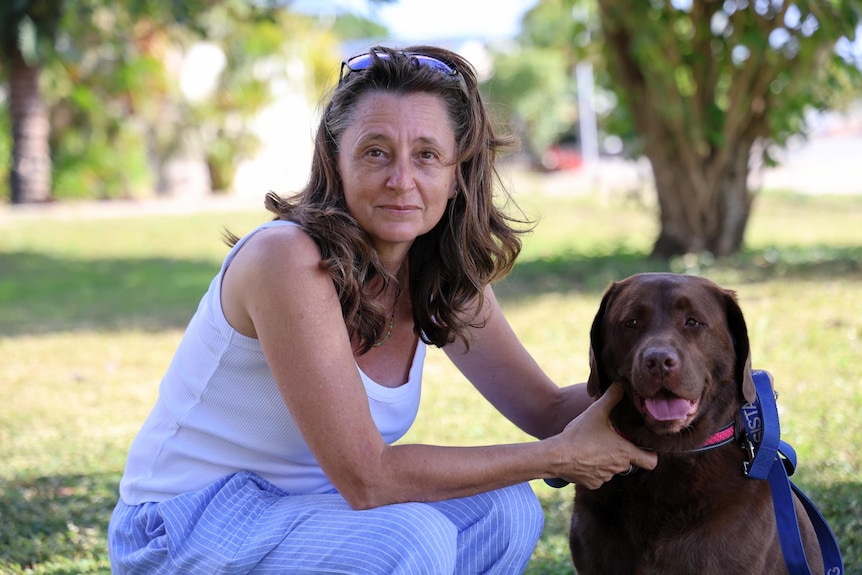
Tanya Sehonwald says Shiloh offers a special kind of emotional support for islanders. (ABC Pilbara: Alistair Bates)
“The fact is that she’s really wanted here, so why send her off when we know everyone can benefit with her here?” she said.
“I just expect her to continue to work with the community, and get to have lots of fun and hugs as well.”