
Red Bull driver Max Verstappen claimed his seventh victory of the F1 2025 season in the Qatar Grand Prix at the Lusail International Circuit.
Verstappen took advantage of a major McLaren strategy error to reduce Lando Norris’s lead in the drivers’ standings to 12 points, with Oscar Piastri second and Carlos Sainz third for Williams. Here are our conclusions from Qatar…
McLaren is prepared to sacrifice the title to ensure total fairness
For the rest, it was a no brainer wrapped inside an open goal: see safety car, pit under safety car.
When the Qatar Grand Prix was neutralised on Lap 7 of 57, a race featuring two mandatory pit stops and stint lengths capped at 25 laps each, it came as a gift to the entire field.
Do the math, as they say.
Yet for McLaren in 2025, somehow even these decisions are not so straightforward anymore.
So committed is the team to maintaining total fairness at all times between Lando Norris and Oscar Piastri that McLaren cannot see what to everyone else is blindingly obvious.
Every move the team makes now carries so much more weight when there are two drivers to appease, a title is on the line and there is inevitably a winner and a loser on the receiving end.
Pit Norris and you choose to extinguish Piastri’s last remaining hope of winning the world championship – on a weekend Oscar was the quicker driver and daring to work his way back into the title picture.
Pit Piastri instead and you put Norris, the driver effectively serving for the championship here, at a race-long disadvantage, virtually guaranteeing a nervy decider in Abu Dhabi.
Either way, you’re consciously taking points away from one driver and giving them to the other.
And if you start double stacking in the pits? Well, guess what? Norris, as the car behind, loses out in that scenario too.
Lando Norris vs Oscar Piastri: McLaren head-to-head scores for F1 2025
👉 F1 2025: Head-to-head qualifying statistics between team-mates
👉 F1 2025: Head-to-head race statistics between team-mates
All this – putting yourself in the shoes of Zak Brown and Andrea Stella – is what so many fail to grasp, or choose to wilfully overlook, in the stampede to criticise McLaren’s mistakes this season.
This, to be clear, is not to excuse one of the most mindless strategy calls in F1 history in Qatar, but to understand why McLaren continues to grab defeat from the jaws of victory and acknowledge the unique pressures under which the team is operating.
It is an unenviable position, knowing that a single call could decide the outcome of the world championship for better on one side of the garage and for worse on the other.
It is no surprise, then, that whenever confronted with a potentially pivotal decision to make, the McLaren pit wall is scared stiff and keeps opting to make no decision at all.
Wouldn’t you think twice – maybe even three times – too?
It makes their lives harder, inviting more scrutiny in what is already a highly pressurised situation. Yet it is also the easy way out, too, to stay out of it where possible and let nature take its course.
What unfolded in Qatar was effectively the pit-stop equivalent of the team orders debates at Suzuka and Imola, both occasions when McLaren decided to do nothing to try to prevent a Verstappen victory.
Cowardly? Weak management? Some will call it that. And they might have a point.
Yet it is also an acknowledgement that a single season does not exist in a bubble and the repercussions of any decisions now could still be felt next year and beyond.
Recap: How the F1 2025 title race has developed
👉 Las Vegas GP conclusions: Max spooks Norris, McLaren DSQ silver lining, Hamilton’s Ferrari regret?
👉 Brazil GP conclusions: Key Norris change, Max’s big fight, latest Piastri SOS, new Ferrari solution
Would you be able to look Lando or Oscar in the eye knowing the decision you made had ended up costing one of them the title?
This is the reality Stella and Co. must tiptoe around every weekend.
Through their eyes, this season cannot be allowed to tear down the house they have built when there is a long-term view to consider.
More than once this season, this column has argued that McLaren’s total-fairness approach has effectively been one big gamble, banking on Verstappen and Red Bull’s resistance fading as the season developed to eventually leave Norris and Piastri competing directly for the title with no need for interference from above.
Clearly that gamble has backfired as McLaren’s repeated “failures” – as Max calls them – have kept allowing Verstappen a way back in.
Yet it is too late to change – to throw those principles out of the window – now.
This, it has long been clear, is the hill McLaren is prepared to die on in 2025.
So to Abu Dhabi, then, where what will be will be…
Max Verstappen will end F1 2025 with his reputation enhanced no matter how it ends
Zak Brown had a good way of describing Max Verstappen, and the season he has stitched together in 2025, ahead of the Qatar Grand Prix.
Max, Brown said, is like the character in a horror film who somehow keeps reappearing every time you think you’ve finished him off.
Just when you think it’s safe, just when you think the coast is clear… boo!
Along comes McLaren’s bogeyman again. Still very much alive, still fighting with all his might.
It is already an achievement that he has taken the title race to the final round of the season, dragging a car that – although improved across the year – has never been restored to its previous best and, in truth, has often been flattered by Max’s genius.
Actually going to Abu Dhabi and winning the whole thing?
Now that would cement Verstappen’s status, even at just 28 years old, as the greatest driver the sport has ever seen.
His victory in Qatar, of course, owed much – everything – to McLaren’s strategic error, yet that crucial moment of the race also underlined the relative simplicity of Red Bull’s approach.
Often the team is criticised for its Max-centric outlook, but be in no doubt that Verstappen’s clear status as lead driver also gives Red Bull more agility – a greater clarity of thought – than its competitors when quick and decisive calls are required under pressure.
Put another way, if McLaren only saw pitfalls when the safety car appeared, Red Bull only sensed opportunity.
That’s all the safety car bought Verstappen, though: opportunity.
It was over to him to make the strategic advantage count, remaining in sight of Piastri and Norris even when they were under instruction to push like hell to open up a gap before their own stops, as if keeping the McLarens tied to a piece of string.
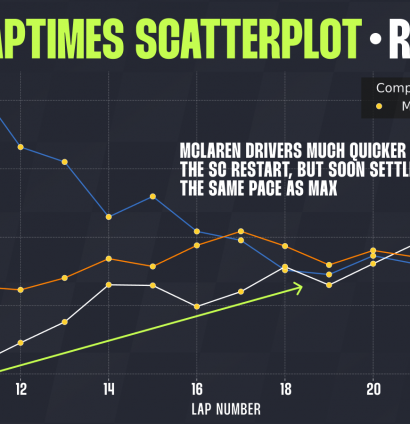
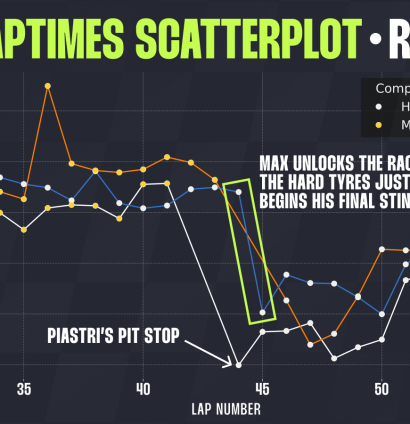
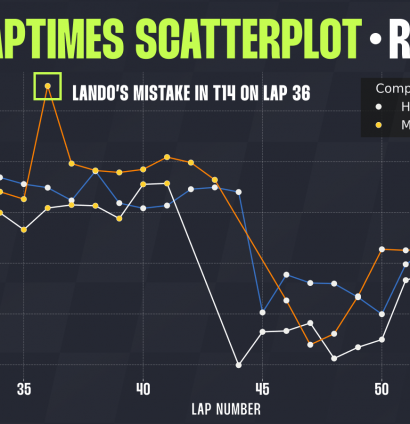
There is no greater reflection of Verstappen’s feats in 2025 than the statistic that he heads to Abu Dhabi on the same number of victories – seven – as both McLaren drivers.
Given the extent of the MCL39’s dominance (the constructors’ title was sealed eight weeks ago), and the woes still plaguing Red Bull to this day, it should not have been possible.
Yet that – somehow doing the impossible – is just what Verstappen does.
Be afraid, Zak. Be very afraid…
The tables have turned again between Lando Norris and Oscar Piastri
The biggest surprise of this season?
Easy: that Oscar Piastri, not Lando Norris, was the McLaren driver to implode when the title race began to heat up.
Everything we knew about both drivers up until the halfway point of this season – Norris’s suspect temperament stretching all the way back to Russia 2021, Piastri’s three-heartbeats-per-lap, Verstappen-esque coolness – suggested only one driver would find the going tough when the tough got going in 2025.
Yet there was Piastri effectively going missing and without a podium for six straight races between Azerbaijan and Las Vegas.
As noted in PlanetF1.com’s conclusions from the Singapore Grand Prix, it was Norris’s retirement at Zandvoort that saw the dynamic between the McLaren drivers change.
All of a sudden Lando had nothing to lose, whereas Piastri – now with a 34-point lead to protect – had everything to lose.
As the weeks have passed, the more it appears that Piastri’s late-season slump arrived in two separate stages.
First came the initial psychological wave at Baku/Singapore when the lingering bitterness of having to swap places with Norris at Monza seeped into both his driving and his demeanour.
Then came the secondary, technical wave between Austin and Vegas, where the limitations of Piastri’s driving style – and, potentially, his heavily data-led approach – revealed itself on low-grip surfaces.
Back on a high-grip circuit in Qatar, the McLaren a joy to drive through all those high- and medium-speed corners, Piastri was reborn.
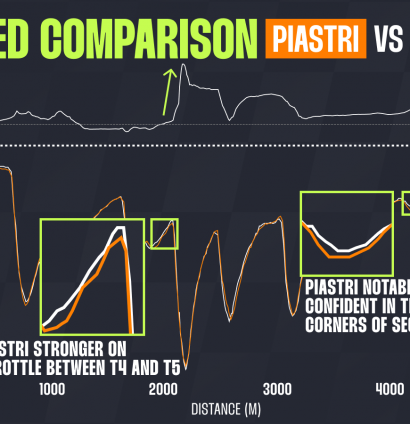
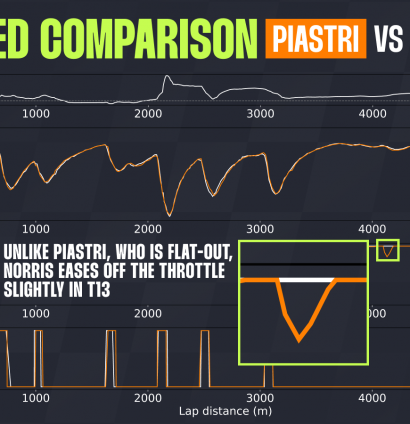
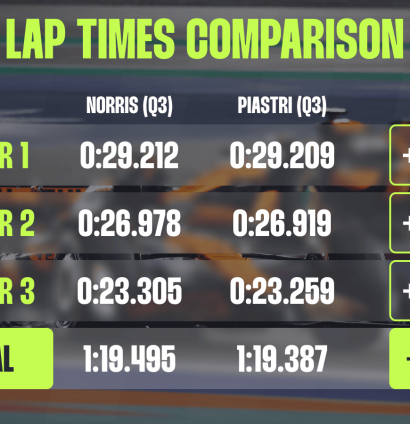
And Norris?
The tables have turned again – the natural order restored, you might say – now he is the one with something to lose.
With the title now close enough to touch, he shrunk in size in Qatar and regressed back to the shaky, indecisive driver most would have recognised before his wins in Mexico and Brazil made him the clear favourite for the championship.
It is to Lando’s great misfortune that he has such a whiny, bratty tone of voice over team radio – more overgrown adolescent than champion elect – when things begin to go against him.
His painful attempts at passing Andrea Kimi Antonelli’s Mercedes was reminiscent of his tentative performance in Baku, where it seemed Norris was totally oblivious to the scale of the opportunity opening up before him in the aftermath of Piastri’s early accident.
That Norris made such hard work of this weekend – lest we forget his troubled laps in qualifying too – should give Verstappen and Piastri all the encouragement they need ahead of Abu Dhabi.
Often world champions in waiting are subjected to one last examination of their title-winning credentials before ascending to the throne.
Think, for instance, how Nico Rosberg, another driver prone to mistakes under pressure, was put through the wringer by Lewis Hamilton in the final laps of the 2016 season as the championship dangled tantalisingly before his eyes.
A similar stress test – 58 more laps spent on the rack – awaits Norris this weekend.
If Max and Oscar can keep the pressure high, and push and prod Lando into an uncomfortable place, the chances are that he will finally crack.
Just a little bit later than so many expected.
Carlos Sainz and Williams are warming up nicely for F1 2026
The exciting thing for Carlos Sainz and Williams is that this was meant to be the difficult season.
This year was meant to be all about getting up to speed, developing an understanding of how each other works and building up gradually towards 2026.
Scoring points when possible, yes, but mainly looking ahead to next season, the opportunity presented by the new rules and finally getting their hands on what is expected to be a prized Mercedes power unit.
Such has been Williams’ all-encompassing focus on 2026 that it was among the first teams to confirm publicly that it had ended the development of its current car back in the spring.
So it is a great credit to the growing strength of the team now that it will end 2025 in fifth place in the constructors’ championship, its highest placing in eight years.
It does not seem like too long ago that Sainz and Williams had a touch of the Lewis Hamilton at Ferrari – a partnership not yet clicking and struggling for lift off – about it.
Ever since the first podium arrived in Baku, finally giving Sainz something to cling on to after a difficult first half of the season, they have increasingly looked a good match.
As Sainz noted after qualifying third in Las Vegas a week ago, team and driver make for a great pair of underdogs.
Carlos was never valued as highly by some of his previous employers as he might have been and Williams has been written off more times over the last two decades than those at Grove will care to remember.
It is common for teams locked in tight battles at the end of the season to treat the final few races as a dress rehearsal for the following year, setting standards that will serve them well when bigger prizes are on offer in the future.
That Sainz and Williams have so quickly developed a habit of seizing these opportunistic results in late 2025 bodes very well for next season.
Brace yourself for a week of Lewis Hamilton retirement rumours
Blame Nico Rosberg.
Ever since the newly crowned world champion walked away without warning in 2016, it has become a sport itself – all part of the fun – to second guess which driver might be thinking about dropping the mic at the end of each season.
The candidates are relatively easy to spot: former world champions of a certain age who have fallen on hard times and increasingly carry the tormented, weary look of yesterday’s man.
The most memorable example of the Abu Dhabi Guessing Game came at the end of 2019, the year Sebastian Vettel’s wobble turned into an irreversible slide at Ferrari.
On that occasion, a prominent F1 reporter had convinced himself from watching Vettel’s body language before the race that he was going to announce his retirement any minute now.
Hang on! Was that merely the setting sun in Seb’s eyes on the grid just then? Or..?
Perhaps our friend had that famous Mark Webber quote on Vettel – “I think he’ll retire early – he’ll probably take a blast in the red car, then sayonara” – ringing in his ears.
Or perhaps, given that Vettel’s F1 career continued for a further three seasons, he simply misread the situation entirely and the study of body language is something that is best left to the experts.
One could not possibly say.
Yet it is that sort of treatment – people constantly looking for the little signs and analysing every single quote to the nth degree – Lewis Hamilton can probably expect this week.
If so, he will have brought it on himself to a large extent given some of his recent statements about not looking forward to next season and being “eager for it to end.”
His nine-word interview after his latest Q1 exit on Friday in Qatar was the latest mark of a driver down in the dumps to the point of disinterested.
For all John Elkann’s complaints that his drivers should “talk less”, though, it has been said this season that Ferrari has not helped Hamilton in that regard either this season.
Unlike his Mercedes days, when he would often be allowed to cool off before having to face the media, in 2025 Hamilton has had a microphone shoved in his face instantly moments after climbing out of the car.
So instead of the considered, thoughtful answers he would provide in the past, now every race – sometimes every session – brings an all-new outburst from one of the more emotional drivers on the grid at the best of times.
Fred Vasseur had a point when he said earlier this season that Hamilton’s “extreme” comments to the media have only made a bad situation worse, yet the team has also failed to save him from himself.
Is it the car or is it me? That’s the question Hamilton has grappled with for the last four years.
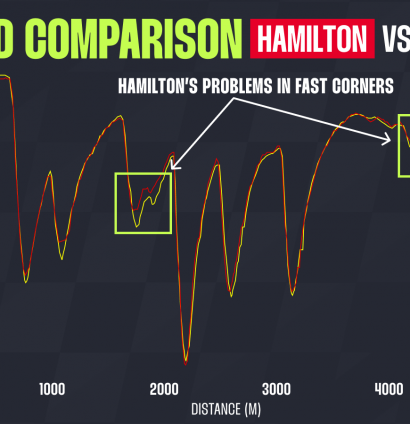
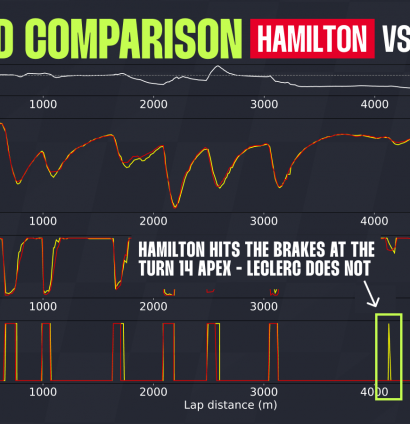
The car clearly isn’t up to much, but with every Q1 elimination – such a regular occurrence right now that they are fast losing the shock factor – grows the likelihood that Hamilton will become convinced that the problem lies mainly within.
On the brink of turning 41, sounding thoroughly fed up of life at Ferrari and with the situation only getting worse, not better, he seems to tick all the boxes for an Abu Dhabi bombshell.
So could the final race of the season also prove to be Hamilton’s last? Highly doubtful, of course.
But it depends how much you choose to read into that little something in his eye on the grid…
Read next: Toto Wolff labels Red Bull claim ‘utter nonsense’ in ‘brainless’ Helmut Marko comment