
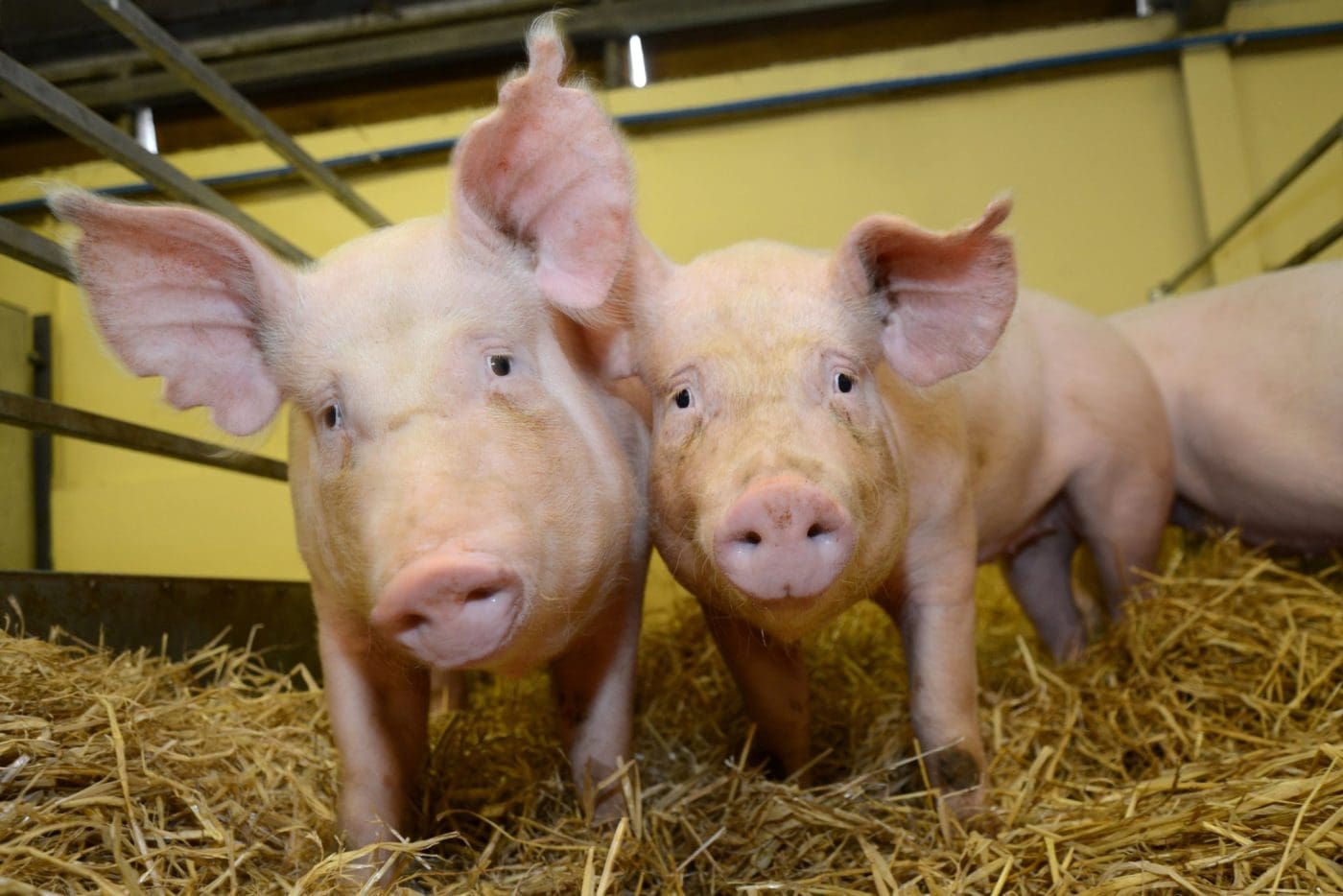
It may come as a confronting surprise for cattle producers to learn that a pig disease could have cost them access to a key export beef market, had it made the relatively short hop from Timor Leste since gaining a foothold there in 2019.
At LIVEXchange 2025, former chief veterinary officer Dr Mark Schipp revealed that, under the wording of Australia’s certification protocol with South Korea at the time, an outbreak of African Swine Fever (ASF) on Australian soil would have forced an immediate halt to beef exports to that market.
Dr Schipp was asked at conference in Perth by veteran WA export industry stakeholder Garry Robinson how prepared Australia was diplomatically to re-establish trade as quickly as possible in the event of a major disease incursion.
Mr Robinson noted that “people in the supply chain in our business could be broken in days, weeks or months” should a disease outbreak trigger a trade shutdown.
Dr Schipp, a globally recognised scientist who has also served as president of the World Organisation for Animal Health, said that after African Swine Fever entered Indonesia and Timor Leste in 2019, followed by Lumpy Skin Disease and then Foot and Mouth Disease in Indonesia in 2022, “we took a big effort to look at what would happen if we had an incursion of those diseases”.
 Some of what the review revealed was “quite surprising”, he said.
One example was the realisation that if African Swine Fever (ASF) had crossed into nearby Australia after arriving in Indonesia in 2019 – which thankfully it has not – a consequence would have been an immediate stop to Australian beef exports to Korea.
How a disease affecting pigs could affect a major trade in beef came down to the technical wording of the export protocol certification.
“There is no overlap between beef and pork and ASF presenting in beef,” Dr Schipp stressed.
“It was because of the way the certificate was written.
“It said Australia is free of ASF, so we would have had to stop exporting beef to South Korea if we had an ASF incursion.
“So that has been fixed, but there are a number of examples like that.”
The example underscores why there have been ongoing calls for Australia not to wait “until the middle of a storm to fix its roof”.
Dr Schipp said disease protocol negotiations with trading partners were “difficult conversations to approach”.
‘Priority would be on combating incursion, not demonstrating areas of freedom’
He also emphasised the importance of industry considering what would happen in the event of a major disease incursion to Australia, and what priorities would take precedence in an emergency response.
“I think the Department has done a lot to address that and prepare and they’ve got a cascade that’s ready to be triggered.
“But at the same time, and part of my pitch this morning is to say that industry has a role as well.
“You need to understand that if we have an incursion, everything stops.
“So what’s the priority? Are we going to put all of our effort into fighting the disease?
“Or are we going to put some of our effort into fighting the disease, and some of our effort into demonstrating that this State or this region is free and then trying to ren-negotiate market access from that State or that region, or are we going to try to argue that we can vaccinate animals and export them?
“All of those are quite different scenarios and require extraordinary amounts of effort and input, and I think industry should be part of that conversation.
“And at the same time, the Department’s been told to take a 5 percent cut. So it’s a strained environment.”
Earlier in his speech he spelled out where the intial priority would lie: “Bear in mind that the priority in the face of an outbreak is combating the incursion, not demonstrating areas of freedom or negotiating new market access conditions.”
Dr Schipp said Australia has a multi-layered defence consisting of pre-border, border and post-border elements, which includes national surveillance programs which provide a high level of confidence in the country’s animal health status.
But in addition to surveillance, preventing diseases from entering Australia remained of “paramount importance”.
LSD, FMD eradication ‘not viable’ in Indonesia
The level of unease around biosecurity in Australia’s livestock sector was evident at the two-day LIVEXchange conference in Perth where, of all sessions across the event, Dr Schipp’s biosecurity address attracted a full attendance and more questions than any other.
In response to questions from the floor Dr Schipp confirmed there is no current likelihood that Indonesia will be able to eradicate LSD or FMD in the foreseeable future.
Eradication had been achieved with Australia’s support through the 1980s and 1990s, he said, “but I don’t think it’s so easily attained now as it was then.”
“Australia will continue to support Indonesia’s efforts to control the disease, but I don’t think eradication is a viable option at this time.”
Kununurra veterinarian Dr Peter Letchford asked how far LSD had spread to date across the Indonesian archipelago since first being detected in 2022.
Dr Schipp said the spread east was of concern, “but it has not progressed as rapidly as we had feared”.
“The challenge is always that this is an insect born in the season, and only takes a change in wind direction to drastically alter the outcomes of the disease.
“And uncontrolled movement of animals – again, this is an area which is very difficult to manage in the Indonesian context, where animals must continually move towards market.
“Whereas in Europe, it’s much easier to impose restrictions and gain those movement controls. So I think there are a number of challenges.”
Implications of rural vet shortage
Dr Letchford also asked Dr Schipp for his thoughts on the ongoing shortage of vets in rural Australia and what this meant for disease response.
“We’ve got more veterinary graduates now than we’ve ever had, and yet we continue to have these shortages and rural and regional practices closing down,” Dr Schipp noted.
He said the issue was not confined to Australia, with the UK, US, Ireland, New Zealand and Canada all reporting similar experiences.
He said his successor, Australian CVO Dr Beth Cookson, has established a task force to collect data around the reasons for rural veterinary shortages and what can be done to address them.
“At the moment we don’t have good data. We don’t understand why we’ve got so many graduates and so many vacancies at the same time.
“I agree with you. I think part of that is selection of students in terms of their background and their expectations.”
“Think ahead, be prepared”
Victorian Chief Veterinary Officer Dr Graeme Cooke, who has direct first-hand experience dealing with an FMD outbreak in the United Kingdom in the early 2000s, said the current burden of disease now outside Australia is “unprecedented”.
He told the room one of the most important elements was “thinking ahead and being prepared”.
“The last time foot and mouth disease was in Australia was in Werribee in 1870 and everything moved at the speed of a horse.
“I know that over the last couple of days in Victoria, at least in Victoria, there have been many hundreds of 1000s of animal movements on a daily basis.
“So if we get these things into our system, they will recover very, very quickly.
“So I would just ask you as you’re driving home or flying home to have some thoughts about how is your area of the industry preparing? How is it building in resilience, and how would it deal with the shock of a sudden interruption in movements and transport and so on?
“So if you’re asked to be part of exercises, if you’re asked to be part of jurisdictional preparedness, please embrace that opportunity, because much better to be aware of things in advance.”