
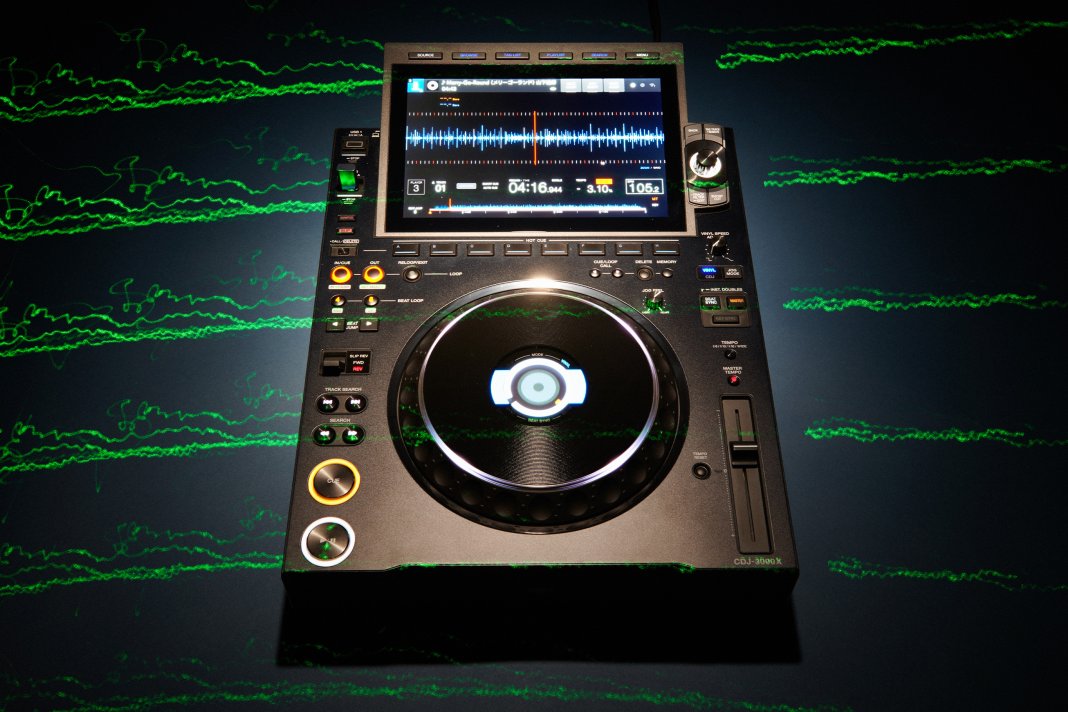
When the Pioneer DJ CDJ-3000 launched in September 2020, nightclubs worldwide were closed, and tours had ground to a halt. For a flagship DJ player, the timing looked disastrous. Except it wasn’t. “Everyone was DJing at home, but the product sold out really quickly and was on back order,” reveals Rob Anderson, the product planning manager at AlphaTheta EMEA. “Within six months to a year, we couldn’t deliver enough stock for our retail channel.”
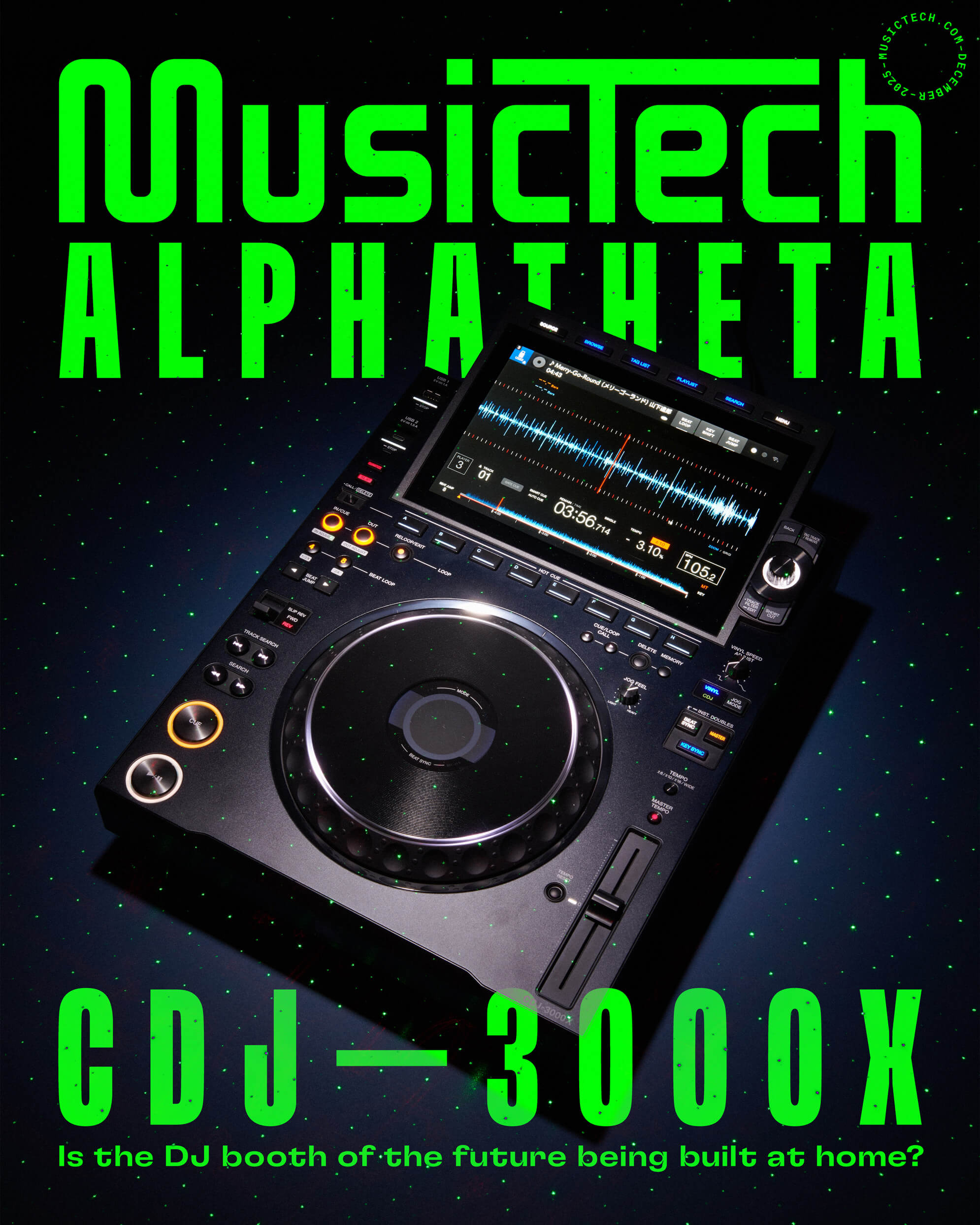 AlphaTheta CDJ-3000X on the MusicTech Cover. Image: Simon Vinall for MusicTech
With venues shut, professional DJs pivoted to live-streaming, but the pandemic had exposed an uncomfortable truth: their reliance on clubs to provide equipment meant many home setups weren’t up to scratch. “A lot of professional touring DJs didn’t really own any kit,” Anderson continues. “Even though the world was at a standstill, people wanted to DJ, and they saw value in investing in professional products, even if they weren’t being used in a professional environment.”
Four years on, history is repeating itself with the new £2,399 AlphaTheta CDJ-3000X. “The home market has seen the biggest uptrend,” Anderson confirms. “While rental companies have placed orders for the party season ahead, it’s enthusiasts and bedroom DJs buying the most units.”
Vive le résistance
Perhaps the most validating endorsement comes from James Hype, the British DJ and producer behind tech house anthems like ‘More Than Friends’ and ‘Ferrari’. For five years, Hype publicly refused to upgrade to the CDJ-3000 from the CDJ-2000 series due to its different layout.
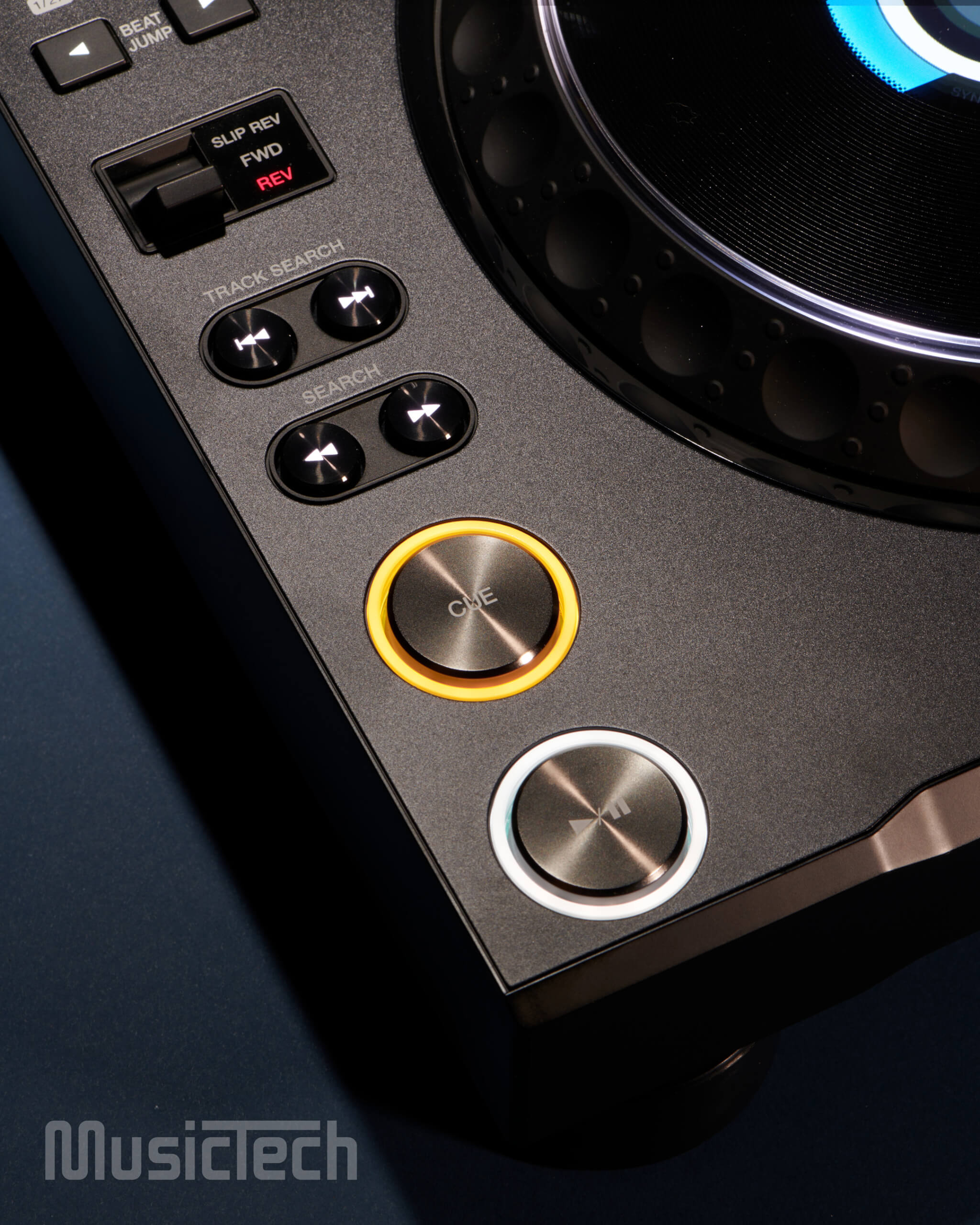 Image: Simon Vinall for MusicTech
“When we released the CDJ-3000, our decision to put the Hot Cue buttons in a single horizontal row changed performance styles,” explains Atsuki Yamamoto, AlphaTheta’s Product Planning Executive. “We noticed many more DJs using Hot Cues, playing them like an instrument.”
For some, the change was too dramatic. “It was a huge muscle memory change for a lot of artists,” admits Anderson. “I’ve seen artists stand in front of a CDJ and be hesitant using the product because it looked different. Once you’re familiar with it and understand the benefits, you can’t go backwards.”
Hype, it seems, never got past that hesitation – until the 3000X arrived. “He spent the last five years still performing on 2000s, and did a whole YouTube series talking about how the 3000s couldn’t quite keep up with his workflow,” Anderson says. “He’s now switched to 3000X, so he’s jumped a generation, and he’s been quite vocal on social media about how the 3000X is really suitable for him.”
Hype was converted – to the point that he filmed an AlphaTheta DJsounds live stream entirely on the 3000X – but did his earlier criticism still sting? “It’s one DJ, and he’s the only artist I’m aware of who was saying the 3000 couldn’t keep up with him,” says Anderson. “But that’s one DJ with a pretty big voice and a very unique playing style. It wasn’t exactly hard to take, but it is refreshing to see he’s moved on to the new player.”
Why there’s no CDJ-4000
AlphaTheta’s decision to iterate with the CDJ-3000X rather than reinvent with a CDJ-4000 was deliberate. “We just felt it was a bit too early,” Anderson explains. “It’s hard with a flagship product to go too wild, purely because of the use case and artists acquiring the familiarity.” Yamamoto puts it more simply. “We chose to refine the fundamentals,” he says. “Exciting new experiences are only possible when they’re built on a rock-solid base.”
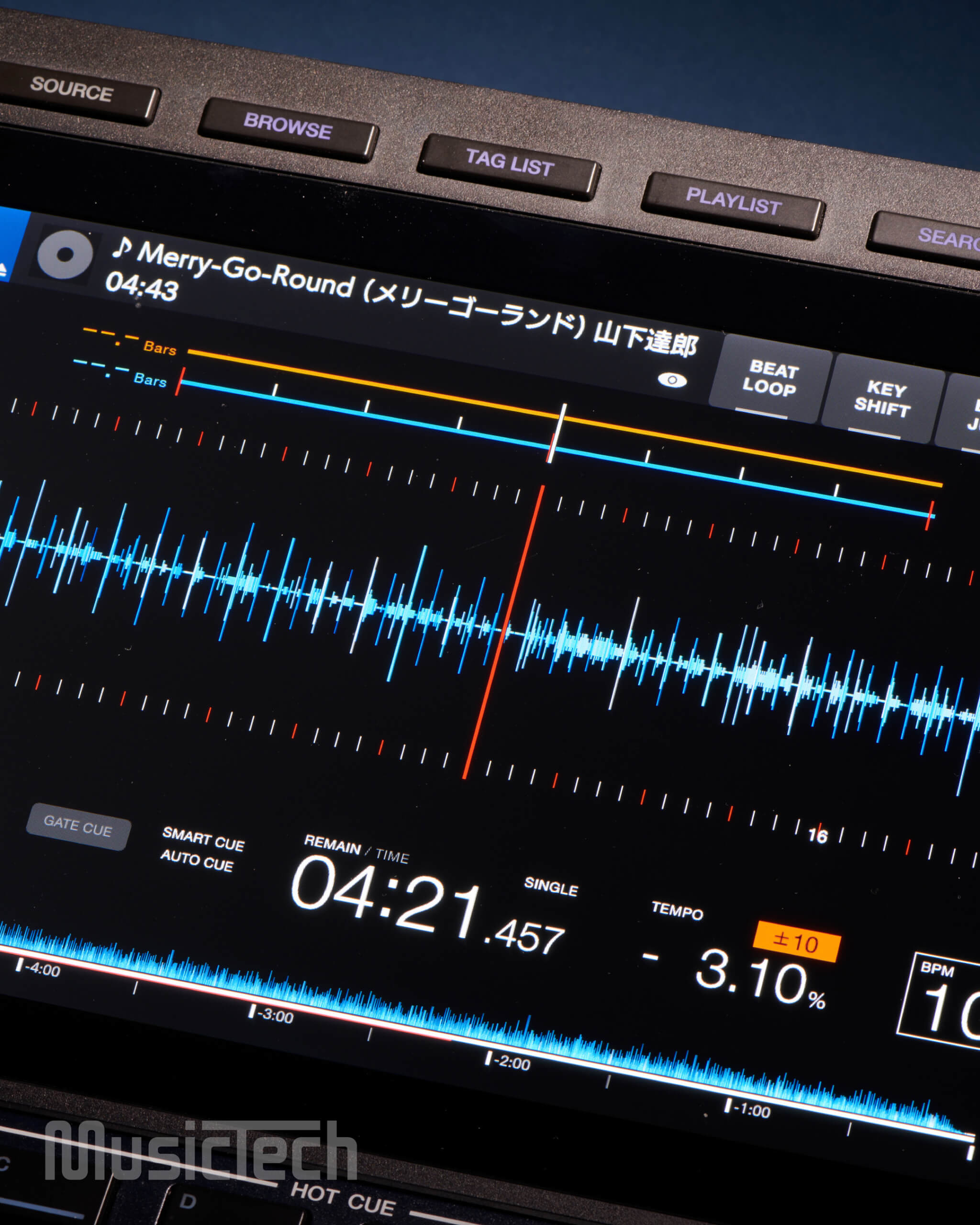 Image: Simon Vinall for MusicTech
The improvements are foundational: a larger 10.1-inch hi-res touchscreen, a 16-core processor, faster browsing and track analysis, Wi-Fi and NFC connectivity for streaming services and cloud libraries, plus refined jog wheels. “The jump in processing power means the player now responds to fast, intricate operations with greater accuracy and smoothness,” says Yamamoto. “This is more than a simple speed boost. It evolves the experience so DJs can ‘play’ the CDJ more like it’s an instrument.”
Yamamoto believes the hardware upgrades also provide headroom for future expansion. “Our decisions aren’t driven by whether something is technically possible, but whether it really delivers value to DJs,” he says. “Adding features isn’t the aim.”
Shogo Suzuki, AlphaTheta’s Executive Manager of Business Planning, outlines the company’s broader vision for how DJ technology will evolve. “When we think about the future of the DJ booth, advancements in connectivity is a key area we want to explore. As more devices link together, it’ll be easier for DJs to create customised setups with tools they can use to express themselves. At the same time, it’s just as important to improve each product as a standalone unit.”
Suzuki’s point highlights AlphaTheta’s dual focus: building a more connected ecosystem while still refining the individual hardware that DJs rely on. There’s no more optical disc drive, of course, although the ‘CDJ’ moniker remains. “That was one of the biggest discussion points in development,” says Anderson, describing it as a “brand in its own right” and “the Hoover of the digital player world”.
The Denon debate
But AlphaTheta doesn’t completely dominate the media player market. Denon DJ has been bold with features on its rival SC series of standalone models: stem separation, streaming services, and dual-layer modes. Is AlphaTheta worried? “If we’re talking about the CDJ, then Denon is really the only competitor to attack that, and yeah, they were super aggressive,” Anderson agrees. “They introduced a lot of features that, in lockdown, were quite appealing, but I think they serve a different customer.
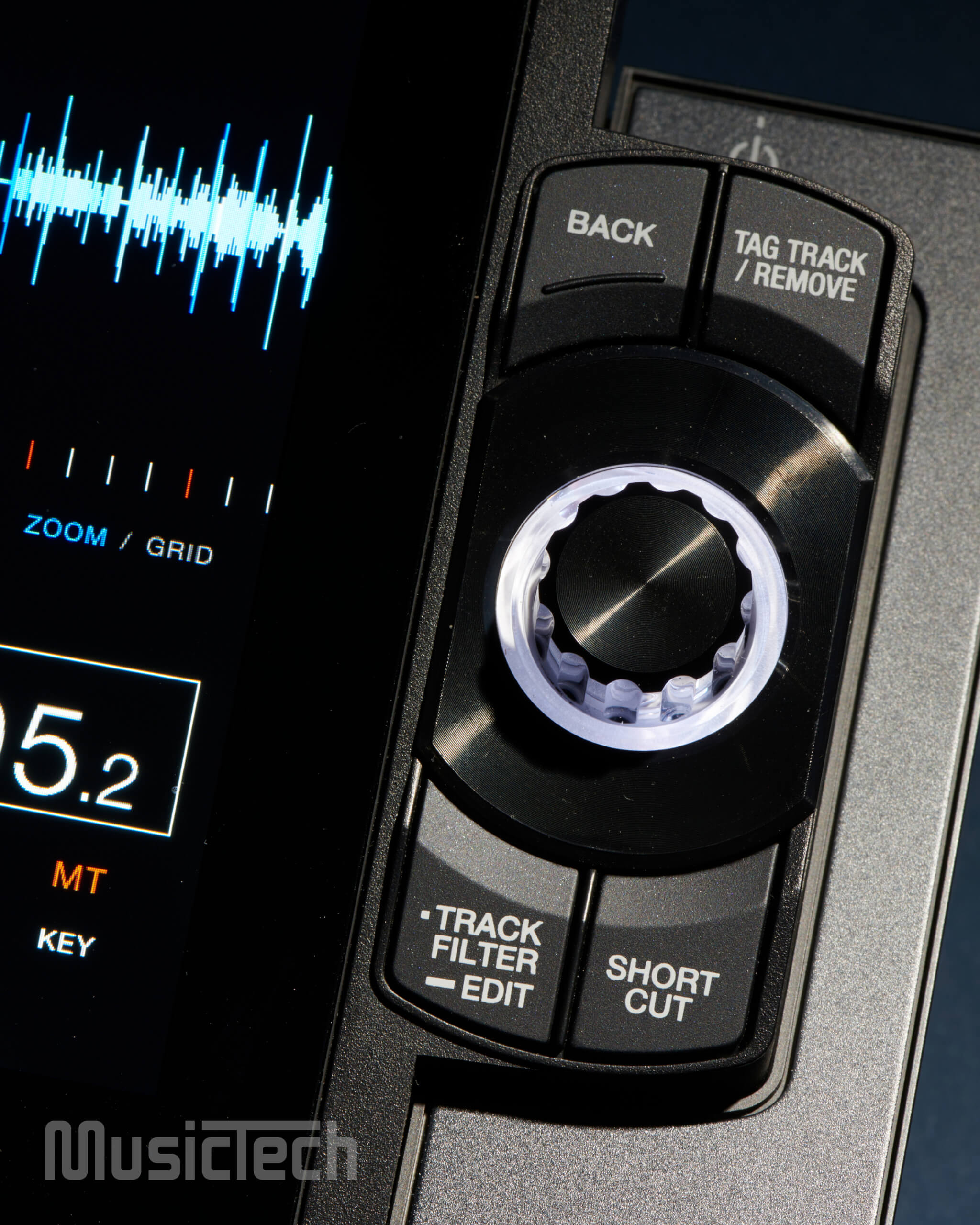 Image: Simon Vinall for MusicTech
“The guys that went down the route of purchasing [Denon] products want whistles and bells and a ton of features and functions, whereas anyone that purchased a CDJ-3000 wanted reliability and industry-standard workflow and something that’s going to feel like the most efficient tactile connection to your music, which competitors just couldn’t offer. If you speak to an artist and say, ‘What can we improve?’, they don’t have an answer.”
That doesn’t mean AlphaTheta is ignoring innovation. Stem separation is clearly on the roadmap. “There’s no hardware in our range that does standalone analysis of stems yet,” Anderson acknowledges. “The fact that you can even split audio now – three years ago that wasn’t a possibility, and it seemed to happen overnight. It’s crazy, and now it’s taken as a given.
“You can pull a vocal within Logic Pro. You’ll soon be able to pull a vocal with Ableton Live. That’s a massive opportunity for us, but we’re never quick to rush anything. Other manufacturers have introduced first-to-market functions, but the operability isn’t the best; the sound quality isn’t the best. We’ll never introduce something until we consider it to be the most optimal for the customer.”
Playing the long game
The 3000X is the first CDJ to carry AlphaTheta branding instead of Pioneer DJ, sparking speculation about the latter’s future. “Pioneer DJ is definitely not dead. We’ve got both brands, and we’re nurturing new brands currently, but we very much plan to keep Pioneer DJ running,” says Anderson. “We changed our company name to AlphaTheta a long time ago [January 1, 2020]. We just decided we wanted to introduce products under that brand.”
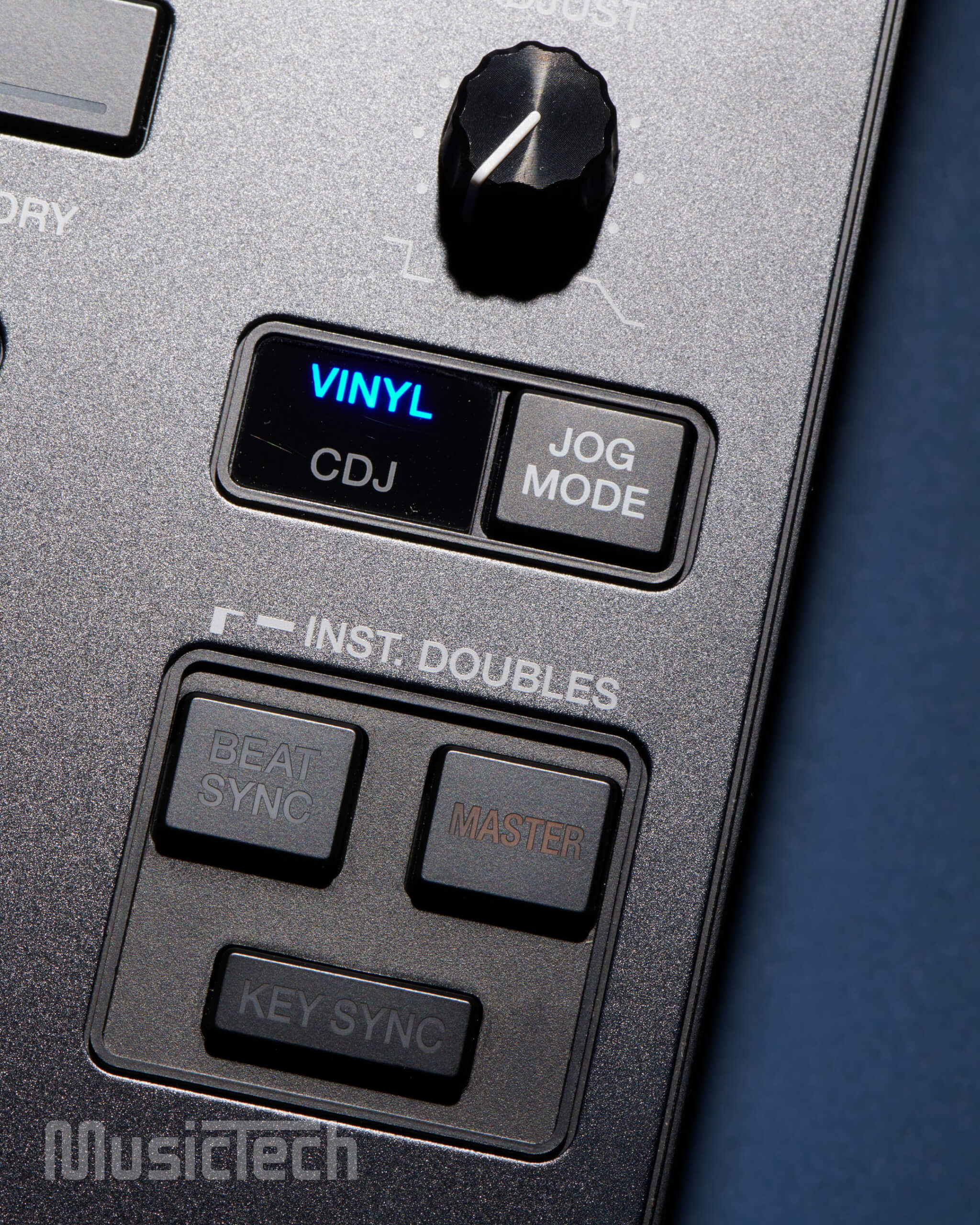 Image: Simon Vinall for MusicTech
Suzuki explains the strategy: “We want to help create environments where a wider range of people can enjoy music in more places than the traditional nightclub scene. To make that happen, we feel we need to offer more ambitious ideas and products built on new concepts. The AlphaTheta name embodies that stance, and signals the direction we’re taking.”
The CDJ-3000X launch timing was strategic: By releasing it now, AlphaTheta wants to give artists the winter to familiarise themselves with the hardware before next year’s touring circuit. October’s Amsterdam Dance Event provided the first real-world test of professional adoption, with hundreds of DJs performing across the city’s venues. This included four CDJ-3000X units for Cecile vs Mood Child, and a Bradley Zero set recorded live for DJSounds using Rekordbox CloudDirectPlay over Wi-Fi, without USBs.
Anderson is confident the CDJ-3000X will be adopted more quickly than the CDJ-3000, primarily because the familiarity factor eliminates the learning curve. “Provided you’ve used the 3000, you know where everything is. There’s no real barrier to entry.” His definition of success is simple: “Seeing the 3000X in booths across the world by next summer. When you see Space Miami, Fabric London, DC10 Ibiza, and there’s no 3000s, just a wall of 3000X, that’s job done.”
DJing anywhere, anytime
AlphaTheta’s plan extends beyond individual products. Anderson states: “Our vision is to create a world where everyone can DJ anywhere, anytime, using any media. Our goal is to grow the industry. It’s not to gain market share, it’s not to eliminate competitors or create any monopolies.” He adds the company ultimately wants young Spotify listeners and TikTok users to believe DJing is a viable career.
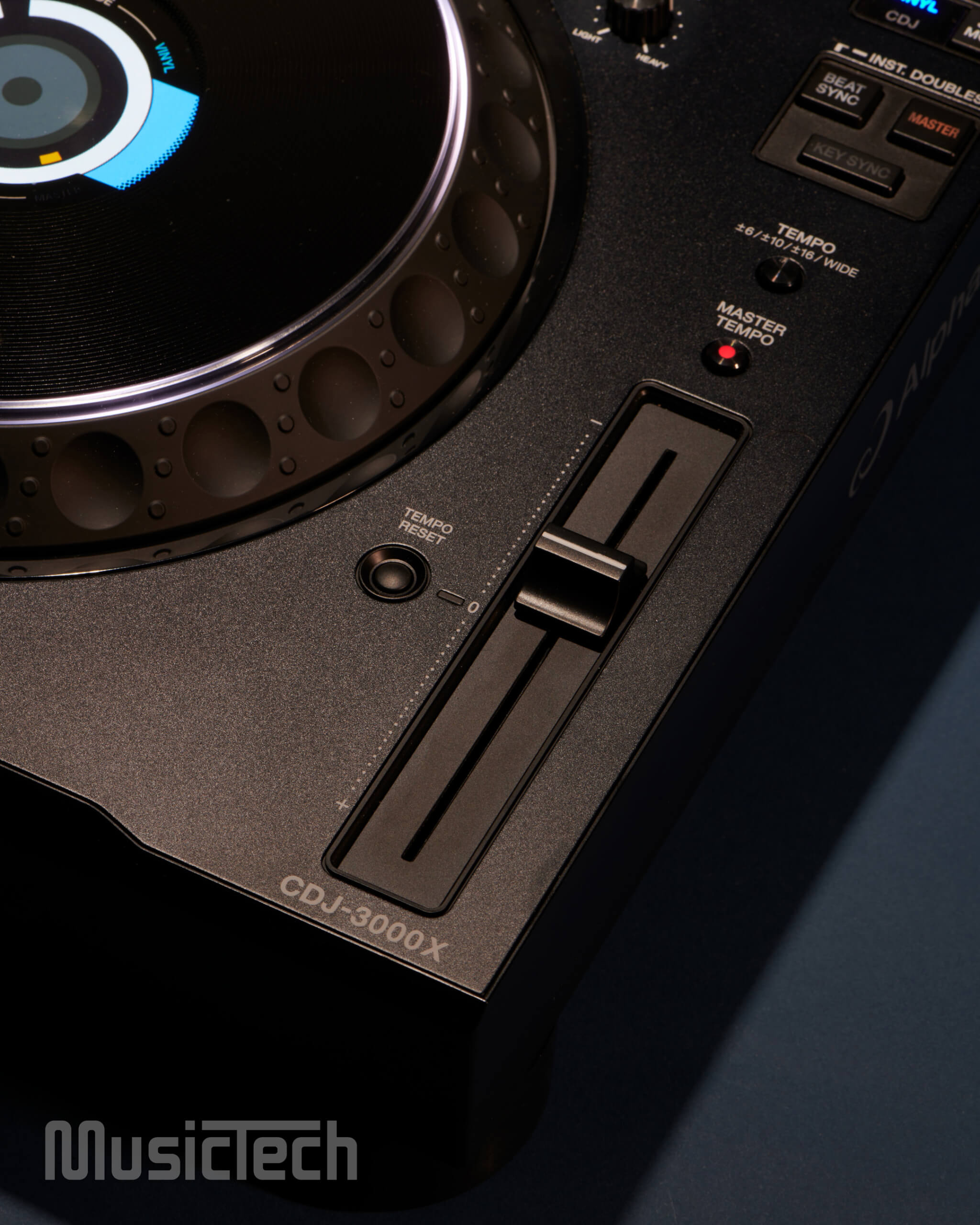 Image: Simon Vinall for MusicTech
This mission underpins AlphaTheta’s initiatives like Equal Beats, which supports women and underrepresented groups in DJ culture, and the Start From Scratch workshops, offering hands-on access to gear and training for those who might otherwise face barriers.
On the product side, Suzuki frames openness as essential: “That compatibility isn’t limited to our own products. We’re also looking toward smooth integration with other companies’ gear and platforms. We aim to keep evolving in an open, extendable direction… Advancements in connectivity is a key area we want to explore,” he adds.
The CDJ-3000X won’t make headlines for revolutionary features, but that’s intentional. “We avoid changing the feel of the core operations, so people of any generation can just step up and play,” says Yamamoto. “We respect that DJs have built up muscle memory over the years, and we want to deliver a more comfortable control experience that comes naturally to them.”
“Products and technology disappear in the hands of the user,” Anderson reflects. “You can interact with the crowd while knowing everything is going to stand up, delivering the best sound quality and the best experience when you’re in the booth.”
Whether £2,399 represents value depends on what you prioritise: bleeding-edge features or battlefield-tested reliability. But with home DJs getting on board with the CDJ-3000X, AlphaTheta’s strategy appears vindicated. The booth won’t look radically different. It’ll just work better.
The AlphaTheta CDJ-3000X is now available.
Words: James Day
Photography: Simon Vinall