
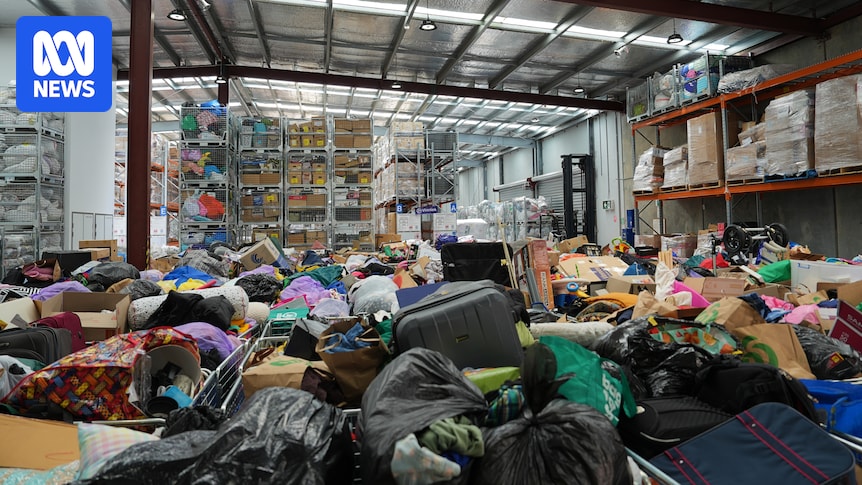
Canberra’s biggest charities dumped almost 600 tonnes of waste last financial year, with the declining quality of donations a key factor in goods ending up as landfill.
The St Vincent de Paul Society sent more waste to ACT government landfill sites than any other charity in Canberra, disposing of 376 tonnes of donated goods.
The figure marks an increase of 67 tonnes from the previous year, when the organisation sent 309 tonnes to landfill under a scheme that waives tip fees for charities, according to a document released under Freedom of Information laws.
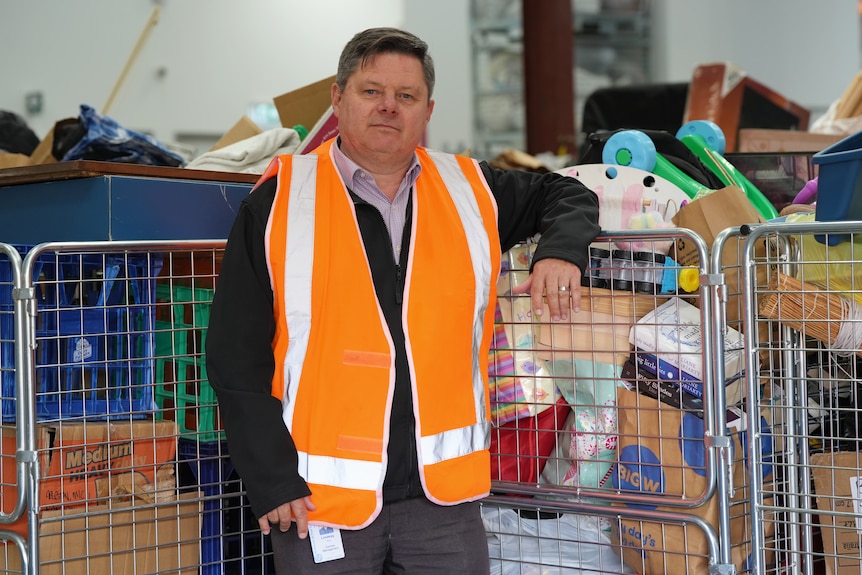
Lindsay Rae says the Vinnies distribution centre sends more unsellable donations to landfill than it used to. (ABC News: Lily Nothling)
St Vincent de Paul director of commercial operations in Canberra and Goulburn, Lindsay Rae, said the rise reflected a pattern of wastefulness the organisation had seen over the past five years.
“We’ve had this natural progression [of waste], especially since COVID, of about 15 to 20 per cent a year,” Mr Rae said.
“Unfortunately, the quality of stuff that we’re buying these days just doesn’t last, and so when we get the donations, a much higher percentage of it ends up going to landfill.
“There are a lot of things that are broken.”
Unsellable donations ‘costing us millions of dollars’
Most of Vinnies’ waste does not come from clothing, but from bulky, broken or incomplete homewares and packaging.
“People immediately think about textiles when they think about what we have to dump, but the reality is it’s not textiles that are creating the problem,” Mr Rae said.
“Only 2 per cent of our waste is actually textiles, the rest is homewares.
“We need good homewares that are complete, that aren’t broken.
“That’s what we need more than anything else.”
The majority of Vinnies’ landfill comes from its Canberra warehouse, which processes items that its 10 retail stores are unable to sort through.
Mr Rae said the warehouse cost $3.4 million to operate each year, covering the work of 45 employees who sorted and processed about 2.8 million kilograms of overflow donations.
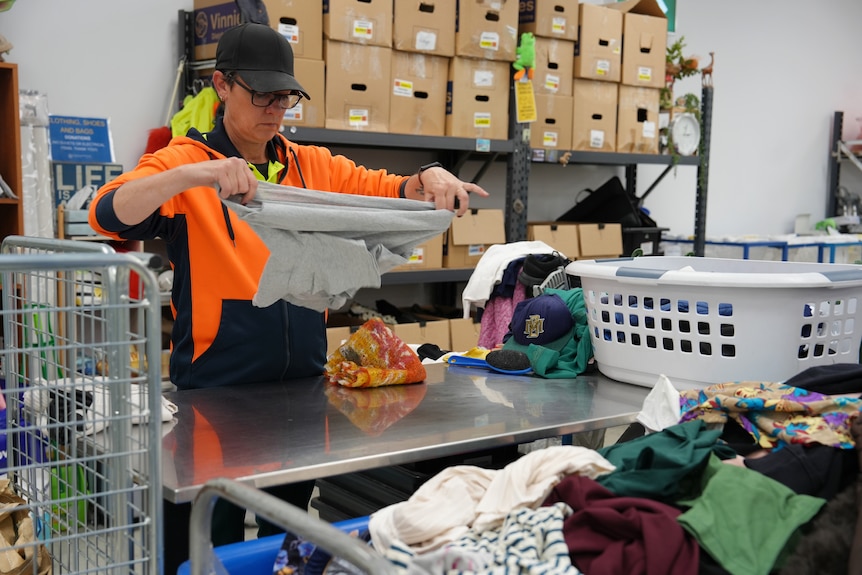
About 45 employees work at Vinnies’ distribution centre in Mitchell where they sort donations. (ABC News: Lily Nothling)
But he would love to see that money put towards services, rather than processing goods.
“When we receive a bag of donations, we don’t know what’s in it,” Mr Rae said.
“A large percentage of it is stuff that we don’t need … and it’s costing us millions of dollars.
“It is actually costing someone a meal.”
Charity waste overall declines
Despite Vinnies’ rising landfill figures, the total waste sent to ACT landfills by Canberra’s six largest charities fell from 950 tonnes to 586 tonnes last financial year — a 38 per cent decline from 2023‑24.
The Salvation Army was the second-largest contributor, though its total fell from 532 tonnes to just shy of 112 tonnes.

Renee Dixon says donations should still be in good condition. (ABC News: Callum Flinn)
Other charities showed mixed trends.
Winnunga Aboriginal Health Services increased its landfill from 24 tonnes to 29 tonnes, while Anglicare’s waste rose from 21.5 tonnes to almost 33 tonnes.
Anglicare ACT director of community engagement, Renee Dixon, said the increase in the charity’s waste was largely driven by poor-quality donations, limited storage space and the organisation’s reluctance to turn donors away.
“We don’t want to be pushing people away, and so we accept those donations willingly and then we work through sorting them out,” Ms Dixon said.
Ms Dixon said depending on the week, up to half of the donations Anglicare received were unsellable.
She urged the public to be more discerning about what was donated and to avoid items such as chipped glassware and crockery, or clothing they would not give to a friend.
“We’re encouraging people to make sure that they’re donating just their best things,” she said.