
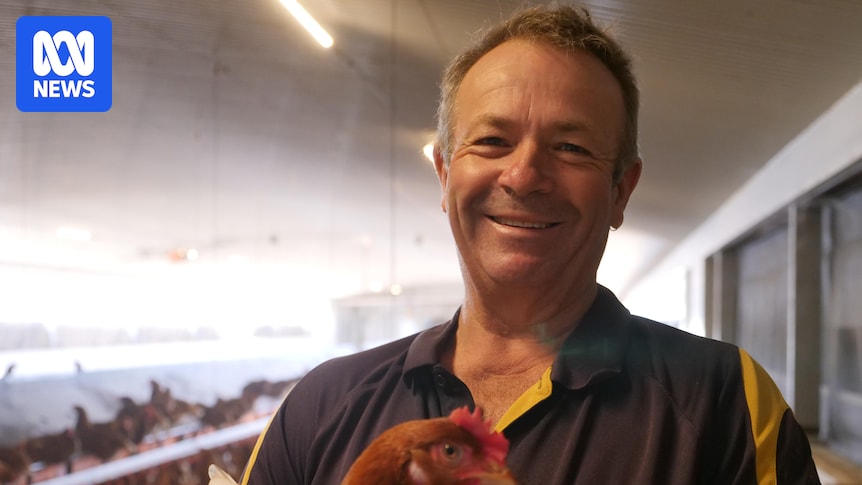
Darren Letton looks around his farm and sees excess pallets filled with eggs, despite demand reaching an all-time high just months ago.
The farmer, who is based in South Australia’s Riverland, has been producing eggs for more than 50 years.
He supplies the two largest supermarkets in SA, but said demand had significantly decreased in recent months since the industry started to recover from the bird flu outbreak.
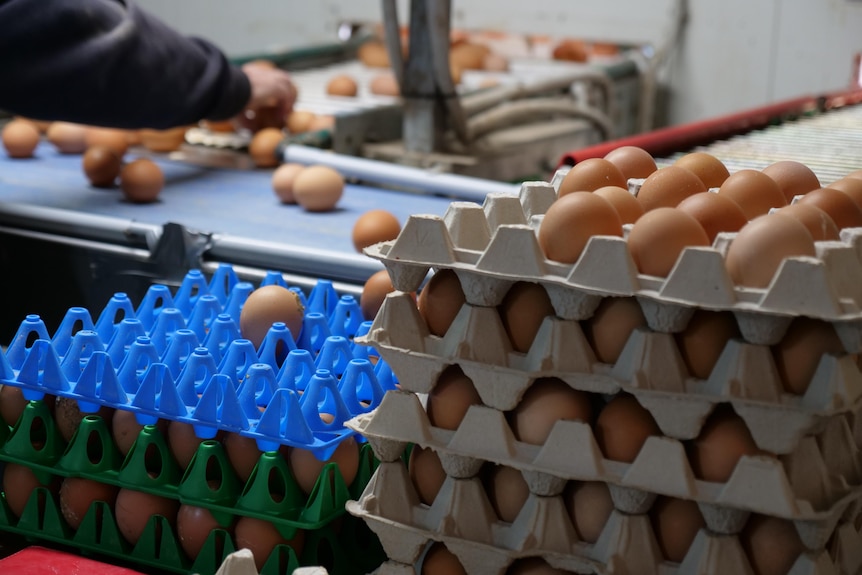
Darren Letton’s business has an oversupply of eggs after the industry recovered better than expected from bird flu. (ABC Riverland: Shannon Pearce)
It was an unexpected turnaround for the industry, which had been warned it could be impacted by the disease until 2028.
Bird flu wiped out 10 per cent of egg-laying chickens and caused supermarket shelves to lay bare.
The outbreak had mostly affected farms in the eastern states.
Mr Letton said during this time, retailers were desperate for his eggs, but that has since changed.
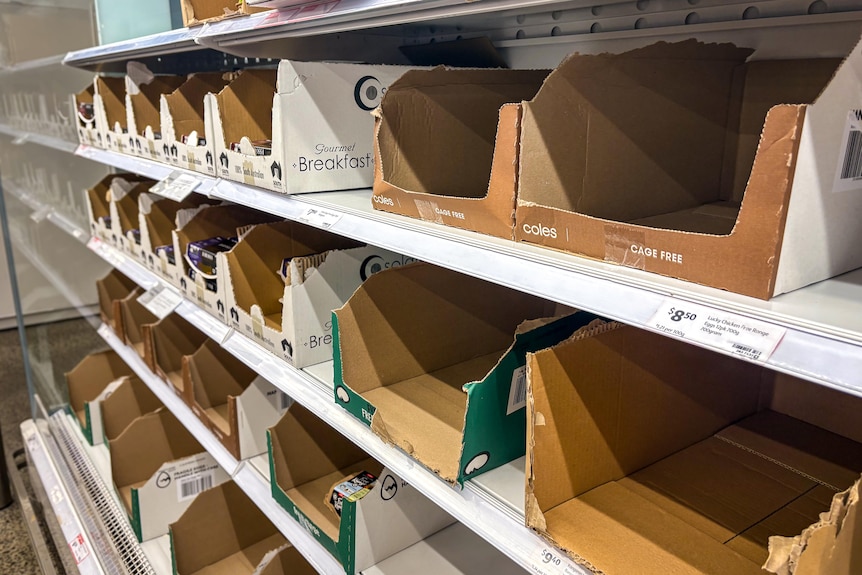
Egg shelves at major supermarkets around Australia were left bare after bird flu outbreaks wiped out millions of chickens. (ABC South East SA: Elsie Adamo)
He said demand for his product had significantly decreased due to the faster-than-expected recovery, leaving him with an oversupply of eggs.
“We’re seeing eggs [flooding in] from the eastern states. They’ve recovered from bird flu and suddenly they can’t sell their eggs,” he said.
“So what do they do? Dump them in South Australia.”
He said the increased supply from interstate producers had driven prices down, causing more competition in the market, which impacted those in South Australia.
“They’ve got stock they can’t sell, so then they discount and then of course it’s causing instability,” Mr Letton said.
“Farmers can’t make a living if they’re giving away product at cheap prices, so it can cause you to go broke.”
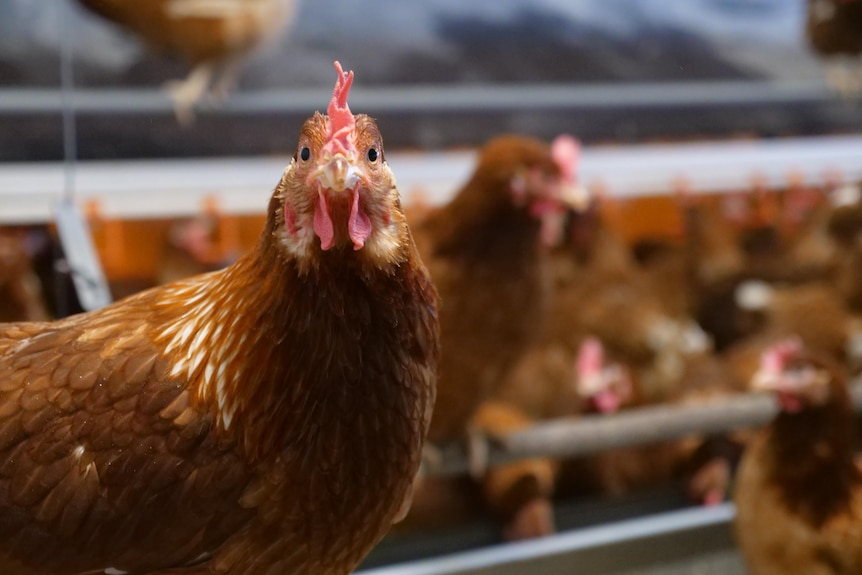
Demand for eggs from local producers has dropped as supplies have recovered. (ABC Riverland: Shannon Pearce)
Egg oversupply pain felt across the state
Mr Letton’s experience is not isolated, Feather and Peck co-founder Catriona Byrne has also experienced diminished demand for her product.
The Willunga-based business has been operational since 2016, and produces pasture-raised eggs from a cluster of South Australian farms.
“Six to nine months ago, we had double the demand for what we could supply and now we have a quarter over what’s ordered,” Ms Byrne said.
“Farmers didn’t expect it to spring back so quickly, but now eggs are in abundance because all the producers have geared up with pallets.”
Retailers say they are backing local producers
With shelves fully stocked at supermarkets and grocers for the first time in years, Coles and Woolworths said they would continue to support local.
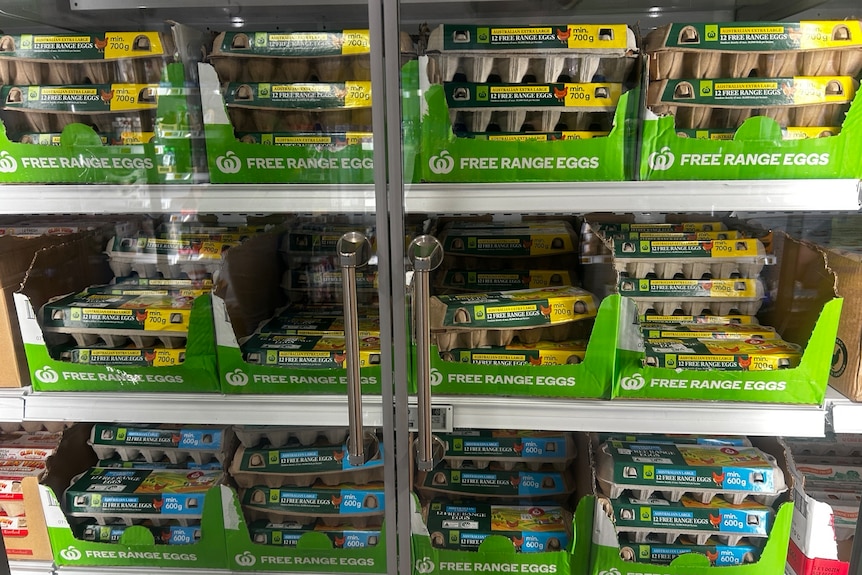
Egg shelves at Woolworths stores across South Australia are filled to the brim, after the industry made a faster-than-expected recovery from bird flu. (ABC Riverland: Jackson Byrne)
A Woolworths spokesperson said: “Close to 95 per cent of the eggs sold in South Australia were sourced from within the state.
“We can offer better value across our home-brand eggs due to the supply recovery.”
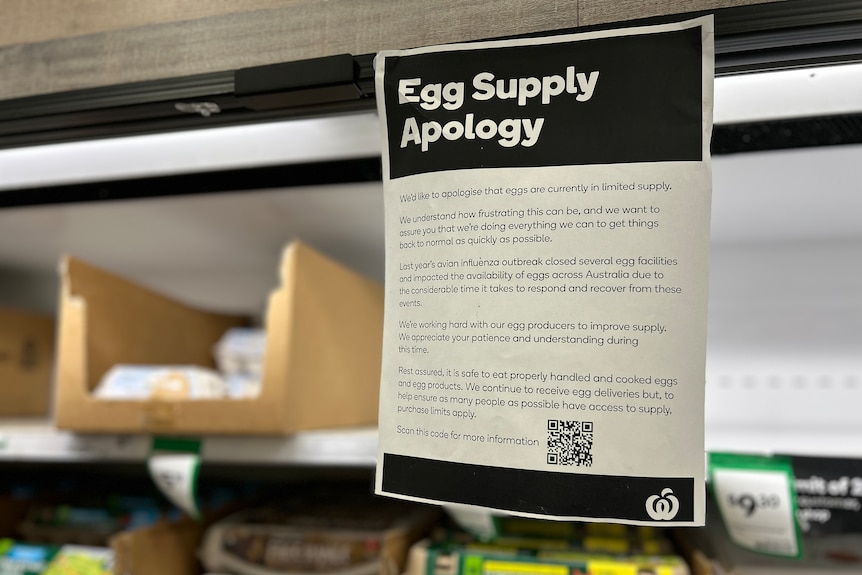
In March, Woolworths was apologising to customers for a lack of eggs on shelves. (ABC South West: Kate Forrester)
Meanwhile, a Coles spokesperson told the ABC it had “worked hard to prioritise local sourcing” and “recently doubled shelf space for their eight South Australian egg brands”.
Producers hope customers will support local
South Australian Produce Market’s marketing manager Penny Reidy is urging consumers to support local producers.
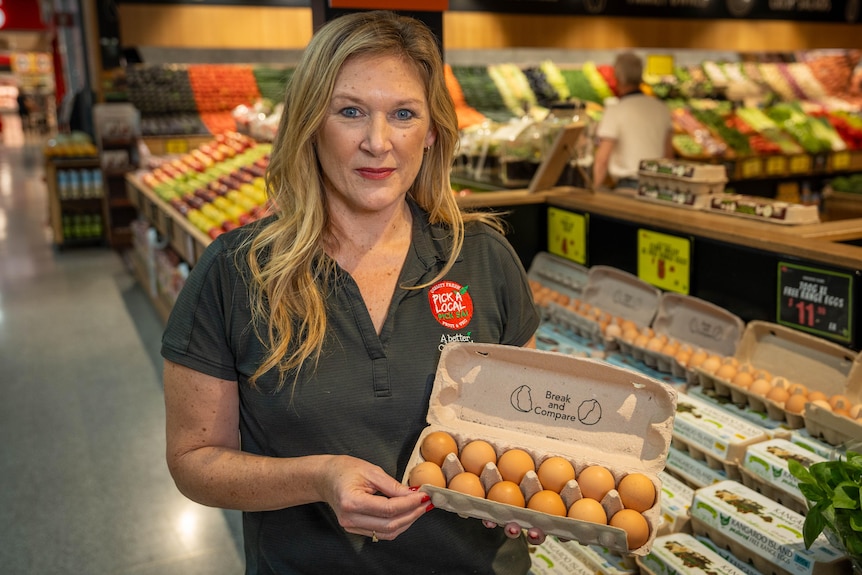
Penny Reidy is encouraging consumers to shop locally when purchasing their eggs. (ABC News: Brant Cumming)
She said there were great deals to be found by shopping at local fruit-and-veg shops and markets.
“We’ve gone from a situation where we’ve had hardly any eggs on the shelves but you’ve always found them at your local fruit-and-veg store and the reason being is we actually have a little bit of a different supply chain,” Ms Reidy said.
“We’ve seen the price of eggs come down, and even those free-range eggs as well, which is fantastic.”
Back on their farms, Mr Letton and Ms Byrne said they understood they supplied a premium product at a time when household budgets were stretched.
“You’ll always have consumers who choose on price [and] of course they’re going to choose a cheaper egg. Cost of living puts that pressure on,” Ms Byrne said.
“Six months ago, everyone was short. People didn’t have a choice of egg, they just had to buy whatever egg was on the shelf. Now there is a choice.”