With summer now underway, Australians are being urged to brace for ideal breeding conditions for one of the country’s most damaging invasive species. An east coast conservationist says community involvement in control efforts this season is more vital than ever
Bruce Hobby lives on Magnetic Island, a popular holiday destination known for its idyllic scenery and pristine coastline. But the island — off the coast of Townsville in the Great Barrier Reef — is also battling with severe cane toad populations.
In an interview with Yahoo News, Bruce said that while removal efforts in the last decade have managed to reduce the pest’s impact on the island somewhat, the toads remain widespread.
With millions of tadpoles now emerging from waterways across the country, he stressed that this is a pivotal moment to act — and that communities can achieve meaningful results when they step in early.
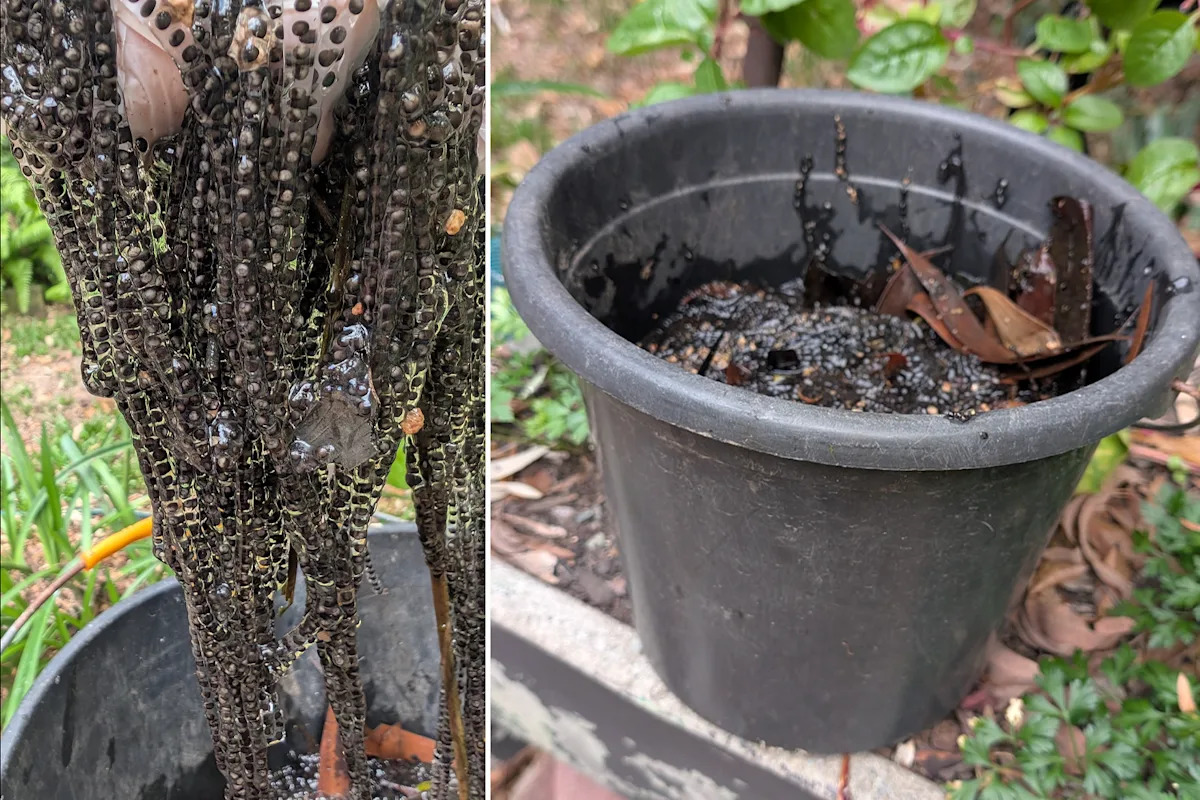
“We’ve caught a total of 83.7 kilos of tadpoles and toadlets in three weeks,” he said.
“The average weight of a tadpole is half a gram. That’s hundreds of thousands.”
In another recent undertaking, 4.9 kilos of eggs were removed in a single afternoon.
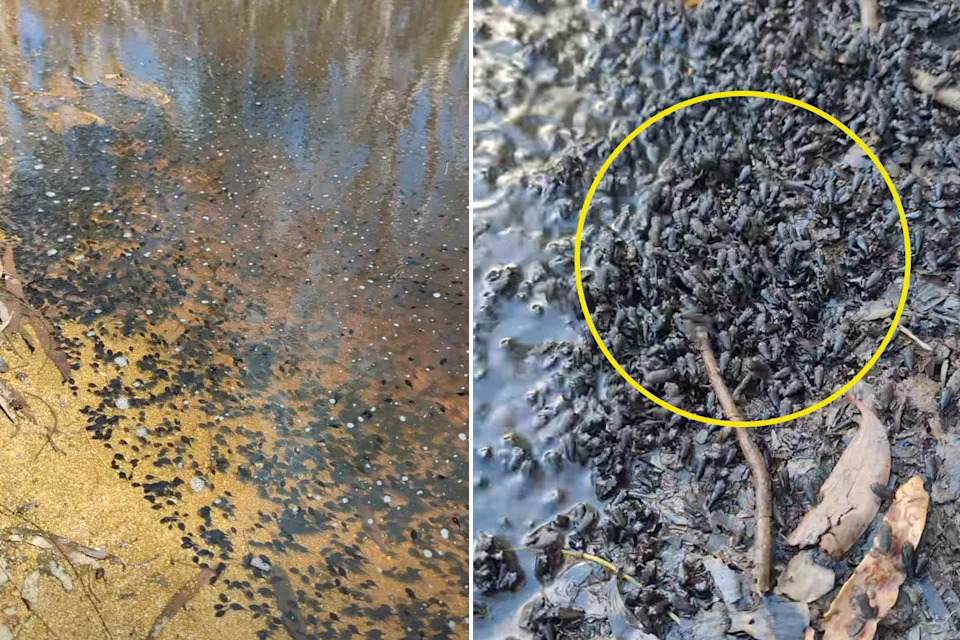
Despite control methods, cane toads remain widespread on the island, with countless tadpoles now leaving waterways. Source: Bruce Hobby
Magnetic Island’s quest to eradicate cane toads
In Australia, there are estimated to be between 200 and 400 million cane toads across the country.
Having been brought over in the 1800s to control populations of cane beetles that were destroying sugar cane crops, they’re numbers have since grown exponentially.
Outside of Queensland, they’re also now established in the Northern Territory, Western Australia and have also been detected in northern parts of New South Wales.
It’s generally accepted that total eradication would be near-impossible on the mainland.
“Certainly in the populated areas, we’ve got a very good chance of putting a massive dent in their numbers,” Bruce said.
“And we have already in three weeks, so we’re hoping that by the end of [the season] there will be very slim pickings.
On a recent expedition, Bruce caught 117 large adult toads in just 30 minutes.
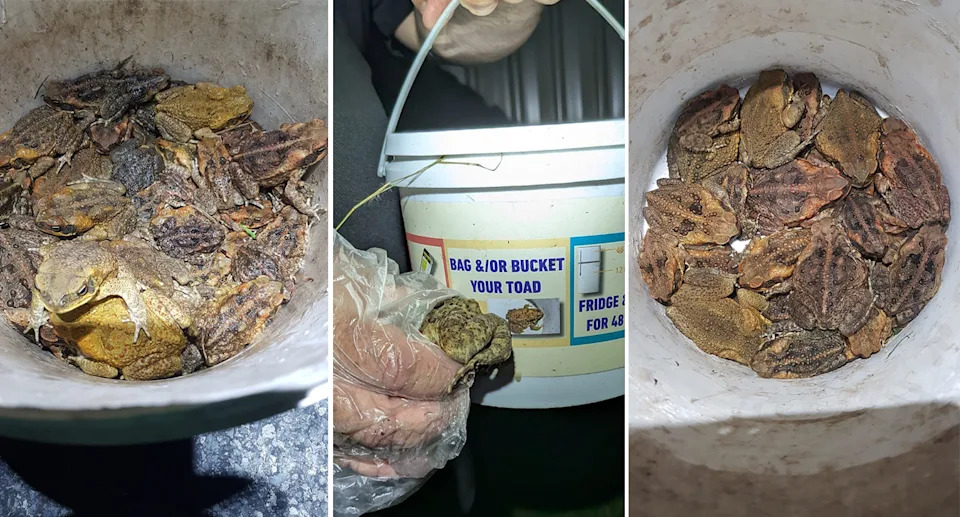
There are estimated to be 200 to 400 million cane toads in Australia. Source: Facebook/Maclean Noticeboard
Alongside a team of volunteers, he leads the Maggie Toad Busters environmental group, which he said recently received a government grant.
He said the organisation has arms throughout the island, and hopes to secure more funding to continue its success.
Bruce encouraged Aussies in cane-toad-affected areas to get involved where possible, noting that coordinated community action can dramatically cut local numbers and protect native wildlife during peak breeding season.

Magnetic Island is located off the coast of Townsville in Queensland. Source: Queensland government
How can you remove cane toads safely?
Dr Clare Morrison, conservation biologist with Griffith University, knows first-hand about the havoc the cane toad can wreak.
She warned the public that any control methods must be used with extreme care.
If people want to help control cane toads, the safest approach is to collect them at night using gloves or a net, then humanely euthanise them following approved methods such as cooling and freezing.
When it comes to eggs, cane toads have distinct string-like spawn, as opposed to native toads, which lay eggs in clusters.
“Cane toads are the only ones in Australia that lay their eggs in these really long black strings, and it can be thousands of eggs, anywhere from 5,000 to 30,000 eggs,” she said.
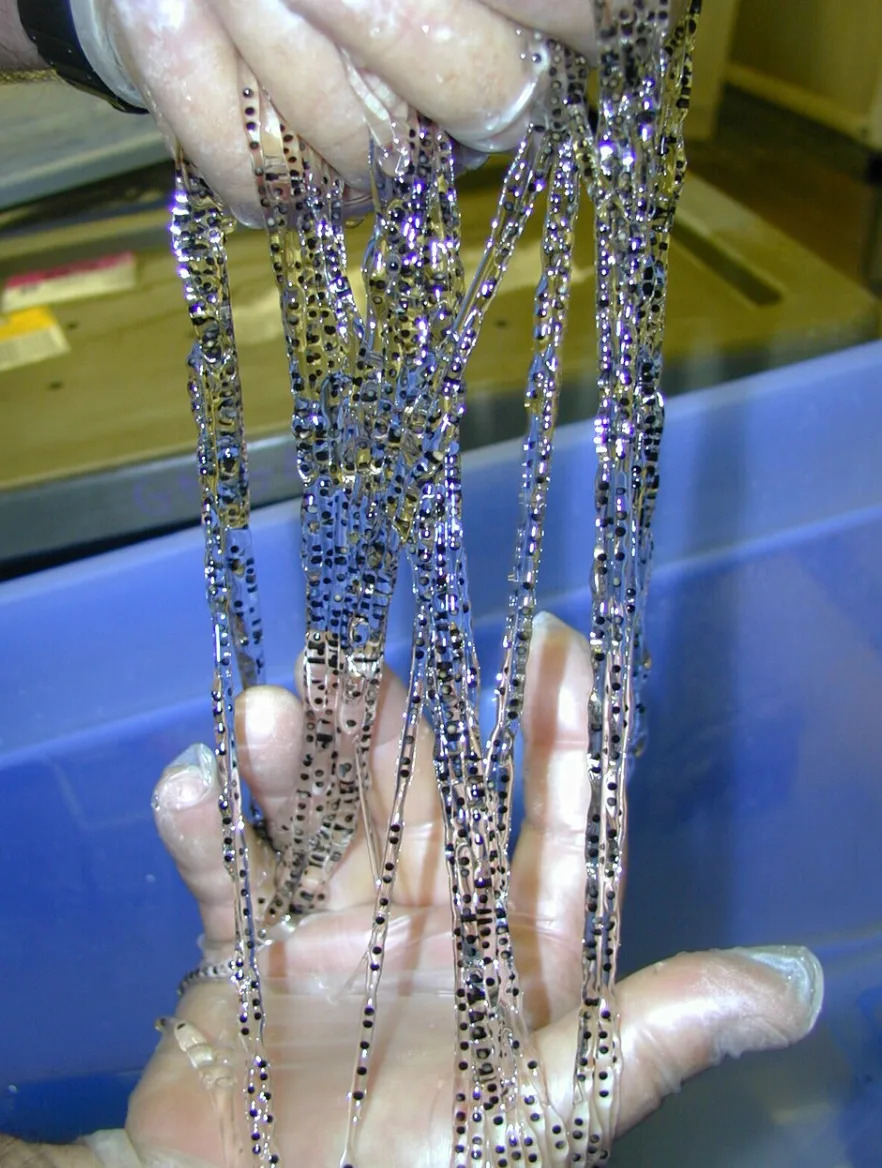
Cane toads lay eggs in long, jelly-like strings. Source: CSIRO
“Native frogs tend to lay their eggs in clusters, and it often looks foamy. So they’re very different.”
She urged the public to wear gloves should they attempt to remove toads or their spawn.
“You’ve got to remember that the eggs are toxic too,” she said.
“You don’t want to be handling them with your bare skin. Make sure you’ve got gloves on and make sure you wash your hands properly afterwards.”
Morrison said a pool rake is one effective way to “break them up”. “They should all stick together, and like in a big clump,” she said.
Once removed, there are several safe ways to destroy the eggs.
One option is to leave them in the sun to dry, which kills the embryos, although Morrison warned this can attract pets or birds. Another is to dig a deep hole and bury them.
“And the last one is that you can just simply put them into like a zip-lock bag, or any bag that you can seal up tightly — and double bag it if you want — and then just put them in the bin,” she said.
“Again, make sure you wash your hands along the way if you’re actually handling them.”
Do you have a story tip? Email: newsroomau@yahoonews.com.
You can also follow us on Facebook, Instagram, TikTok, Twitter and YouTube.