
Instead, a flood of prescriptions is now issued each year, with TGA data showing 6.59 million units of legal medicinal cannabis products sold in Australia last year.
Loading
But as commercial platforms automate consultations and prioritise script volumes, “the real elephant in the room for us is the telehealth model that is causing a lot of this really low-value care”, Langham said.
Telehealth prescribing surged during the pandemic and is now a national marketplace with fast-growing single-medication players in areas ranging from weight-loss drugs to cosmetic injectables, vaping, ADHD diagnoses and others.
Asked about the comments, a TGA spokesman said it was important to strike “the right balance between access to services to patients, particularly those living in rural and regional Australia, and the public safety risks associated with isolated prescribing practices”.
Federal Health Minister Mark Butler said on Tuesday that while telehealth had been a significant innovation in healthcare – particularly since the beginning of COVID for those who found travel difficult – serious issues had emerged.
“I think we’ve found over the last five years, as the model has frankly exploded in some areas, that we need to make sure that there are proper quality controls on the system,” he said.
Butler said the TGA was reviewing medicinal cannabis which would be crucial for ensuring proper “quality controls [are] in place”. He said there had been ample coverage of the medicinal cannabis sector’s “closed-loop models – business models where people get a referral and a script and then a dispensed product from essentially the same business”.
The regulator’s review of the rules around medicinal cannabis prescription will help establish for the first time just how much of the drug is being prescribed.
At present, there are multiple ways doctors can provide scripts for cannabis, meaning the TGA does not record the number of patients accessing cannabis products.
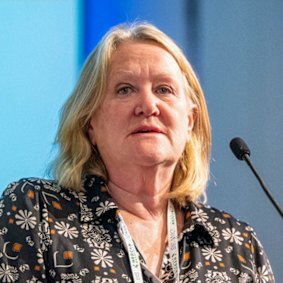
The Therapeutic Goods Administration’s chief medical advisor Robyn Langham.
One of the only available measurements of the medicinal cannabis market is sales data, obtained under freedom of information by drug policy research body the Penington Institute each quarter.
“We don’t know how much is being prescribed,” the TGA’s Langham said.
In July, the body that polices doctors, the Australian Health Practitioner Regulation Agency, also warned it believed some practitioners were putting profits over patient welfare and that it would target doctors it considered were overprescribing.
“We don’t prescribe opioids to every patient who asks for them, and medicinal cannabis is no different. Patient demand is no indicator of clinical need,” Medical Board chair Dr Susan O’Dwyer said at the time.
One doctor caught up in AHPRA’s crackdown is Justin Welsh, a South Melbourne practitioner who approached this masthead after he was barred from prescribing medicinal cannabis to his more than 4000 patients.
In November, after a lengthy legal dispute, AHPRA suspended the 54-year-old emergency medicine veteran from prescribing cannabis (he can still practise medicine), in part because of the volume of his prescriptions.
Welsh himself is not bashful about his prescribing: “This year alone, I have written 14,711 prescriptions. That’s 102,977 cannabis products worth an estimated $9,782,815 to the cannabis industry,” he said.
Welsh concedes the numbers are high, but argues he is dealing with a patient cohort that regulators have never managed properly and that would otherwise buy from the black market. “I’m not creating new users,” he says. “I’m reducing harm. If I don’t prescribe, they go to the street.”
Welsh spent two decades in emergency medicine at the Epworth before turning full time to cannabis prescribing during the pandemic. He is furious at the current enforcement push, accusing AHPRA of “acting above the law” and ignoring the regulatory vacuum that governments created from 2016 when they legalised medicinal cannabis but misjudged the scale of demand.
Welsh’s suspension was triggered by state health complaints – particularly from Western Australia, where THC limits are lower than in Victoria where he predominantly prescribes. For a national telehealth doctor, he argues, the inconsistent maze of state rules is unworkable. “There is no regulation for what a dose is, or an overdose. It’s random.”
Welsh said the real safety risk in cannabis lay in people accessing the unregulated market: “Street marijuana contains mould, pesticides, twigs and dog shit,” he says. “Medicinal cannabis is [a high] standard and often cheaper than illegal product.”
Welsh’s suspension has left his patients in limbo – on the day this masthead visited his clinic, dozens of text messages and phone calls peppered his phone from patients wanting to know why he had cancelled their appointments. Welsh said the calls from distressed patients were upsetting.
“People need this medication. Otherwise, they use other drugs that are more dangerous than cannabis.”
An AHPRA spokesman said the Medical Board of Australia had “accepted an undertaking” from Welsh prohibiting him from prescribing medicinal cannabis but could not comment further.
On Friday, the Penington Institute released its annual Cannabis in Australia report, which showed product sales plateauing in 2025 after years of rapid growth, and the sale of edible cannabis products, such as gummies, almost doubling in the last year.
The report noted Australia imports two-thirds of its medicinal cannabis medicines, leaving domestic growers sidelined.
Start the day with a summary of the day’s most important and interesting stories, analysis and insights. Sign up for our Morning Edition newsletter.