
 The National Gallery, London

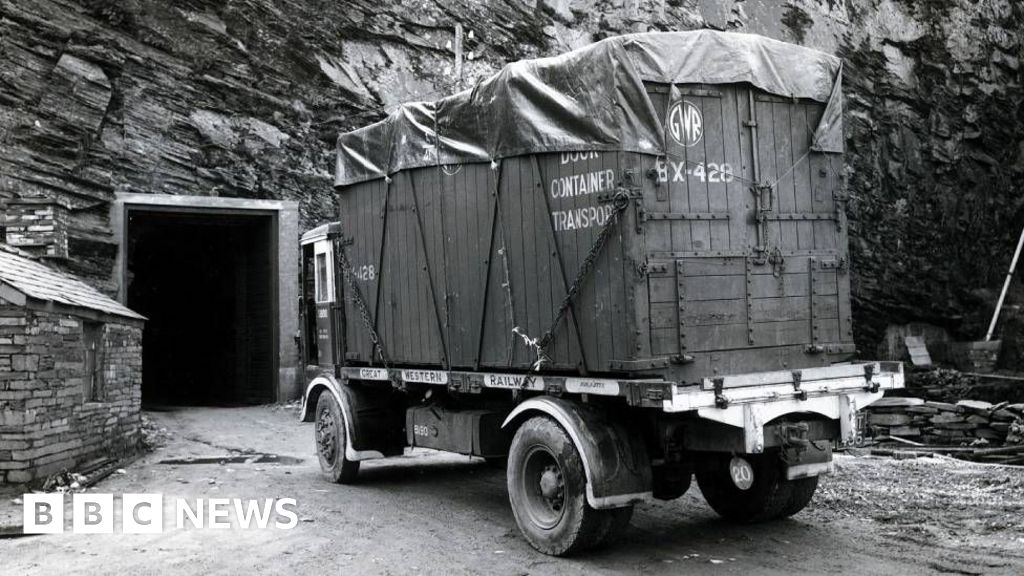
The artworks were shipped to north Wales near the beginning of the war
The National Gallery, London has unveiled a piece of art commemorating a Welsh quarry that housed the country’s paintings during World War Two.
Following the outbreak of war, the gallery in the UK capital moved its art to the Manod Quarry in Blaenau Ffestiniog, Gwynedd, in order to keep it safe – as part of Winston Churchill’s promise that “not one picture shall leave this island”.
The art remained in small brick “bungalows” within the caverns for four years before being returned to London after the war ended.
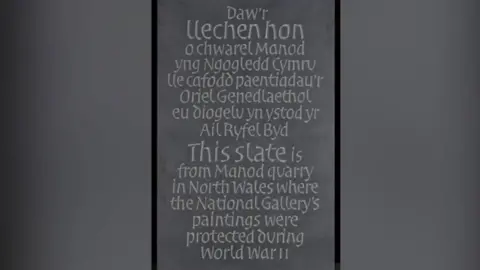
The tablet, made from slate taken from north Wales, has inscriptions in both Welsh and English.
As war broke out, with bombs falling on London and a German invasion seeming likely, attention turned to how to protect the National Gallery’s collection.
In 1940, Winston Churchill famously said of the nation’s art treasures: “Hide them in caves and cellars, but not one picture shall leave this island.”
Experts scoured the UK for a hiding place – until they found the Manod Quarry, which had been a working quarry for over a century.
Its excavations created a cavernous space at the heart of the mountain, and covered with hundreds of feet of slate and granite it was virtually impregnable to bombing.
Its remoteness also made it easier to keep the mission top secret.
 The National Gallery, London
The tablet, made from slate taken from north Wales, has inscriptions in both Welsh and English
Sir Gabriele Finaldi, director of the National Gallery, said the tablet served as a reminder of the crucial moment “the nation’s paintings were secreted in caves in the slate hills of north Wales to preserve them for future generations”.
Dr Kath Davies, of Amgueddfa Cymru, described it as a “fantastic” project commemorating an important historic event which also preserved “traditional Welsh craft and heritage”.
Conceived by artist Jeremy Deller and designed and carved by John Neilson, the tablet was commissioned by Mostyn gallery, Llandudno, and supported by the National Contemporary Art Gallery for Wales (CELF).
The Manod Slate Tablet will be on permanent display in the Portico Vestibule of the National Gallery.