
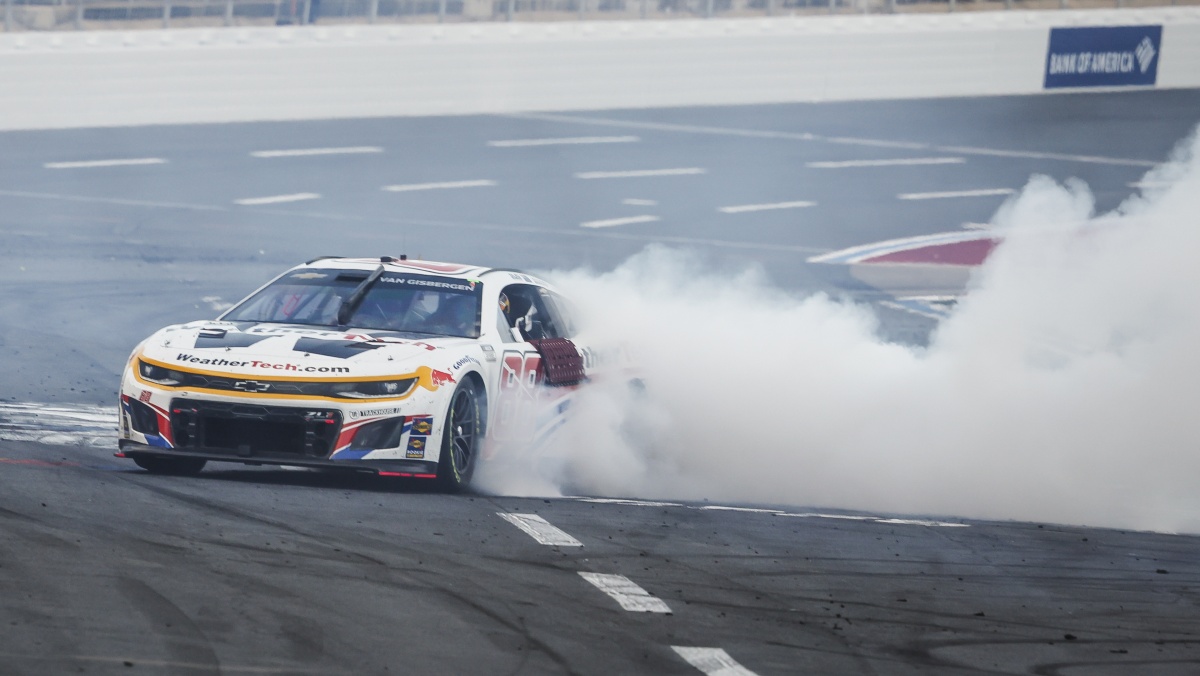
TRACKHOUSE Racing is turning to fresh artificial intelligence technology to give it an edge on track in the ever-competitive NASCAR Cup Series.
Set to field the cars of Shane van Gisbergen, Ross Chastain and rookie Connor Zilisch in 2026, team owner Justin Marks has noted that the squad is exploring AI assistance with regard to race day strategy.
In an X from the Sports Business Journal’s Adam Stern, it is noted that Trackhouse is working with Silicon Valley to develop a new AI system to “help the team make on-track decisions by turning tons of data into usable suggestions.”
Marks notes that “AI will be able to ‘do the work of a huge workforce without having to have a huge workforce.’”
The current-day Trackhouse Racing outfit was born out of a takeover of Chip Ganassi’s NASCAR assets.
A cornerstone of that deal was a top-tier alliance with Chevrolet, placing the team alongside Hendrick Motorsports and Richard Childress Racing.
Trackhouse Racing has further direct technical ties with Hendrick, which this year won the Cup Series title with Kyle Larson.
The latest generation Cup Car has seen the series pivot to largely spec race cars from single-source suppliers in a bid for on-track parity.
While the cars may still be relatively low-tech, much pre-event preparation leans on cutting-edge methods, such as advanced simulation.
Drivers and teams are each week allotted simulator time, and significant effort goes into ensuring accurate tyre information is applied for each circuit, with special cars fitted with various sensors used in ‘wheel force’ tests to provide data.
In a further example of tech in play, all drivers and teams have access to each other’s on-track positions and driver inputs via the SMT Data service, effectively levelling the playing field for driver performance.
In 2022, General Motors acquired the Pit Rho Race Analytics platform, which further synthesised these and other parameters.
During race weekends, teams utilise “war rooms” set up at workshops to provide additional support to engineers and crew chiefs on-site at the circuit.
Throughout events, across manufacturer lines, live team radio communications are captured and stored in databases, so that any changes made during pit stops become common knowledge across the field.