
Labor has rejected criticism of its failure to take up key recommendations from a scathing review of public sector board appointments, insisting a proposed ban on new jobs in the weeks before an election is not necessary.
Former public service commissioner Lynelle Briggs’ long-anticipated “jobs for mates” review was released by the government on Tuesday, more than 18 months after it was handed to government.
Crossbench senators and transparency experts criticised Labor’s handling of the report and its toughest recommendations, suggesting a new framework for appointments released by the finance minister, Katy Gallagher, would not stop politicised decision-making and the rewarding of friends and supporters.
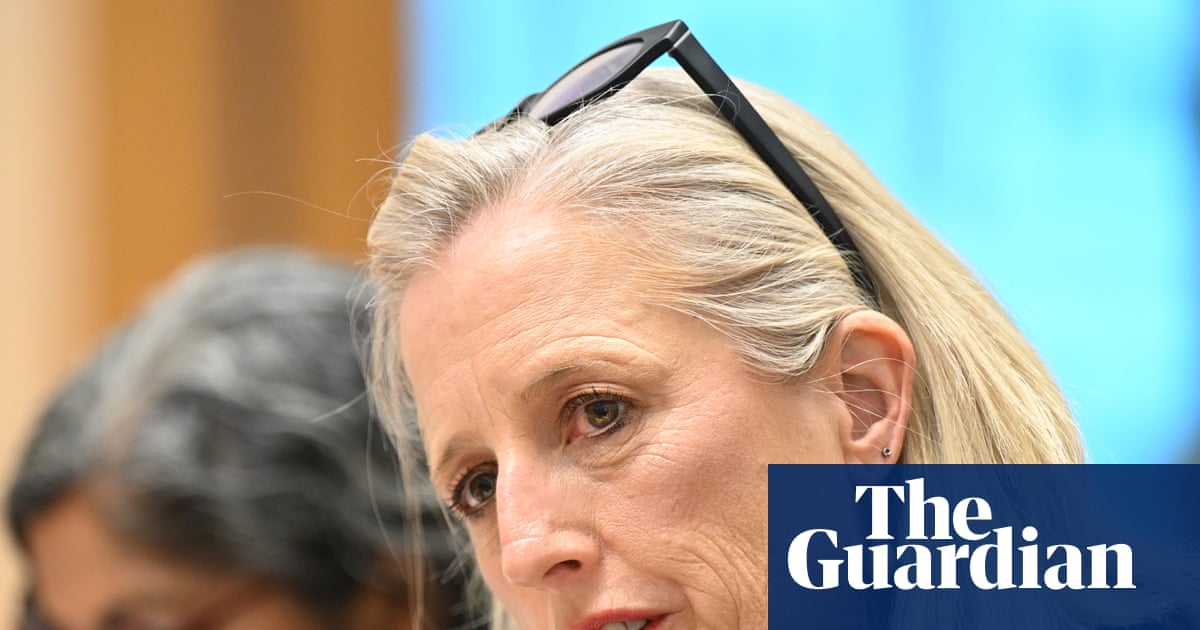
Gallagher told Senate estimates Labor would not take up recommendations for “bequest” appointments immediately before elections, or for ex-politicians and staffers being barred from new roles for six months after leaving government, extending to 18 months for former ministers and their staff.
“We don’t believe that people should be excluded if they’ve got the right skill set and go through a process of appointment to a government board,” she said.
“There are people who leave work in this parliament, who do have the right skills and would be an asset on government boards and committees.”
Briggs said these appointments often see staffers, former politicians, their supporters and friends appointed immediately before elections, “with seemingly little regard for the consequences”.
She called such appointments “shameless”.
Sign up: AU Breaking News email
Of the report’s 30 recommendations, Labor says 19 are covered or partially covered by its new framework, while three are covered by separate guidances and rules. Another three recommendations are subject to further consideration by Labor, while the government disagrees with five.
“We have used this to inform our decision-making and anyone who comes in here and says that the appointments framework is not an improvement on what existed previously, or the problems that Ms Briggs identified, is simply wrong,” Gallagher said.
But the Greens senator Barbara Pocock offered bruising criticism of Labor’s response.
“I think what your government is becoming is a government of gestures,” Pocock told a Senate hearing. “A government of codes. As opposed to a government which delivers what the Australian population wants, which is an end to jobs for the boys.”
Integrity experts and transparency-focused MPs warned Labor’s changes would not curb cronyism and risked entrenching a culture of unqualified political allies being granted lucrative roles.
“There are some positive improvements to process in the framework, but it’s not going be enough to stop the jobs for mates culture that was the whole reason for setting up the review in the first place,” said Dr Catherine Williams, executive director of the Centre for Public Integrity.
“It’s deeply disappointing that the government, having rightly recognised the urgent need for reform in this space and having established an independent review of processes, has ultimately failed to do what is necessary to solve the problem it recognised from the very beginning.”
A key criticism is of the government’s refusal to enshrine Briggs’ recommendations in law, and its move to instead to set some up inside a regulatory framework which Williams said would be “discretionary and flexible”, allowing ministers and the prime minister to exempt any appointments from the new rules.
The ACT senator David Pocock led a Senate revolt over the government’s failure to release the report, derailing the chamber’s daily question time in a protest over Labor’s secrecy on the review.
skip past newsletter promotion
Sign up to Breaking News Australia
Get the most important news as it breaks
Privacy Notice: Newsletters may contain information about charities, online ads, and content funded by outside parties. If you do not have an account, we will create a guest account for you on theguardian.com to send you this newsletter. You can complete full registration at any time. For more information about how we use your data see our Privacy Policy. We use Google reCaptcha to protect our website and the Google Privacy Policy and Terms of Service apply.
after newsletter promotion
“I’ve worked hard with all non-government senators to secure the release of the Briggs review. Now it’s clear why the Albanese government was hiding it for two years,” Pocock said on Tuesday.
“It is no surprise there is such low trust in politicians.”
He called on Labor to take up the full set of recommendations, a sentiment echoed by the teal independents.
“Governments handing out plum jobs to mates is corrosive to trust in our democracy. Unless these reforms are enshrined into law it’s unlikely this culture of cronyism will change,” the Mackellar MP, Sophie Scamps, said.
Kooyong MP Monique Ryan accused Labor of dumping the report after the end of the parliamentary year, whileAllegra Spender, the MP for Wentworth, said Canberra’s jobs for mates culture was having “a corrosive impact on trust”.
Transparency International Australia chief executive, Clancy Moore, said Labor’s framework should become law.
“It’s disappointing to see the Albanese government reject some of the excellent and very measured recommendations outlined by former public service commissioner, Lynelle Briggs,” he said.
“This includes banning ministerial appointments in the six months before an election and banning staff and advisers for being appointed to government roles six months after leaving employment and 18 months for people in ministerial offices.
“The report is very clear in that government appointments should be at the heart of the Albanese government’s integrity agenda.”
Quick GuideContact Guardian AustraliaShow
If you have something to share about this story, you can contact the Guardian Australia news teams using one of the following methods.
Secure Messaging in the Guardian app
The Guardian app has a tool to send tips about stories. Messages are end to end encrypted and concealed within the routine activity that every Guardian mobile app performs. This prevents an observer from knowing that you are communicating with us at all, let alone what is being said.
If you don’t already have the Guardian app, download it (iOS/Android) and go to the menu. Select ‘Secure Messaging’.
– If you don’t need strong security you can write to a Guardian Australia journalist using the details here. Click on a person to see their details.
– For end to end encrypted email you can create a free Protonmail account and email gaus.contact@protonmail.com.
Messaging apps
You can also use the encrypted messaging apps Signal or WhatsApp to message us at +61 490 758 250.
SecureDrop and other secure methods
If you can safely use the tor network without being observed or monitored you can send messages and documents to the Guardian via our SecureDrop platform.
Finally, our guide at theguardian.com/tips lists several ways to contact us securely, and discusses the pros and cons of each.
Illustration: Guardian Design / Rich Cousins
Thank you for your feedback.