
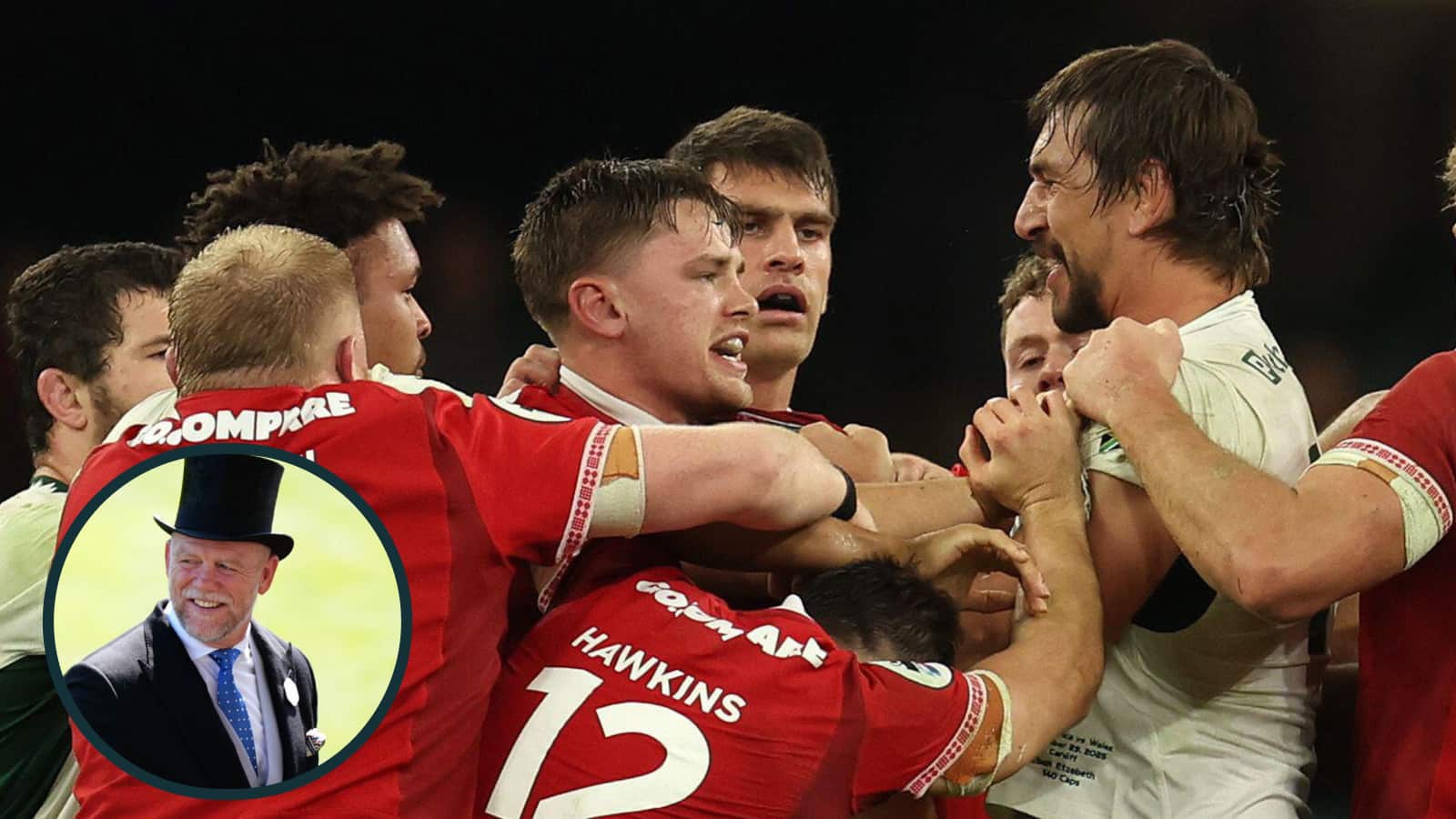
This week we will mostly be concerning ourselves with Wales, the monkey clinging to rugby’s back, and a big picture look at an unruly weekend…
Shoots of hope anywhere?
I mean, if you were at the Principality Stadium, probably not. A game played for purely cash purposes may have failed even to attain that target given the number of empty seats. It certainly seemed of little use to most of those on the field. On a day when a number of odd statistics laid bare the extent of the mismatch, Wales’ probability of winning was officially set at zero per cent during the first half by November series stats partner Capgemini. Not even the Jim Carrey character in Dumb and Dumber could have found an optimistic viewpoint of that. There were still 50-plus minutes to go.
Nor in the administrative side did the picture become any clearer. WRU director of elite performance Dave Reddin’s television appearance was an odd choice, given that he conceded that the WRU may have to field a fourth team in next season’s URC despite the union’s current intention to cut one of Wales’ four teams. That does not instil confidence that the current plan is well thought-out and road-mapped.
The unease was exacerbated by the noise around the annual AGM for Welsh rugby, which happened 24 hours after Luc Ramos had brought the suffering to an end. Scarlets coach Dwayne Peel was forthright about the uncertainty people – off-field roles as well as the players – are having to endure, with the Scarlets or the Ospreys set for the axe. The established current Welsh captaincy pair of Jac Morgan and Dewi Lake are understandably refusing to sign new contracts until the future is clear. Yet there are still no real answers, no clear path to redemption. Patience is wearing understandably thin.
No, on the pitch there was no sign of revival. Off the pitch the strategy continues to look confused. Among the fans, simply despair. There were no shoots of hope there.
And yet. You’d have thought a team short of 22 players would potentially be facing a heavy defeat in an away game. But the Ospreys scrapped to a two-point defeat at Edinburgh (also depleted but not as heavily) and were good value for it, having led at the break. The Scarlets handed Glasgow a bagel. The Dragons pushed Leinster all the way. Cardiff won excellently in Italy, despite being so short they had to import a hooker on a one-match loan from Bath, and remain in second place in the URC table.
It’s minimal in terms of what to hope for within the next couple of years, but hope for Wales is there. There are plenty of good players emerging in Wales and the regions, for so long stuck in the top-heavy management imposed upon them by the WRU, are developing them and giving them a chance as best they can.
The results of those weakened teams this weekend past was perhaps the most effective way of delivering the message to a union that has lost its way. The regions – local media still refer to them as clubs – appear to be doing their job excellently under trying circumstances. The WRU now needs to do its own.
Gone. For now. But wait for the end of the World Cup
We believed it may have disappeared from view altogether, with the only sign it ever existed a handful of colourful Powerpoints with hockey-stick-shaped revenue graphs all over them. But R360, the distasteful and tradition-trampling global franchise league attempting to tear up the fabric of the game and tailor it into some new form of snazzy suit, officially announced that it would lie low and lurk for the next couple of years this weekend.
As such, those players who had signed pre-contract agreements can now consider them void, meaning that several national unions – and the British and Irish Lions and Australia’s national rugby league to boot – do not now face the unpleasant scenario of having players banned from their own jurisdiction and competition because they joined the other side.
Nor, for that matter, do we humble fans face the acrimony of watching the game get torn apart for the sake of a few chaps and their private equity friends to make a few bob.
Not yet anyway. Supposedly R360 will launch in 2028, more or less straight after the World Cup. The lines in the sand have been drawn by the existing unions and bodies, but it’s an interesting contractual moment for many players, for whom Australia 2027 could be an end-of-era peak and for whom a lucrative swansong could be an interesting alternative.
So we’ll see what happens. But it is unlikely to be an edifying time if the Rugby World Cup ends up being played out with the spectre of the game being subjected to a similar form of civil war that golf was a couple of years ago.
A wild weekend
It wasn’t an entirely edifying weekend for the game generally actually. The return of eye-gouging to the consciousness, a pointless international match with most of the top players unable to play, coaches red-carded for arguing with officials, a rash of red cards for a variety of offences and horrendous TMO misses all were in frame.
Bath and Saracens came to the rescue on Sunday with a match of highest quality, however, while the return of European competition this weekend, featuring (among others) Bath v Munster, Leinster v Quins, Saracens v Clermont and La Rochelle v Leicester should be just the tonic!