
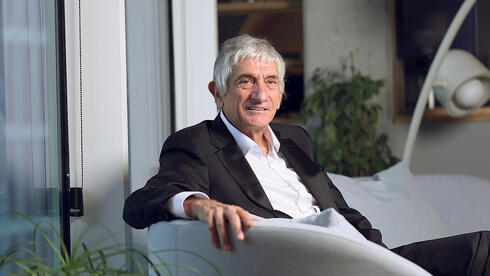
“When I was a child, my parents didn’t ask me at the dinner table, ‘How was school?’ but rather, ‘Did you ask a question today?’ This is a great way to train a child to think scientifically, because our job as scientists is to ask questions,” says Professor John Matthew Martinis, winner of the 2025 Nobel Prize in Physics.
In an interview with Calcalist, Martinis explains that this is how he maintains his scientific curiosity, even after decades of practice. “Even questions that seem obvious can open the door to new nuances, sometimes in the answer and sometimes in the actual formulation of the question. When I gave a lecture yesterday, for example, I especially enjoyed the question-and-answer part. I always learn something from the questions people ask, and from the way I am required to answer them. I just love being a scientist; it allows me to ask questions about the world every day. We need to encourage this in children too: to keep asking questions.”
2 View gallery
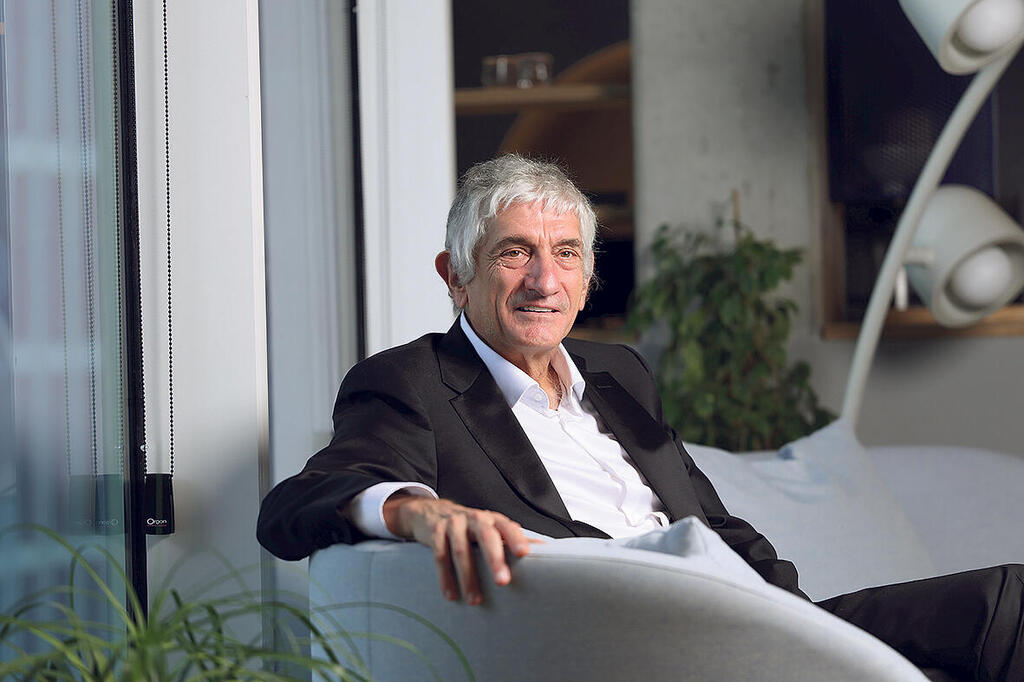
Prof. John Martinis
(Orel Cohen)
And your children, did they follow in your footsteps?
“They didn’t exactly follow me, but they definitely followed the scientific path, the path of thinking and asking questions. It’s something we did consciously with them. My son is now in marketing. He finds people more fascinating than nature, which is great. But because he has an analytical mindset, he examines problems in his field in a different way. And I think he really got that from me.”
Martinis is an American physicist who began his career researching quantum phenomena in superconductors. Already in his doctoral thesis, he presented a result that was considered revolutionary at the time: quantum phenomena are not limited to the tiny atomic world, but it is possible to build a large engineering system, a centimeter-sized electronic chip, that behaves according to exactly the same laws. In other words, it is possible to artificially create an “atom on a chip” and control it through currents and voltage. This understanding opened the door to the invention of the modern qubit and the idea that a quantum computer is not just a theoretical dream but a system that can be designed, manufactured, and operated. Later in his career, Martinis moved between academia and industry, led breakthroughs at Google, and became one of the central figures in the world of quantum computing.
Now, shortly before he arrives in Stockholm to receive the Nobel Prize, which will be awarded on December 10, he is stopping in Israel for a series of meetings and visits, including at Tel Aviv University, the Israel Center for Quantum Computing (IQCC), the Institute for National Security Studies (INSS), and a festive event organized by the Qubit IL association. The interview with him takes place in Tel Aviv, at the offices of the Israeli startup Quantum Machines, with which he maintains close cooperation through the company he founded and for which he shares high praise.
Quantum Machines develops the control layer, the “brain,” of quantum computers. It doesn’t build the qubits themselves but the system that operates them. Martinis describes the collaboration with Quantum Machines as one of the central pillars of his work at Qolab. According to him, Quantum Machines has taken control capabilities to a level that he himself could not reach, and its products have become a significant tool for his company. “Israel has fantastic technological and scientific capacity, and also a certain kind of entrepreneurial culture that is not found in many other places,” he says.
“In Israel, hardware is being developed at a very sophisticated level, thanks to the unique expertise that exists here. This is the future of building quantum systems properly. You have the expertise and the ability to bring in the right engineers to develop the next generation.”
Long before he dreamed of a Nobel Prize, Martinis’ research dealt with a question that sounded almost heretical in physics: whether the laws of quantum physics, then considered the preserve of atoms and molecules, could also appear in much larger systems, the kind that could be seen with the naked eye and built in the laboratory. This was the turning point that transformed him from a young doctoral student into one of the people who laid the foundation for modern quantum computing.
For years, it was believed that quantum phenomena existed only in the world of atoms and molecules. How did you come to the realization that it might be possible to make even a large, engineered system, like an electronic chip, behave according to quantum laws?
“Quantum mechanics is usually associated with the physics of atoms and molecules. But what we showed in my doctoral thesis with John Clarke and Michel Devoret is that it is a much more general phenomenon. We built an electronic chip about a centimeter in diameter and showed that the currents and voltages in it obey the laws of quantum mechanics. In a sense, we showed the first prehistoric qubit; the word didn’t even exist back then. That was about 40 years ago, and it was a wonderful doctoral experiment for me and for many others around the world who tested and developed this technology.”
2 View gallery
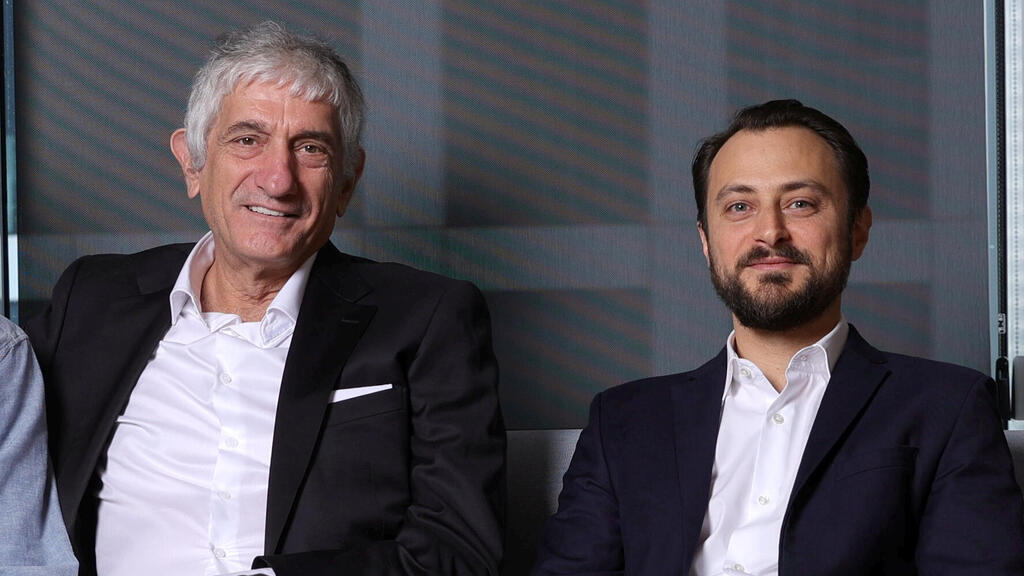
Prof. John Martinis (left) & Itamar Sivan
(Orel Cohen)
When did you realize that your experiments could become the basis for a real engineering platform?
“The moment I thought it was possible to build a quantum computer was in the first decade of the 2000s, when we started developing qubits. I’ve always been interested in building a quantum computer. In an experiment in 2008-2009, we were able to synthesize very complex photon states very precisely. For the first time, I realized that we could control these systems with great precision, and that maybe we could build a quantum computer from this. Then came the second big event, in 2019, after I joined Google, the quantum supremacy experiment. We showed that a quantum computer can be powerful. It’s not yet useful; it’s something that people are still working on, but we were able to show that you can do a powerful calculation for a mathematical problem. It changed the field a lot.”
Some believe that a real, usable quantum computer is still decades away. Do you agree with this assessment?
“We need to be prepared for the possibility that in five or ten years we will see sophisticated demonstrations, for example a short version of a factorization algorithm (i.e., a quantum algorithm able to decompose a large number into its prime factors, a task that ordinary computers have difficulty performing, and a key test of the ability of a quantum computer). It may take longer; it may take less; there are different opinions. But it is a real possibility that needs to be considered. We are all planning the infrastructure and technologies with such a timetable in mind, in order to be ready for the moment when it happens.”
After years of theoretical research and academic experimentation, Martinis joined Google to lead quantum computing projects. Under his leadership, a breakthrough was achieved: an experiment conducted in the company’s laboratory demonstrated “quantum supremacy,” meaning a quantum computer was able to perform a certain mathematical task faster than a regular computer could. This was significant proof that quantum computing is no longer just a theoretical pursuit but may become a practical tool in the future. Martinis’ project at Google showed that ideas once confined to academic theory could be turned into functioning hardware, with potential for further development.
However, after the success of the project, Martinis found himself in a dispute with the company’s management regarding project structure and engineering direction. While he pushed for rapid changes in production processes, Google management preferred to continue with existing models. The gap widened until he felt that the corporation had become too cautious, and true innovation required greater freedom.
What was the root of the disagreement between you and Google?
“After we had this successful project and I was leading the hardware team, Google decided to change the management structure. For example, I couldn’t get promoted for various reasons, which felt very strange given our achievements. They wanted to manage the project differently. If you look at what I’m proposing today at Qolab, a radical change in the way devices are manufactured to enable rapid scale-up, that’s exactly the kind of thing Google didn’t want to do. Since my departure, I’ve even spoken to them, and they’re continuing with their plan as it is. They’re not interested in our ideas. And that’s pretty sad to me, because when I look at the progress over the last five years, it’s just too slow.
“I think we need to radically rethink how we do it. But corporations get stuck in their plans. That’s exactly the job of startups, to do something different. Ultimately, it’s good that I left. Now I’m free to focus on what really needs to happen in the field.
“Ultimately, I felt people just wanted to keep doing what they were already doing instead of looking forward with courage. That’s a common frustration for anyone working in a large corporation.”
In 2022, Martinis founded Qolab, a quantum startup that aims to lead the large-scale production of superconducting qubits and develop an industrial-scale quantum computer. The company develops quantum chips on semiconductor-grade wafers with the goal of making the qubits reliable, uniform, and mass-producible.
Qolab is working with companies like Applied Materials to develop advanced manufacturing processes that reduce error rates and produce qubits at industrial scale. “Qolab is trying to radically change the way we make superconducting qubits and rethink the bottom layer of the chip,” Martinis explains. “It not only improves the manufacturing process itself, but also introduces new ideas about wafer-scale integration, enabling us to assemble chips and build quantum systems cheaper and at scale.
“Right now, you can make superconducting qubits using academic-style processes, like those in university cleanrooms. They are sophisticated but still based on processes invented in the 1960s. It works, and produces good qubits, but they’re not reliable enough. We are taking a completely new approach: metal deposition and etching, the same way modern semiconductors are made. It takes longer, but it’s far more reliable.
“What we’re trying to do is not build our own cleanroom but use existing ones. This way, we avoid investing billions in construction and can upgrade existing machines for much less money, achieving exactly the control and precision we need.”
Do you see a scenario where quantum computers accelerate training of large AI models?
“Yes, absolutely. One example is simulating quantum phenomena. In quantum chemistry, a quantum computer can generate data for molecular or material configurations much faster than long experimental series, providing highly detailed information about quantum states.
“This data can then be fed into classical machine learning models to predict new chemicals faster. To me, this is an excellent use case, enabling humanity to develop better chemicals, more efficient processes, use more accessible materials, and reduce environmental impact in manufacturing.”
“We need time to adapt to a fully operational quantum computer”
“Quantum computing is one of the most important technological revolutions that has not yet materialized. Achieving it will require collaboration among multiple major players,” says Itamar Sivan, CEO of Quantum Machines, which hosted John Martinis and collaborates with him. “Qolab contributes not only by working with Quantum Machines but also with other companies, understanding that building a quantum computer is one of humanity’s greatest challenges.”
Regarding Israel’s place in the quantum race, Sivan notes the gap between state resources and private funding: “Israel is a small country, and even when budgets exist, they are nowhere near what countries like the U.S. or China allocate. But Israel has easy access to private funding, venture capital and growth financing, which makes the startup ecosystem vibrant. It’s not just due to military-driven cyber tech; venture capital is easier to access here than in many European countries.”
He adds that Israeli quantum companies are often born global: “Israeli quantum firms do not target the local market. Very quickly, they operate almost as American companies, most of their business is in the U.S., even if offices are formally in Israel.”
On timing, he says: “People sometimes expect this technology to appear within two years. When asked, I usually say it’s good that it doesn’t happen so quickly. We need time to gradually adapt. If governments fail to adapt policies on AI now and quantum in the future, it could create serious problems. That’s why it’s good that it takes more than five minutes to get a fully operational quantum computer.”