

From a controversial budget-cap proposal that has baffled teams, to Formula 1’s soaring franchise valuations, to pro cycling’s continued dependence on wealthy patrons rather than investors, this week’s AIRmail unpacks the structural forces shaping the sport’s uncertain economic future. We also examine cycling’s deepening sportswashing entanglements with Saudi Arabia and the UAE, and track the unsettling advance of the doping-friendly Enhanced Games. In a moment when global sport is redefining its business models, values, and risks, pro cycling stands at a crossroads—revealing as much about its governance failures as about the geopolitical and financial currents swirling around it.
Analysis, Insight, and Reflections from The Outer Line.
# Catch up on pro cycling – and its context within the broader world of sports – with AIRmail … Analysis, Insight and Reflections from The Outer Line. You can subscribe to AIRmail here, and check out The Outer Line’s extensive library of articles on the governance and economics of cycling here. #
Key Takeaways:
● Confusion Around Lappartient’s Proposed Budget Cap
● Financial Lessons From Formula 1 …
● … But Cycling Relies on Philanthropists, Not Investors
● Cycling’s Ongoing Sportswashing Problems
● Enhanced Games Move Forward Despite Legal Setback
UCI President David Lappartient recently took the dramatic step of proposing a budget cap for pro cycling – a critical ongoing development that has flown somewhat under the radar. However, the initiative was rejected by the teams – apparently on a virtually unanimous basis. This discussion happened at about the same time that it became clear that the Arkea team was folding, and as questions remained about the status of the proposed merger between Intermarché and Lotto. As Lappartient said, it initially seems a bit “paradoxical” that the smaller teams apparently also rejected this plan. Supposedly, the plan would have placed a sort of “luxury tax” on the higher-spending teams that would somehow be distributed to the smaller teams. Notably, few if any details were available as to how this process (theoretically similar to those in place for other pro sports leagues) would have actually worked. In addition, it was not clear that either the teams or the riders had really been consulted or informed as part of the process. Indeed, there is virtually no information about the entire discussion other than what Lappartient relayed to the French media.
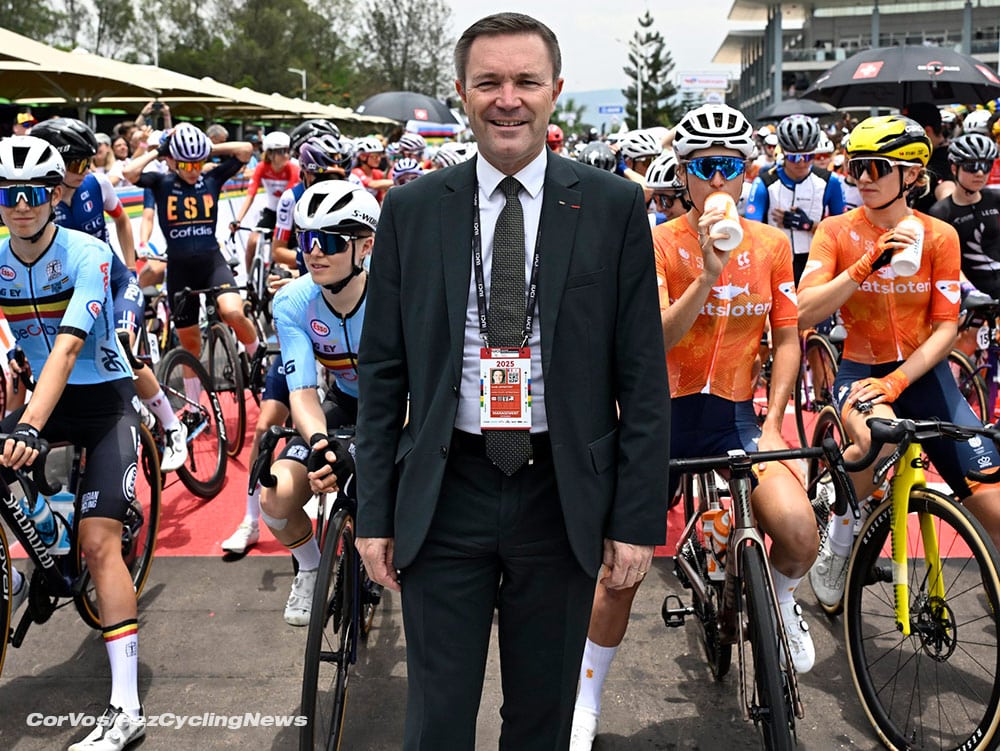
This leads us to conclude that there may have been aspects of Lappartient’s plan that were hasty or not completely thought out – that perhaps the plan was constructed more as a quick “bandaid” to cover the current spending inequities rather than addressing the more fundamental structural problems the sport faces. For example, was there perhaps a minimum budget required as part of the plan that smaller teams might have been concerned about? Why was there apparently so little transparency in the process? Respected former pro, lawyer, and rider advocate Chloe Hosking sagely observed, “At first glance, this seems like a debate about spending limits, but it reveals something deeper about cycling’s governance and the need for meaningful rider engagement.” As we have said so many times over the years, if the sport is actually going to make meaningful change, the athletes have to be involved with a real voice in the process. In cycling, to date at least, that just doesn’t happen.
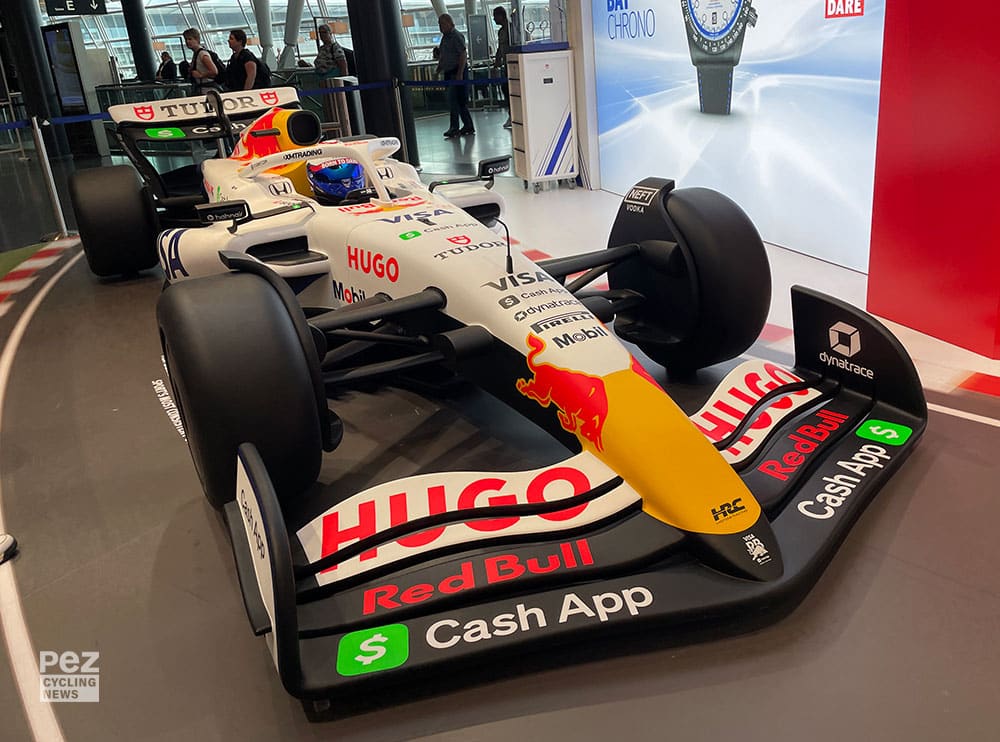
A recent deep dive by The Athletic into the Mercedes Formula 1 team showed how the program has recently eclipsed most NBA teams in terms of franchise value, highlighting how it has accomplished such massive growth in enterprise value over just a few years. In contrast, while UCI President David Lappartient complains to the media about cycling’s structural problems, Formula 1 provides a real-world case study in how a properly structured league model, built around stable franchises, guaranteed participation, and a hard cost cap, can transform a once-volatile sport into one of the most lucrative entertainment properties on earth. Before the FIA imposed a $145M budget cap in 2021, most F1 teams, similar to professional cycling teams, routinely lost money; today, the same operations are minting nine-figure profits and attracting large institutional investors. The cost cap didn’t just control spending; it created predictable margins and turned team ownership into a genuine equity play. The Toto Wolff run at the Mercedes (and Ineos co-owned) team is the clearest example: a team that posted a $100M loss in 2014 is projected to surpass $1 billion in revenue this year and now carries a staggering $6B valuation, more than most NBA franchises and even global soccer powerhouses like Liverpool. The critical takeaway: team owners weren’t afraid to absorb years of losses because they were investing in a franchise, an asset that would appreciate regardless of short-term sporting results.
No news here, but professional cycling, by contrast, remains locked in a structural model that, instead of building it, actively undermines long-term value. Despite operating at a similar global scale, the WorldTour still functions as a collection of temporary, sponsor-dependent projects with no guaranteed revenue, no league-wide commercial rights, and, most importantly, no mechanism for franchise value creation. And, as Visma-Lease a Bike’s recent financial disclosure shows, success on the road and in the media doesn’t guarantee balanced books. A benefactor like Gerry Ryan can pour €150M into his GreenEDGE outfit (currently called Jayco-AlUla) over a decade and walk away with nothing beyond the satisfaction of having kept a team alive; the moment a title sponsor leaves, the entire entity risks disappearing.
This patron conundrum highlights pro cycling’s key issue: investments into the sport aren’t investments at all, they’re better defined as frivolous consumption. With few willing to show the type of generosity of Ryan, it is clear that without fixed licenses, revenue sharing, or a cap that allows owners to control costs and project future earnings, cycling cannot attract the kind of deep-pocketed, long-term capital that transformed F1. As F1 teams leap from $200M to multi-billion-dollar valuations in five years, pro cycling’s teams remain essentially worthless on paper, a harsh indictment of the sport’s ongoing inability to turn itself into a modern professional league. As institutional investors trip over each other to gain a stake into nearly every professional sport, they have avoided cycling like the plague. Until cycling builds a system where ownership confers durable rights, predictable costs, and actual resale value, it will continue to rely on philanthropists rather than investors.

Recent sportswashing dialogue in cycling may have been focused on the (former) Israel-Premier Tech team, but the sport has other, equally problematic situations – particularly concerning both Saudi Arabia and the UAE. As is well-known, Saudi Arabia sponsors UCI races, and its AlUla oasis-city tourism promotion body co-sponsors both men’s and women’s WorldTour teams. While its presence in the sport (and rumored on-and-off-again role in One Cycling) may not have the same visceral immediacy as Israel’s due to the Gaza conflict, this heavy Saudi involvement nevertheless impacts pro cycling’s global image. According to Human Rights Watch and Amnesty International, the country accelerated its use of capital punishment in 2025 with more than 260 executions so far. The majority of offenders have been foreign workers committing low-level drug related crimes, or citizens convicted of attending anti-regime protests – including at least one arrested for protesting when he was a minor.
Just as troubling is the UAE’s deeply-engrained role in Sudan’s ongoing civil war, which may eventually prove to be an even greater stain on pro cycling. The country is hosting increasingly prominent UCI events, including the recent e-sport championships and the 2028 road world championships – going as far as to construct a purpose-built hill in Abu Dhabi to avoid a boring repeat of the 2016 Doha (Qatar) desert sprint finale. The escalating conflict in Sudan is being waged by the country’s incumbent SAF army and the paramilitary Rapid Support Forces (RSF), which receives the majority of its military supplies – including everything from high-tech armaments to professional mercenaries – from the UAE. The civil war took a deeply tragic turn when RSF forces liquidated nearly the entire population of the besieged city of El Fasher in late October. According to several sources, as many as 69,000 non-Arab people may have been systematically murdered by RSF soldiers in the operation, with massacre sites and mass graves so large that they were visible from commercial satellite imagery. Two weeks of mass killings in El Fasher may exceed the death toll recorded in two years of the Gaza conflict – a sobering realization to which the UN, diplomatic missions, and global news outlets are just coming to terms.
The UAE has downplayed its role in the Sudan conflict and the El Fasher atrocities, including a debunked disinformation campaign it waged through its SKY Arabia news channel, but it has since tacitly admitted that its foreign policy approach in supporting the RSF may have been “wrong.” The evidence was overwhelming as journalists and observers documented UAE’s use of a clandestine airstrip in nearby Chad to stage arms deliveries, as well as the outflow to Abu Dhabi of up to $13 billion in RSF-mined gold in exchange. UAE negotiators lauded a recent U.S. facilitated peace plan, but it was soundly rejected by the recognized Sudan government and SAF for favoring the UAE-backed RSF – and because the proposal came from the very place supplying the RSF’s weapons. It is worth noting that Saudi Arabia has also been supporting the SAF, and the UAE’s competition with Saudi Arabia for global political influence may be a component in this tragic morass. International backlash against both countries may be blunted, however, due to their considerable and ever-increasing international monetary and media influence. A key question is whether international sports like cycling will recognize and somehow acknowledge the potential danger to their image and integrity, or will they just continue to take the money?
 What’s next – Enhanced cycling KOM championships?
The Enhanced Games continue to move forward, despite this week’s news that its questionable anti-trust lawsuit against the World Anti-Doping Agency and two Olympic swimming governing bodies was dismissed this week by a New York court. WADA said it was “pleased that common sense has prevailed” and that it “remains focused on its core mission of protecting clean sport for the good of athletes around the world.” Nonetheless, the doping-friendly competition is scheduled for May 21 to 24 next year in Las Vegas, and will include swimming, running and weightlifting, and will offer as much as $1 million for every new world record set. It has been opposed by virtually every Olympic sports federation and national anti-doping organization, but has continued moving forward with highly visible public support from Donald Trump, Jr. and high-profile investors like Peter Thiel. Meanwhile, event organizers say that it “aims to embrace capitalism, reuse existing infrastructure, pay athletes fairly, focus on key sports, break world records and promote improvements.” Time will tell, but as we discussed earlier, perhaps the biggest impact would occur if new records are not established – which might then reasonably cast suspicion on the “cleanliness” of current Olympic sport – or if athletes are injured during their enhanced preparation or competition, which could lead to meaningful reinforcement of anti-doping legislation and make all sports safer.