
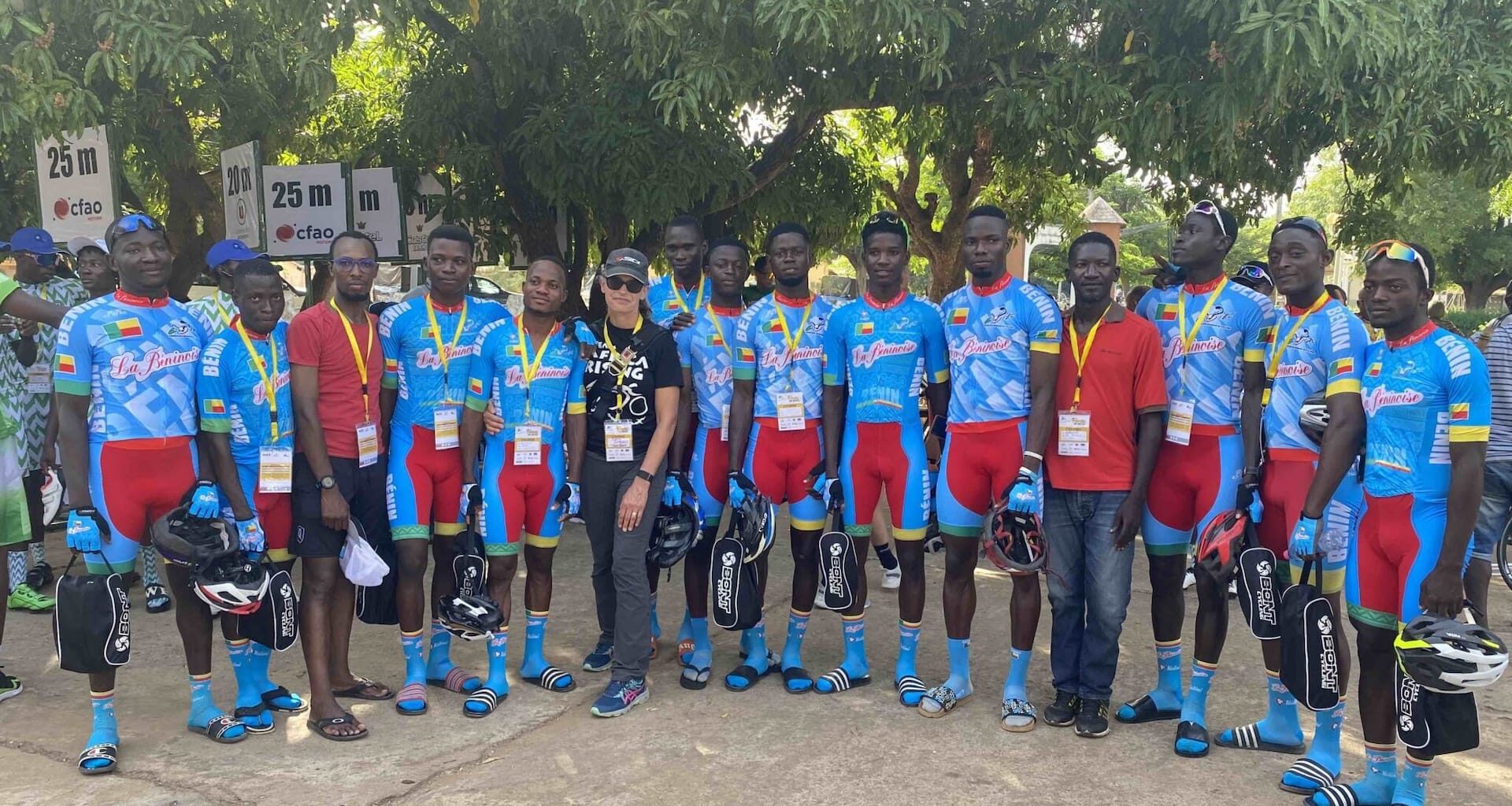
At Team Africa Rising, virtual performance centers and Zwift are being used to help find the next generation of African pros.
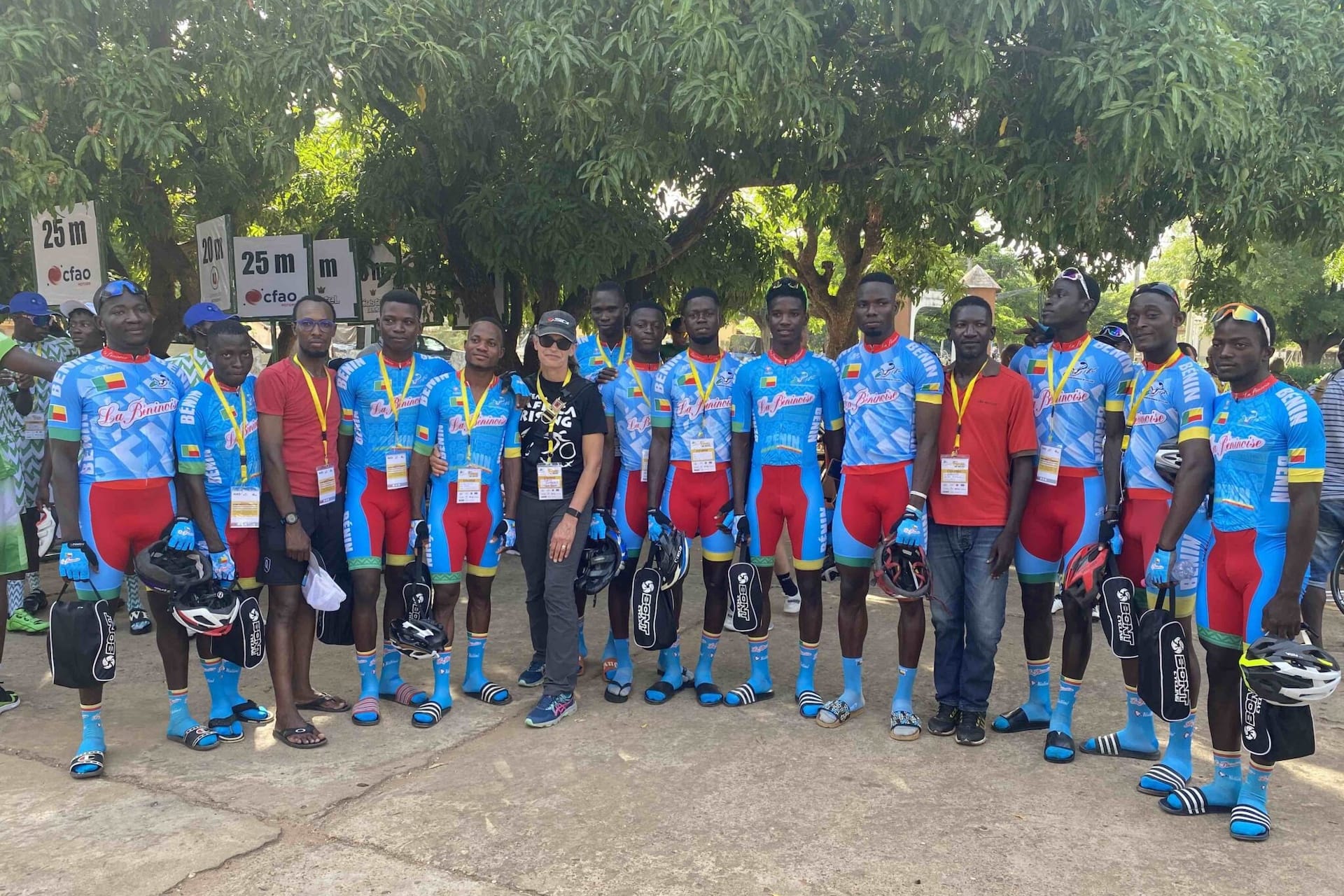
Riders from Benin, with Adrien Niyonshuti (third from left) and Kimberly Coats (sixth from left).

Two men exchanged knowing nods across a sea of frenzied fans pressed against the barricades in Kigali, Rwanda. The locals, some seeing cycling for the first time, were there to witness the inimitable spectacle and the grand arrival of 2025’s road world champion, Tadej Pogačar. Others in the crowd came to mark a symbolic moment – the day cycling had finally arrived in Africa. But not so for these lifelong cycling yeomen.
One of those men is Jeremy Ford, the marketing and communications hand who has spent more than a decade working pro bono at the Qhubeka charity and Team Africa Rising to champion cycling’s growth throughout the continent. He would have envisioned this scene in his dreams.
The other is Doug Ryder, now the general manager of the UCI ProTeam Q36.5, who can trace his own path back to the early 2000s and the South African UCI Continental outfit that he founded: MTN Energade. That team would eventually evolve into the first African setup to be awarded a WorldTour license: Dimension Data, in 2016.
For Ford and Ryder, and others doing the unglamorous grassroots work, the sport has been in Africa a long time. It is established, growing, and cultivating roots that may not have been as firmly planted without the leverage of virtual cycling and long-term partnerships in the indoor cycling space.
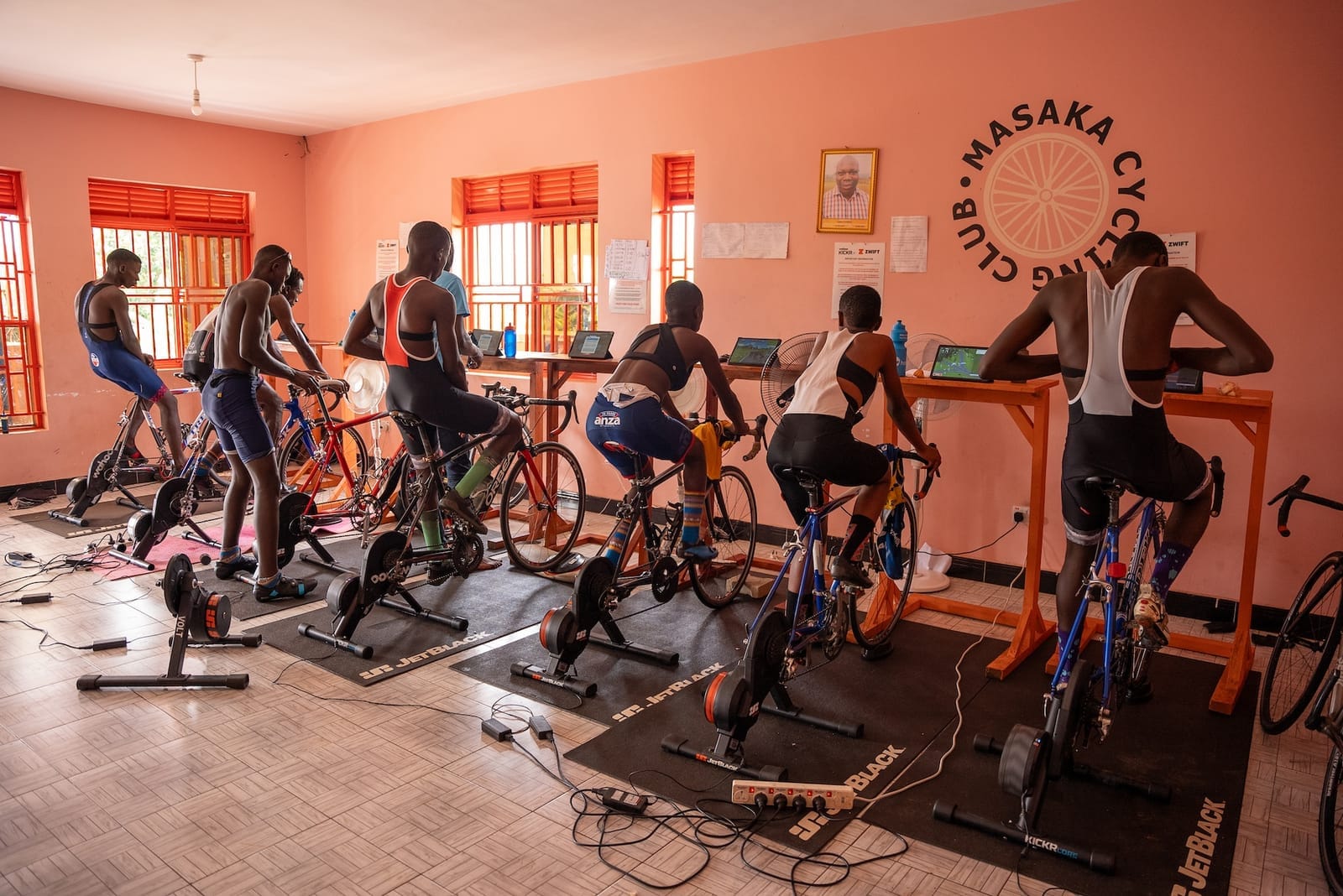 Uganda’s Masaka Cycling Club has previously shown that smart trainers and Zwift can be used to help identify and develop riders.The moment
Ford recalled the exchange he shared Ryder. “If Adrien hadn’t beaten Jock in that mountain bike race, none of this would have happened,” he told Escape, recounting Ryder’s revelation.
The “Jock” he was referring to was Jonathan Boyer, who, in 1981, became the first American to ride in the Tour de France. Fast forward 25 years, “that mountain bike race”, which took place on September 16, 2006, was the inaugural Wooden Bike Classic, featuring a mix of mountain bikes, single-speeds, and even a downhill event to showcase Rwanda’s utilitarian handmade wooden bikes. The “Adrien” was the then-19-year-old young man from eastern Africa: Adrien Niyonshuti.
The young Rwandan mountain bike debutant shockingly beat Boyer that day, kicking off a cascade of seminal moments Ford described in this story he shared with Escape. It was a result that seemed inconsequential at the time but ultimately set in motion the chain of events that led to Rwanda hosting the Road Cycling World Championships two decades later and reshaping the trajectory of cycling development across Africa.
This post is for paying subscribers only
Subscribe now
Already have an account? Sign in
Did we do a good job with this story?
👍Yep
👎Nope