
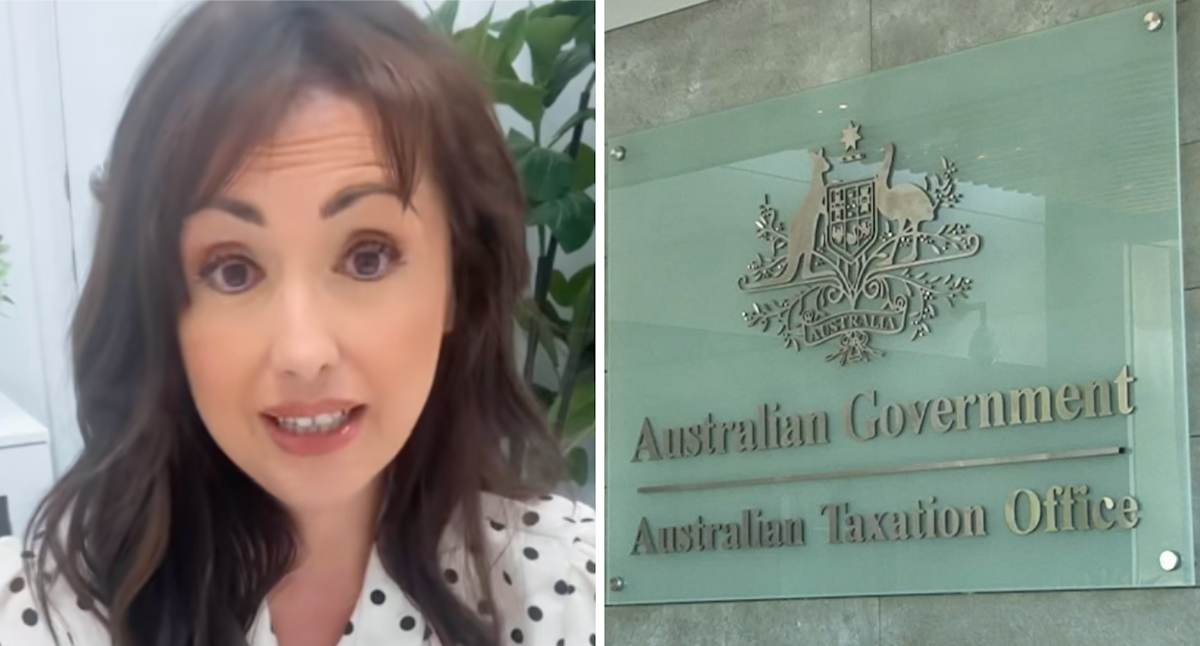
 Tax Invest Accounting director Belinda Raso has urged taxpayers impacted by the change to act now before the Jule 30, 2027 deadline. (Source: TikTok/ATO)
The Australian Taxation Office (ATO) has put thousands of Australian professionals splitting income with their spouses and children on notice. For decades, small businesses have been able to run under a trust, proprietary limited or partnership arrangement and legally split income with family so the income is taxed at an overall lower rate.
But the rules will soon change, with the ATO releasing a new guideline outlining how this will now be treated. From June 30, 2027. The ATO will see personal services business using an income-splitting strategy as tax avoidance under Part IVA.
Tax Invest Accounting director Belinda Raso told Yahoo Finance thousands of small business owners would be impacted by the change, including professionals like lawyers, accountants and tradies.
RELATED
“This is a massive change because a lot of small businesses, especially mum and dad operations, were set up like this. This is a major turning point for how small business is going to be run,” she said.
The ATO is targeting businesses that are producing income under personal services income (PSI).
PSI rules were introduced 25 years ago and aim to ensure that income earned due to an individual’s personal skills or efforts is primarily taxed in the name of the individual, regardless of the business structure they operate from.
PSI is income that is generated by you or another entity that is mainly a reward for your personal effort or skill.
Do you have a story to share? Contact tamika.seeto@yahooinc.com
PSI doesn’t include salary and wage earners, businesses that supply and sell goods, income that’s generated from an asset, or income from a business structure where there is more than one income generator.
“It’s tradies as well. It’s not just IT professionals or professionals. This is where it’s going to encompass a lot of people,” Raso said.
“They need to know that if there’s only one person generating the income, they then can’t split that income.”
The ATO’s approach will apply from June 30, 2027, and it has said it will not backdate its compliance push provided taxpayers have made a “genuine attempt” to move into a low-risk arrangement.
It has set out examples of what will be considered low- and high-risk arrangements, and will focus on high-risk arrangements.
Raso said the ATO had drawn a “line in the sand” and encouraged impacted taxpayers to reach out to their accountant now to get their affairs in order.
“Touch base with your accountant and say, look, I’ve looked over this, I believe we’re in a high-risk category, we need to restructure, we need to change, we need to ensure that there’s no income splitting,” she said.
Raso expects the ATO will “go hard” on the issue, given they have given taxpayers 18 months’ notice of the change.
Raso noted the ATO would be treating this as tax avoidance, not tax minimisation, which could have very significant consequences.
“Tax avoidance will then lead to an open-ended audit, basically, with the ATO. Then there are not only penalties, there’s also surcharges as well. There’s a big difference between tax minimisation and avoidance,” she said.
Get the latest Yahoo Finance news – follow us on Facebook, LinkedIn and Instagram.