
Continuing our Review of 2025, Dezeen’s editorial team members have each picked their favourite buildings of the year, including new cultural institutions, homes, hotels, skyscrapers and even an architecture school.
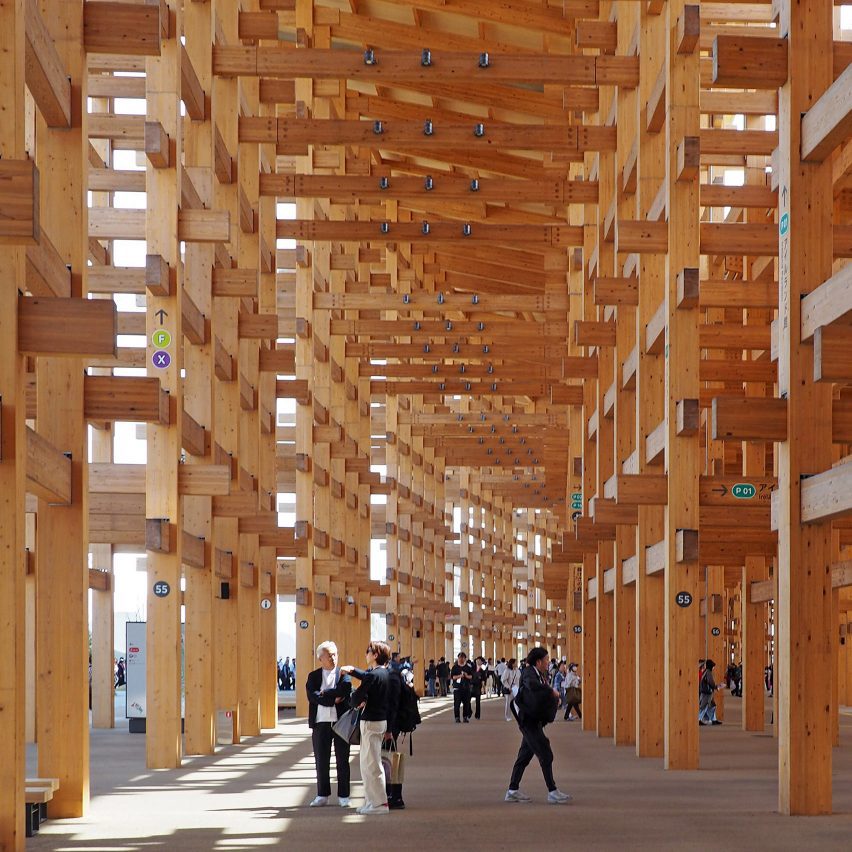 Photo by Lizzie Crook
The Grand Ring, Japan, by Sou Fujimoto
chosen by Cajsa Carlson, deputy editor
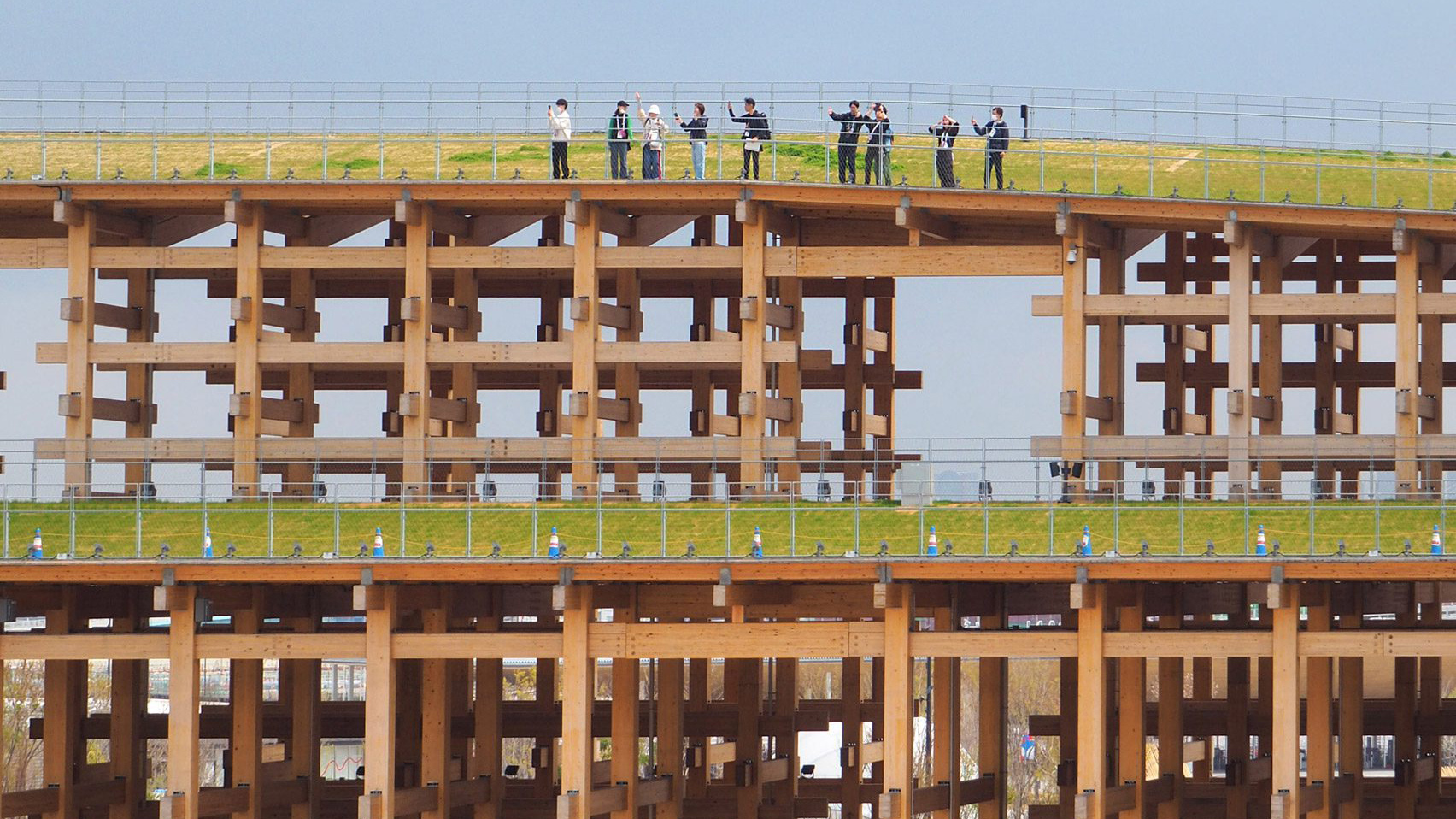
“Standing in front of The Grand Ring, architect Sou Fujimoto‘s immense wooden structure, was a breathtaking experience that introduced visitors to Expo 2025 Osaka.
“The world’s largest wooden structure, The Grand Ring encircled the exhibition space and let visitors walk along it to see the pavilions on show from above.
“While its size was impressive – the ring had a circumference of two kilometres and a diameter of 700 metres – it was its beautifully intricate wooden construction that made The Grand Ring by far my favourite architecture project this year.”
Find out more about The Grand Ring ›
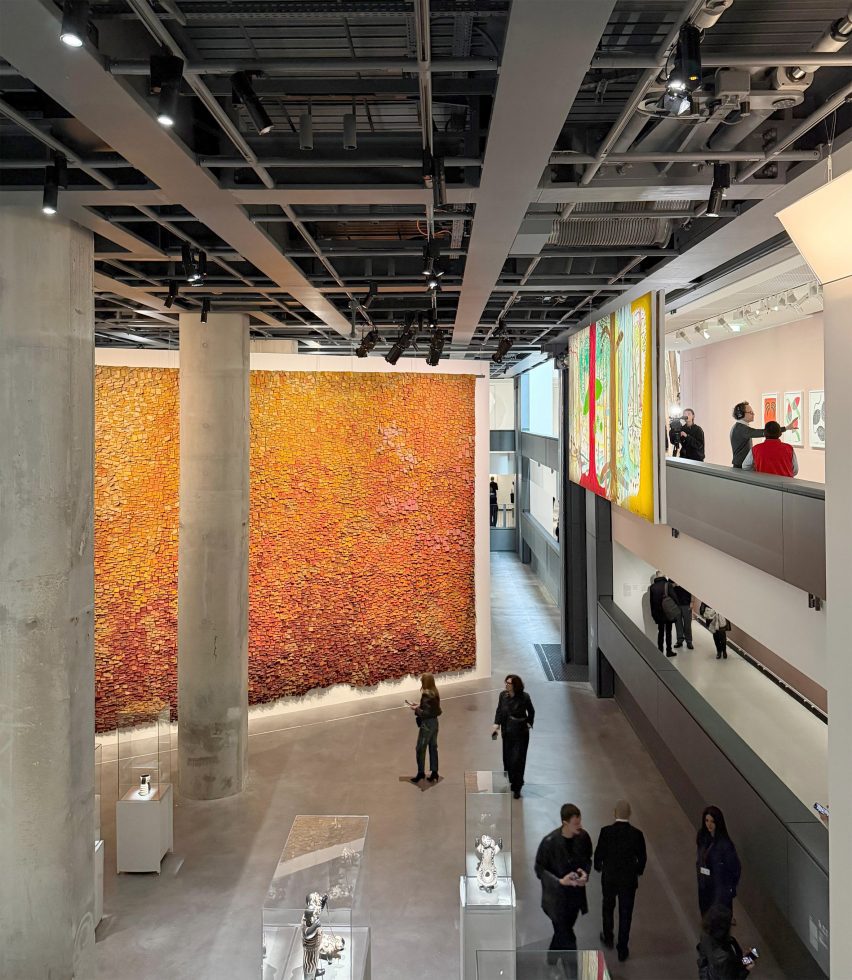 Photo by Tom Ravenscroft
Fondation Cartier, France, by Jean Nouvel
chosen by Tom Ravenscroft, editor
“Many buildings claim to be kinetic, with moveable elements, but in reality, very few actually are. At the Fondation Cartier, Jean Nouvel has created an entire building that can transform, and transform at a colossal scale.
“A typical looking Haussmann-era block hides an unexpected and dynamic interior. The main, central gallery contains five massive moving floors that can be used to completely configure the space.
“The whole exercise is beyond impressive. Each of the floors is around 300 square metres – the size of three one-bedroom apartments, weighs around 200 tons and can be raised and lowered on massive columns into 11 positions. This means the institution can be arranged into over 150,000 configurations.”
“A great addition to Paris and a modern art foil to the neighbouring Musée du Louvre.”
Find out more about Fondation Cartier ›
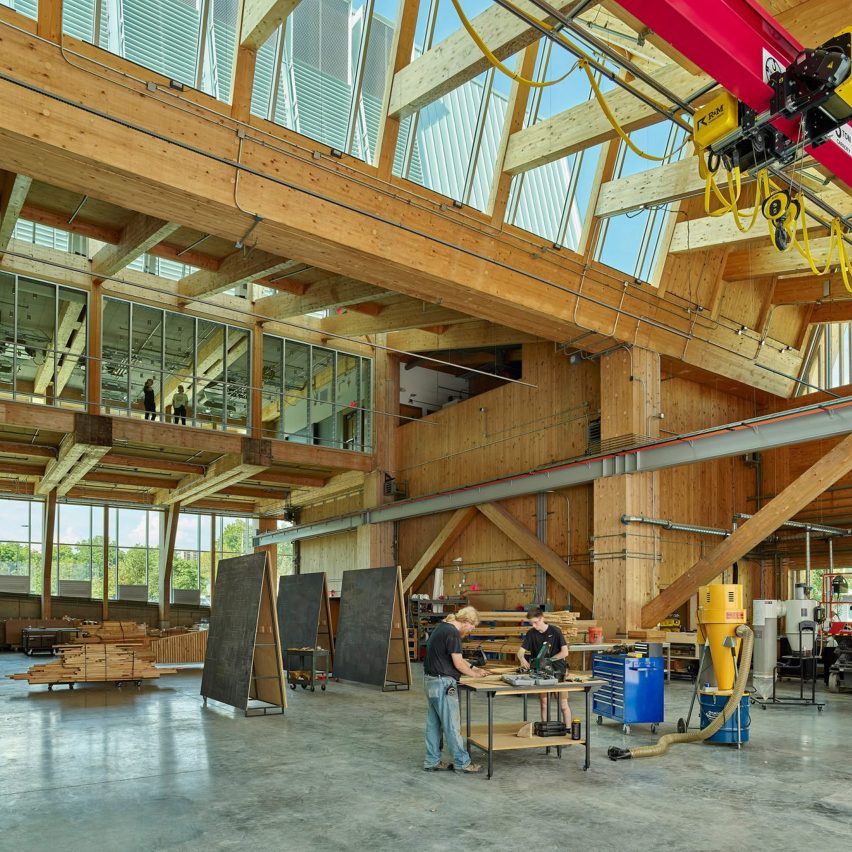 Photo by Tim Hursley
Anthony Timberlands Center, USA, by Grafton Architects
chosen by Lizzie Crook, architecture editor
“As a survivor of architectural education, I’m somewhat surprised that my most revisited project of 2025 was an architecture school.
“I love Grafton Architects‘ bold positioning of a loud and messy workshop right at the heart of the building, with a viewing gallery suspended overhead. It embraces the dynamic, collaborative nature of studio culture while affirming the importance of making.
“What’s more, the building puts mass timber in the spotlight. Its exposed framework is described as a new professor for the university, which gives the building an almost endearing character.”
Find out more about Anthony Timberlands Center ›
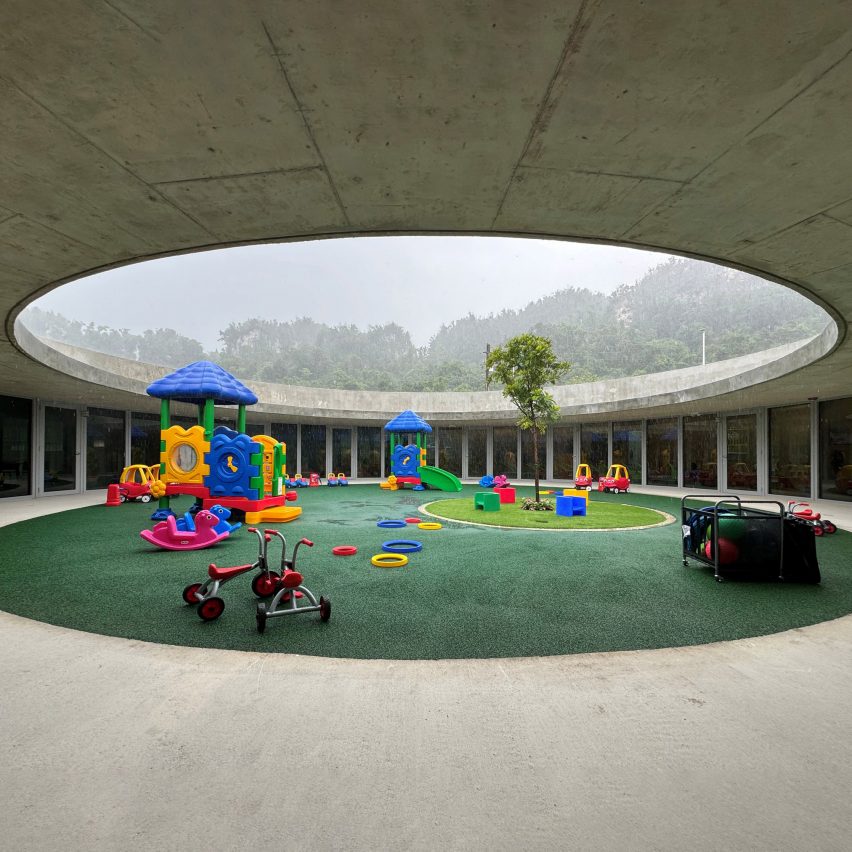 Photo by Paola Quevedo Santos
Ciales Kindergarten, Puerto Rico, by Toro Arquitectos
chosen by Ellen Eberhardt, US reporter
“I find this project unusual in the best way. The embrace of playful, simple volumes, such as a circle and rectangle, call to the building’s use as a kindergarten and the use of colour is considered and fun.
“The central green and play structures look almost surreal in contrast to the surrounding concrete and I think the school rushing to play at the centre is a prime example of how architecture can guide humans, even if they’re little.”
Find out more about Ciales Kindergarten ›
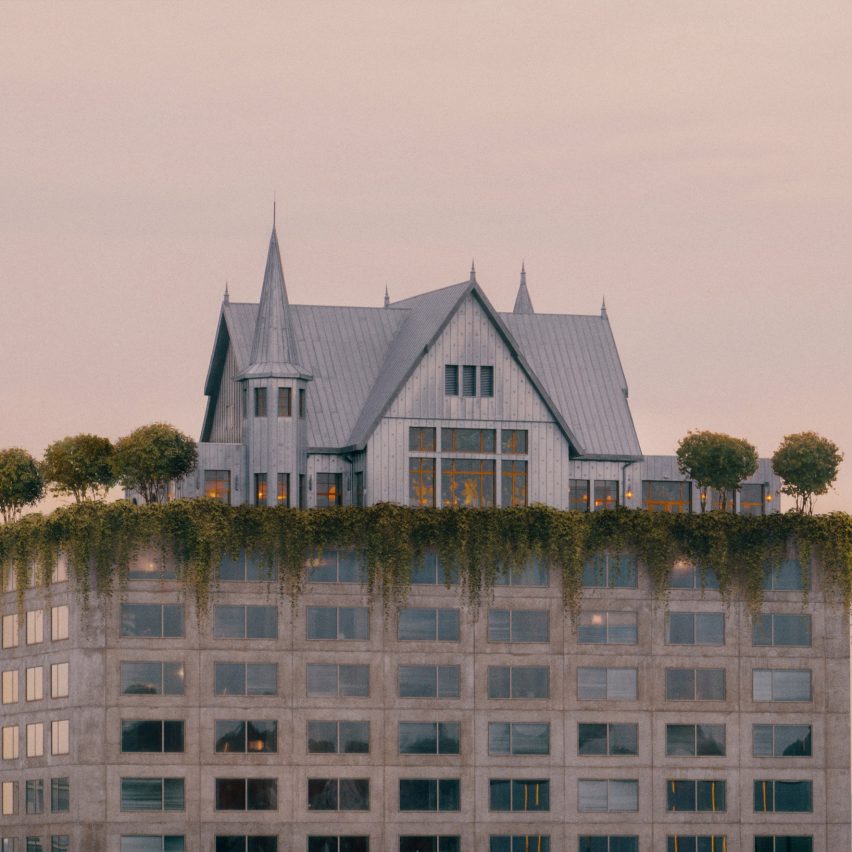 Photo by Julius Hirtzberger
Maison Heler, France, by Philippe Starck
chosen by Jennifer Hahn, design and environment editor
“My favourite building this year actually comes from a designer, the inimitable Philippe Starck, who decided to plonk a facsimile of a 19th-century mansion complete with multiple turrets on top of a nondescript high-rise in Metz, France.
“I love the whimsy of it all. The whole thing is surreal and frivolous yet somehow not tacky – maybe because it’s clad entirely in metal – and makes a very convincing case for more whimsical architecture.”
Find out more about Maison Heler ›
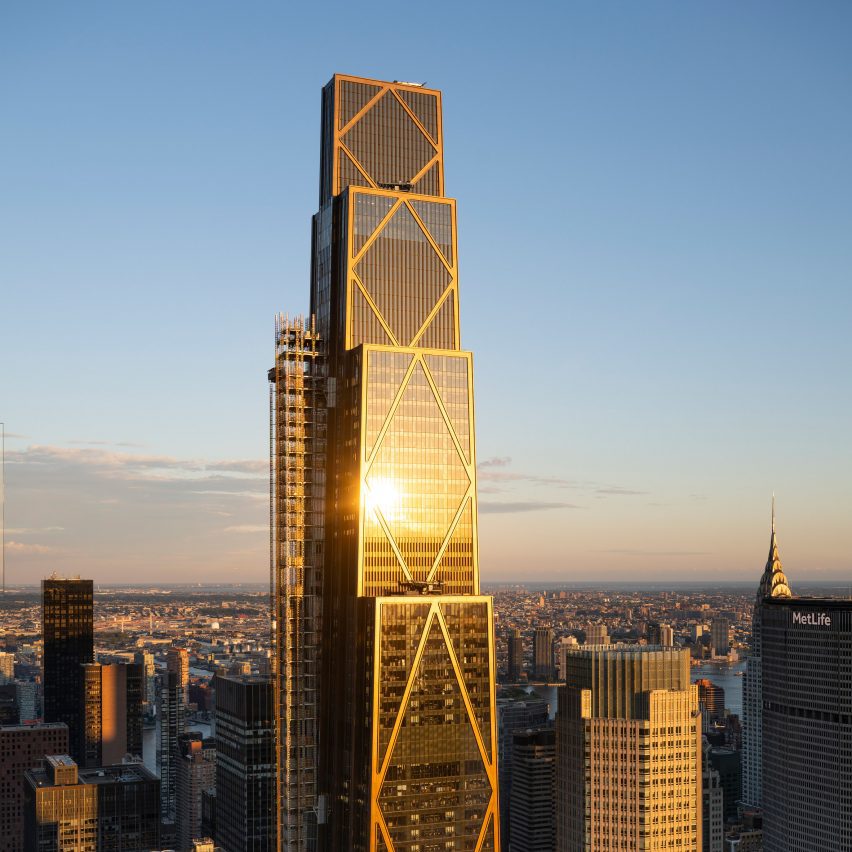 Photo by Nigel Young
JPMorgan Chase headquarters (270 Park Avenue), USA, by Foster + Partners
chosen by Ben Dreith, US editor
“Few buildings on the US scene were as greatly anticipated or widely commented upon as Foster + Partners‘ 1,388-foot-tall (423 metres) skyscraper for banking empire JPMorgan Chase in the heart of Manhattan. It is both a dystopian citadel and a beacon for New York’s continued skyscraper culture and financial prowess.
“With massive steel supports that fan from the street, the building is immaculate in terms of engineering, material usage and form, but raises questions about excess in building and preservation, as it was built on the site of one of the most extensive skyscraper demolitions in history, though the studio claims a significant portion of that structure was reused.
“It also marks a notch on Lord Foster’s belt, a trophy in steel and glass among the greats that graciously departs from the glass-curtain-wall ubiquity of recent skyscraper construction.”
Find out more about JPMorgan Chase ›
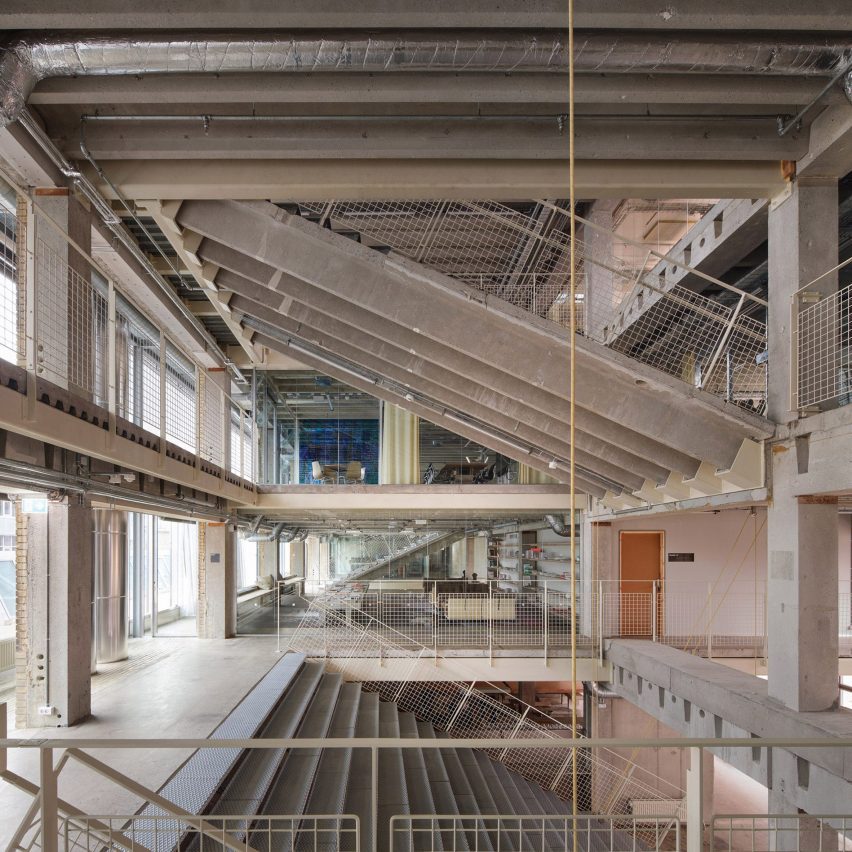 Photo by Hampus Berndtson
Thoravej 29, Denmark, by Pihlmann Architects
chosen by Amy Peacock, architecture reporter
“Thoravej 29 is a celebration of building reuse, and a shining example of what can be accomplished when architects are committed to making the most of the materials they have to hand.
“Originally built in the 1960s, Danish studio Pihlmann Architects transformed the former factory into an arts space and community hub, and in an incredible achievement, repurposed 95 per cent of the waste materials produced in the reconstruction, including all of the waste concrete.
“In the process of creating double and triple-height spaces, concrete floors were ripped out and refashioned as staircases and furniture. Discarded bricks from the external walls were reused for paving, and wooden doors were shredded and formed into particle boards for shelving and tables.
“It’s a joy poring over the photos of this building and piecing together how its parts were made from its past.”
Find out more about Thoravej 29 ›
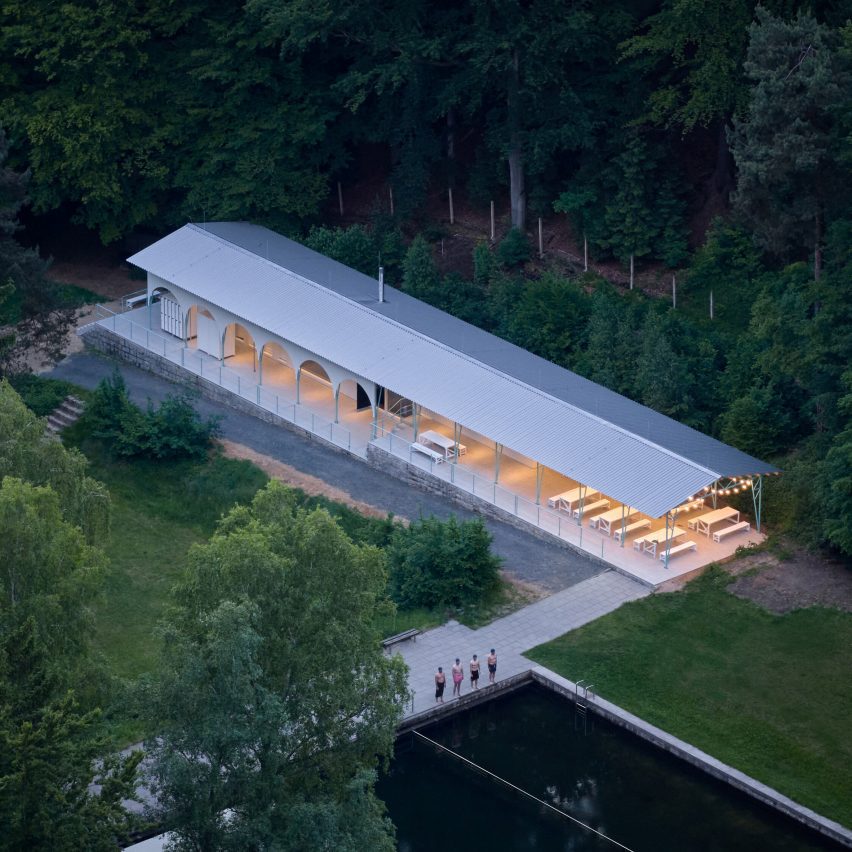 Photo by BoysPlayNice
Lesní Koupaliště, Czech Republic, by Mjölk Architekti and Marie Vondráková
chosen by Nat Barker, features editor
“There’s something strangely uplifting about this modest little public pool house in the spruce forests surrounding Liberec.
“Having been all but destroyed by a fire in 2010, it was willed back to life by the heroic efforts of Mjölk Architekti and Vondráková, who took on the project as volunteers and secured vital funding from the city government.
“The design itself – a combination of cross-laminated timber, corrugated aluminium and turquoise-painted steelwork – prioritised minimising costs and build complexity, but the result is very pleasing nonetheless, and the facilities an excellent public resource.
“All in all, it’s a commendable demonstration of the potential for architects to make a positive difference in their communities.”
Find out more about Lesní Koupaliště ›
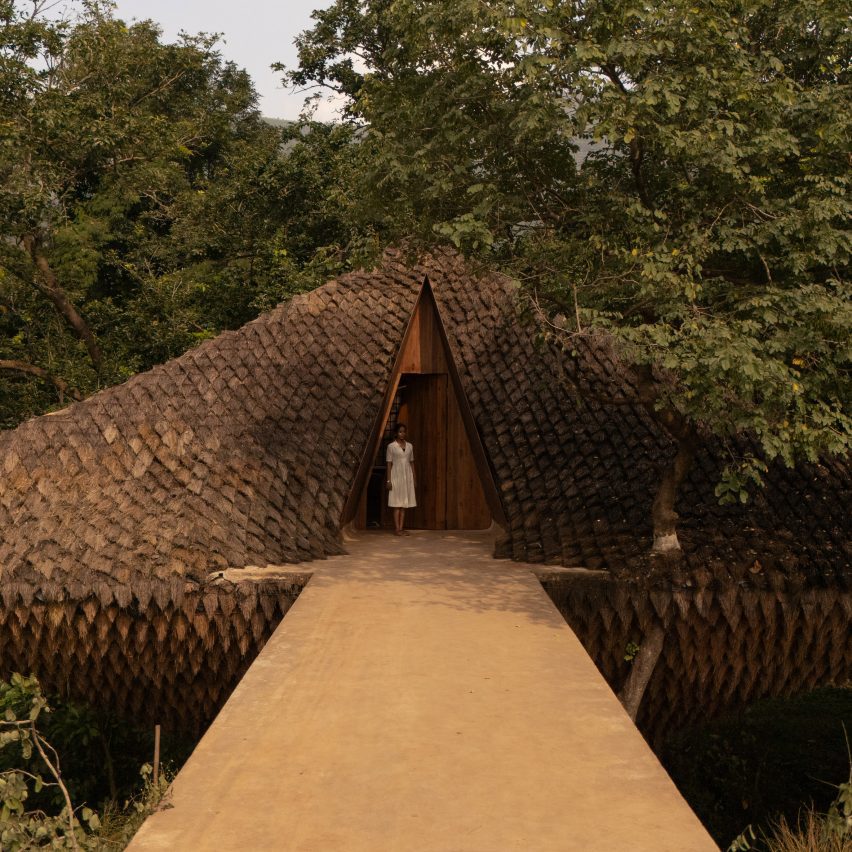 Photo by IKSHA
Bridge House, India, by Wallmakers
chosen by Starr Charles, editorial assistant
“Architecture studio Wallmakers created this organic, bridge-shaped home to stretch over a seven-metre-deep gorge in rural Karjat, India.
“Its minimal steel structure is camouflaged with a mixture of mud and local grass thatch, creating a scale-like texture that decorates the home’s exterior and interior.”
Find out more about Bridge House ›
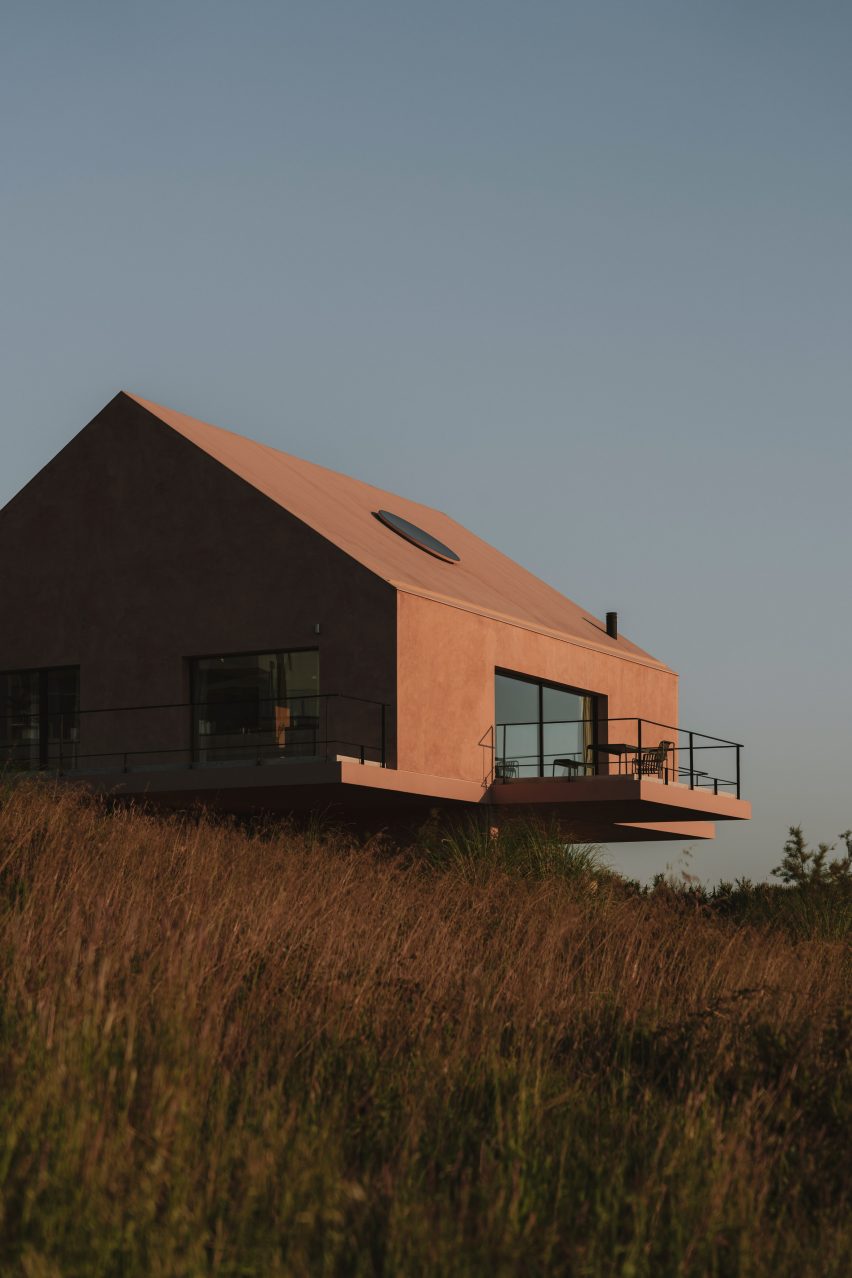 Photo by Clemens Poloczek
Casa Plaj, Portugal, by Extrastudio
chosen by Jane Englefield, design and interiors reporter
“The architects of this Portuguese holiday home defined it as ‘radically simple’, and they were completely correct.
“Gabled in form and clad in earth-toned lime plaster, the simple building’s cantilevered terraces mean it’s perched invitingly right on the edge of its hillside site.”
Find out more about Casa Plaj ›
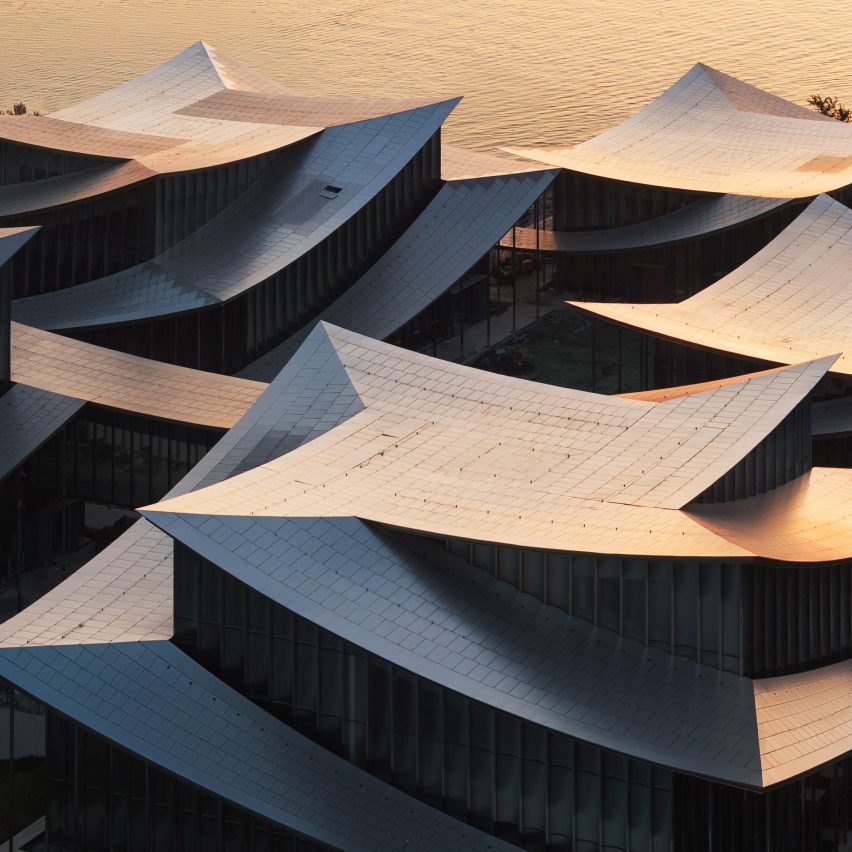 Photo by Ye Jianyuan
Suzhou Museum of Contemporary Art, China, by BIG
chosen by Christina Yao, China editor
“Reflecting how Western architects are increasingly recognising local culture in their work in China, BIG‘s Suzhou Museum of Contemporary Art captures the aesthetics of traditional Chinese architecture combined with the Danish studio’s obsession with roof design.”
“The tiled eaves of traditional Chinese homes are translated into flowing rooflines in an abstract and modern way. Courtyard gardens are arranged in between various gallery pavilions, connected by the corridors sheltered by the continuous roof, a homage to the centuries-old Suzhou gardens.”