

Since Labor’s victory, the threat of right‑wing populism has not gone away — it has grown increasingly palpable. Carl Rhodes reports.
AS RIGHT-WING POPULISM spread across the globe, many hailed the Labor Party’s decisive May election victory as proof Australia had bucked the trend. New analysis suggests the nation may not be as immune as once thought.
The Australian Election Study, released last month, found the former opposition leader Peter Dutton to be the least popular major party leader since the survey began in 1987. Respondents branded him uninspiring, untrustworthy, dishonest, and weak as a leader.
This result suggests that Dutton’s loss was not proof that Australians had rejected right‑wing extremism. It might just be that he was not very good at populism. More troubling, the evidence suggests the threat remains very real in Australia.

Temu Trump’s failure
At the time of the election, Dutton’s defeat was widely attributed to the so‑called “Trump effect” of him being negatively associated with the United States leader. Dutton was even mocked as a Temu Trump, a cut-price imitation of a president who had been sworn into office only months earlier.
The policy positions of the two men were strikingly similar, bordering on political plagiarism. Macho conservatism manifested in harsh immigration measures, blinkered and racialised nationalism, and ruthless cuts to government jobs and spending.
Dutton may have mimicked Trump, but he lacked the narcissistic certainty that insulated the U.S. President from self-doubt. What emerged instead was a politician who flip‑flopped when public support showed signs of waning, while unable to fully inhabit the populist talking points that had been scripted for him. He could not muster the confidence, charisma and emotional appeal that successful populist leaders deploy to mobilise discontent.
Consider successful populists around the world, like Donald Trump himself, but also Nigel Farage in the United Kingdom. Both possess a peculiar ability to mask their social and economic privilege while convincingly arguing that their interests align with those of ordinary citizens struggling under the weight of an economy that has sacrificed shared prosperity on the bonfire of global neoliberalism.
By contrast, Dutton came across as little more than an unreliable imitator lacking the acumen to be the nation’s leader. In hindsight, it looks like his populist policy platform was not the problem, Australians simply couldn’t warm to him.
The mainstreaming of Australian populism
Since Labor’s victory, the threat of right‑wing populism has not gone away, it has grown increasingly palpable. Nationwide March for Australia rallies in August and October drew thousands. Framed around nationalism, anti‑wokeness, and blaming immigration for the cost of living crisis, the Melbourne rally in August featured a speech from Thomas Sewell, leader of the neo‑Nazi National Socialist Network.
Flags waved, and crowds cheered as Sewell warned of the cultural demise of “proud and true and thoroughbred” Australians if “we allow these wokes to rule over us, and tell us what we’re to think.”
The rallies were not confined to fringe extremists. Among the protestors were mainstream politicians, including One Nation leader Pauline Hanson and MP Bob Katter. Hanson, long the stalwart of Australian populism, is experiencing a resurgence. Polling last month showed her party’s primary support at 14 per cent, its highest since 1998. If an election were held today, One Nation could emerge as Australia’s third-largest political party, with roughly 12 seats.
Elsewhere in mainstream politics, Liberal MP Andrew Hastie has emerged as a frontrunner to take over as leader of his party. This is the man who, in September, argued that immigration was not only making Australians feel like “strangers in our own home”, but that it was also impoverishing people by fuelling high house prices.
Calls have also grown for Australia to form a new political movement akin to Nigel Farage’s populist Reform Party in the UK, replete with policies to abandon carbon taxes, lower the minimum wage, cut immigration, reduce government spending and services, and increase economic isolationism. Meanwhile, Australia’s richest woman, Gina Rinehart, has been advocating for Australia to adopt Donald Trump-style policies to “make Australia great”.
The evidence is unmistakable: in 2025 right‑wing populism has not only survived but entered the mainstream.
Australia’s populist test lies ahead
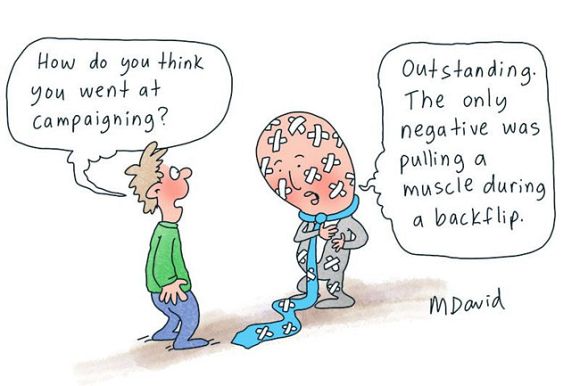
Now that the dust has settled on May’s federal election, it is clear that Peter Dutton’s loss was not the defeat of populism. The danger did not disappear with one botched election campaign. It lives on in the possibility of a more compelling, disciplined populist stepping forward to exploit the currents of anger and distrust already being stoked.
Genuine economic discontent is the fuel beneath the populist fire. Housing affordability has collapsed, locking younger Australians out of home ownership while rents soar. Wages have stagnated while inflation has eroded household budgets, leaving more and more people excluded from prosperity. Meanwhile, the number of Australian billionaires keeps growing.
Without robust political solutions to these fundamental economic problems, populist leaders will continue chasing power by falsely blaming immigration, climate policies, and globalisation for economic pain. Mass rallies, rising support for One Nation, and mainstream politicians echoing populist rhetoric all signal a movement gathering strength.
The lesson is stark. Populism did not die with Dutton, it is simply that it is waiting for the right messenger, someone who can fuse grievance with charisma, and channel discontent into power and division. When that figure arrives, Australia will face its true populist test.
Carl Rhodes is Professor of Business and Society at the University of Technology, Sydney. He has written several books on the relationship between liberal democracy and contemporary capitalism. You can follow him on X/Twitter @ProfCarlRhodes.
Support independent journalism Subscribe to IA.


Related Articles