
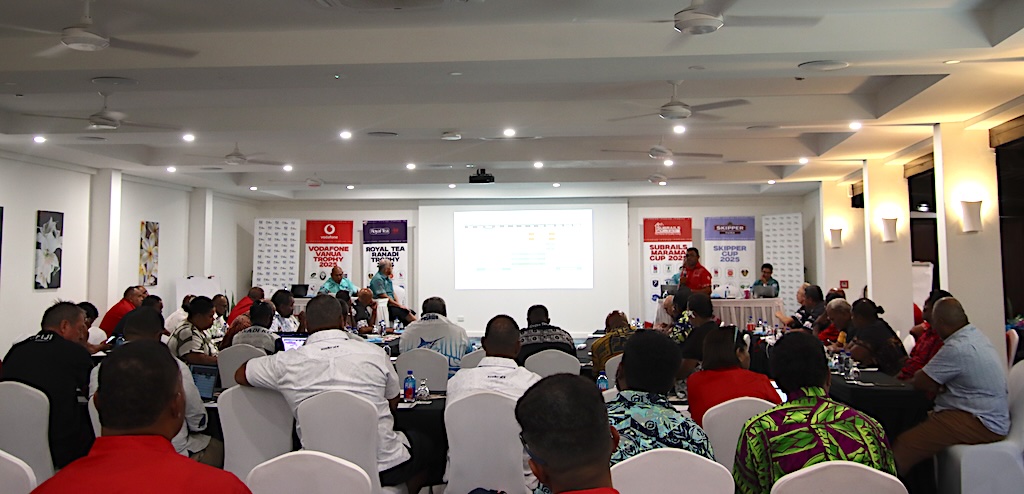
SUVA, 6 December 2025 – The Fiji Rakavi Football Union (FRU) held its General Assembly today, uniting provincial representatives, board members, and rugby stakeholders to reflect on the 2025 season and chart the way forward under a new 10-year strategic vision.
Chairman John Sanday: “A Moment of Reflection and Responsibility”
Chairman John Sanday opened the session by commending the patience and support of member unions over the past year. He reflected on the board’s first full term, marked by both challenges and growth, and reaffirmed Fiji Rugby’s strengthened global position following its inclusion in the 2027 Rugby World Cup and the new Nations Championship.
“This is not just a board achievement, it belongs to everyone who has ever worn the white jersey, coached in our villages, or cheered from the sidelines,” Sanday said.
He urged the unions to embrace rugby as a force for social progress, addressing pressing issues such as gender-based violence, drug abuse, and youth engagement, while upholding the sport’s core values of respect, discipline, solidarity, and teamwork.
“Our strength must not only be measured on the scoreboard but in the health of our rugby ecosystem,” he added.
Acting CEO Koli Sewabu: “Working Together for Solutions”
Acting CEO Koli Sewabu described the assembly as a “solutions-focused workshop,” designed to encourage open discussion and joint problem-solving among unions.
Key topics included:
A full review of the 2025 domestic competitions and proposed changes for the 2026 season.
Updates on the Strategic Plan 2026–2036, now entering its final drafting stage.
Fiji’s hosting of the Nations Cup in July 2026, and continued collaboration with the Fiji Rugby Players Association.
Sewabu said the new strategic plan would emphasize sustainability, performance excellence, and unity.
“Our aim is to build a stronger, smarter, and more connected rugby system across the country.”
High Performance Update: Building a Global-Ready Rugby System
FRU’s General Manager for High Performance, Naca Cawanibuka, presented a data-driven review of the 2025 season, highlighting the success of the Skipper Cup as Fiji’s key development platform, producing more than 60% of the Flying Fijians squad.
He outlined the 2026 competition calendar, which includes:
Skipper Select vs Fijian Drua match on 6 February 2026, Churchill Park, Lautoka.
Increased support for women’s competitions, aligned with international fixtures.
Introduction of a Crossroads 7s registration system, linking club participation to provincial affiliation for improved governance and player discipline.
Cawanibuka emphasized the importance of improving game tempo and discipline, noting that Fiji’s average ball-in-play time (31 minutes) still lags behind international standards (36–38 minutes).
“We must build a healthy ecosystem that prepares every player, coach, and administrator to compete and thrive globally,” he said.
Union Voices: Challenges, Pathways, and Women’s Rugby
Tailevu Rugby Union President Joe Rodan called for stronger financial systems and standardized player transfer fees to compensate unions for talent development. He also urged greater investment in data education, referee consistency, and marketing partnerships.
“We have to think big and aim high, if others can commercialize their rugby brands successfully, so can we,” he said.
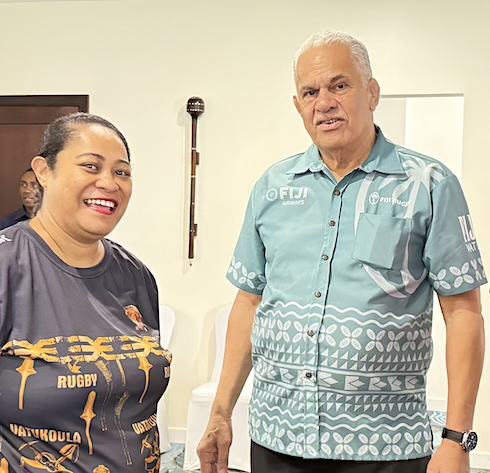
Talei Tuitoga from Vatukoula Rugby Union highlighted the unique struggles faced by smaller unions in developing women’s rugby, especially with limited player numbers and funding.
“Women’s rugby is growing, but it’s still young compared to the men’s game, which has had a century of development,” Ms Tuitoga said.
She called for flexibility in team formation rules and suggested combining smaller unions to ensure women’s teams can compete consistently.
Ms Tuitoga also appealed for greater funding support and partnerships with organizations or companies that could sponsor women’s rugby, even suggesting tax rebate incentives to encourage private sector involvement.
“If given the right resources and opportunities, our women can be just as competitive as the men,” she added.
Jeremy Duxbury of Ba Rugby Union echoed calls for greater national coordination, emphasizing the need for a unified policy framework across rugby bodies, government agencies, and the Fiji Sports Council.
“Right now, there’s duplication and limited communication between the main sporting organizations. A national policy aligning everyone would benefit the entire rugby ecosystem,” he said.
Mr Duxbury also urged the FRU to rebuild lost development pathways that once bridged local and international levels, referencing the former Colonial Cup and Pacific Rim competitions.
“There’s now a big gap between the Skipper Cup and the Flying Fijians. We need to revive age-grade and provincial pathways like under-18s and under-20s competitions to keep talent progressing,” he explained.
He further advocated for better player data tracking from youth to senior levels and stronger partnerships with industries such as forestry and mining to support rugby programs and community development.
Looking Ahead
The Assembly concluded with a strong message of collaboration and accountability. The FRU will now finalize its Strategic Plan 2026–2036, confirm the 2026 competition calendar, and roll out new systems to support women’s rugby, player development, and financial transparency across all unions.
Chairman Sanday closed the session by reaffirming rugby’s role in nation-building:
“We are one family, united by rugby and driven by a shared goal: to build a stronger, smarter, and more responsible future for Fiji Rugby.”