
A series of videos is reigniting debate over the future of humanoid robots.
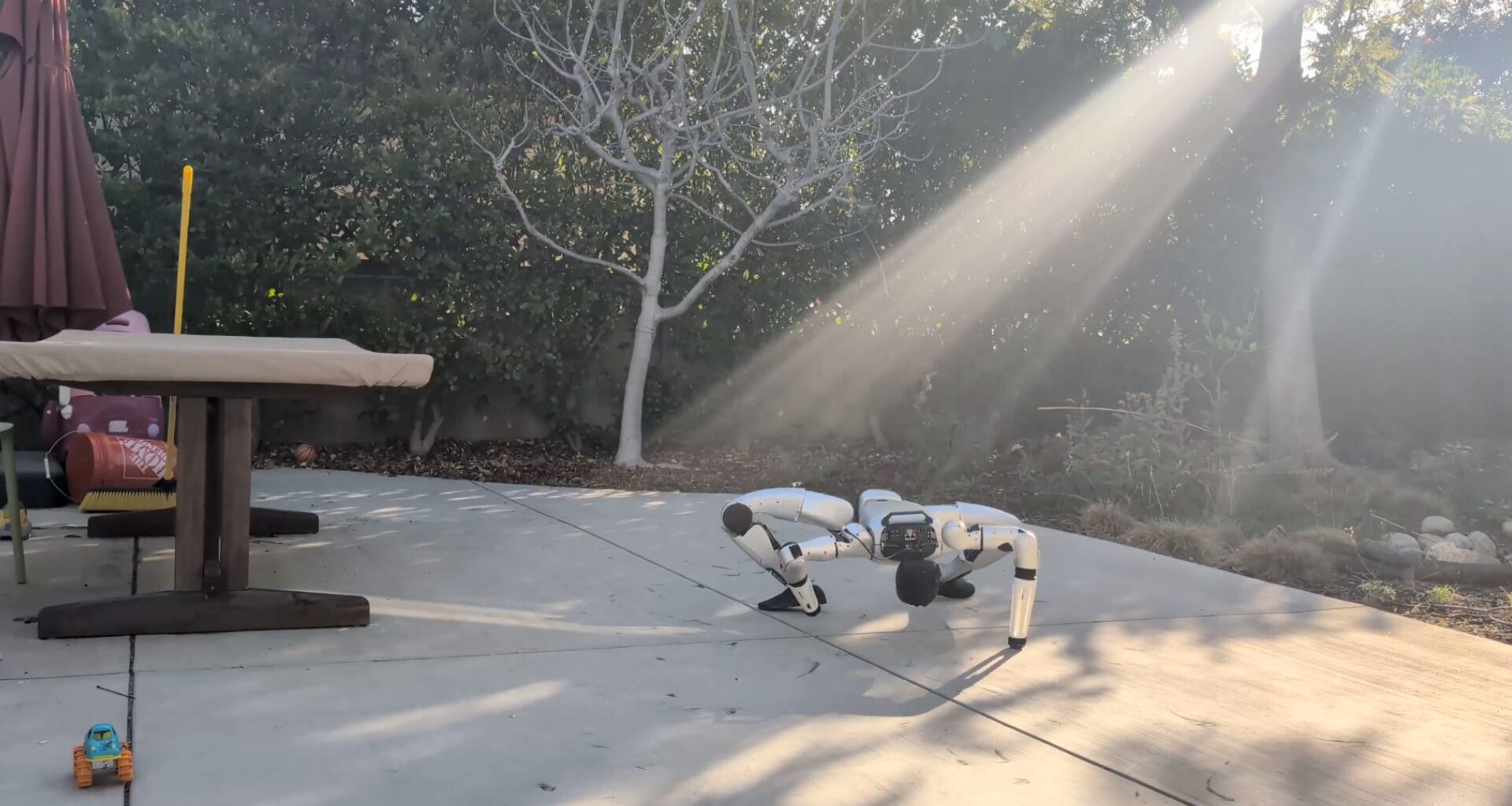
The videos shared by robot builder and researcher Logan Olson from October show the training exercise that enables a humanoid unit to suddenly drop to all fours and crawl at an unnerving speed and with unnerving flexibility.
The robot’s limbs contort with unsettling precision, blurring the line between engineered motion and animal instinct. The clips have quickly spread online, sparking equal parts awe, amusement, and unease.
In the final video shared on X in November, its limbs twist and fold in ways that resemble a creature rather than a machine, prompting both fascination and discomfort. The clip underscores how today’s humanoids are evolving far beyond simply walking and waving.
Creepy robot crawls
Olson is pushing the boundaries of what humanoid robots can do, and his latest experiment has captured widespread attention online. This spring, Olson got his hands on a Unitree G1 unit and has since shared numerous videos showcasing his tinkering. But his most recent footages take the robot to an entirely new level — and an eerily unsettling one.
A series of videos released shows G1 seamlessly shifting from a standing position to crawling on all fours in just a few seconds. Its limbs bend and twist with uncanny precision, giving it the appearance of a human-robot-spider hybrid. Another clip shows the robot scuttling across the floor, both impressive and disconcerting, prompting reactions ranging from awe to genuine unease.
Olson achieved this feat using an AI-based “crawl policy,” a control system he developed to allow the G1 to transition smoothly between standing, walking, and crawling. When he added a Halloween-themed disguise, the robot’s lifelike movements became even more striking, reportedly startling neighbors.
The viral clips underscore just how quickly AI and robotics are advancing. Tasks that once seemed impossible — fluid, coordinated humanoid motion beyond walking and running — are now achievable, hinting at a future where humanoid robots operate with unprecedented dexterity and realism.
Humanoid motion evolved
Agility Robotics AI research scientist Chris Paxton recently highlighted Logan Olson’s viral video of a crawling humanoid robot to illustrate an important point about robotic motion.
In a post, resharing the footage, Paxton emphasized that many humanoid robots are essentially “faking” humanlike movements. “It’s a property of how they’re trained, not an inherent property of the hardware,” he wrote, noting that robots are capable of far stranger and faster motions than the graceful walking or running humans expect. He added, “Human motion is most efficient for humans; robots are not humans.”
According to Futurism, the discussion is especially timely as companies like Tesla, Figure, and China’s Unitree compete to bring humanoid robots to the mass market. While significant progress has been made—Paxton even suggested that running is now almost commoditized—experts question whether the human form is the best choice for every task.
Chris Walti, former lead of Tesla’s Optimus project, told Business Insider earlier this year that humanoid robots are not ideal for factory work, which prioritizes speed and repetitive motions. “Humans weren’t designed to do repetitive tasks over and over again,” he said, reports Futurism.
Olson’s unsettling video underscores the versatility of humanoid robots: while a crawling robot may not be the most practical or appealing, it demonstrates just how much these machines can do beyond mimicking humans.