
Is your boss really spying on you?
getty
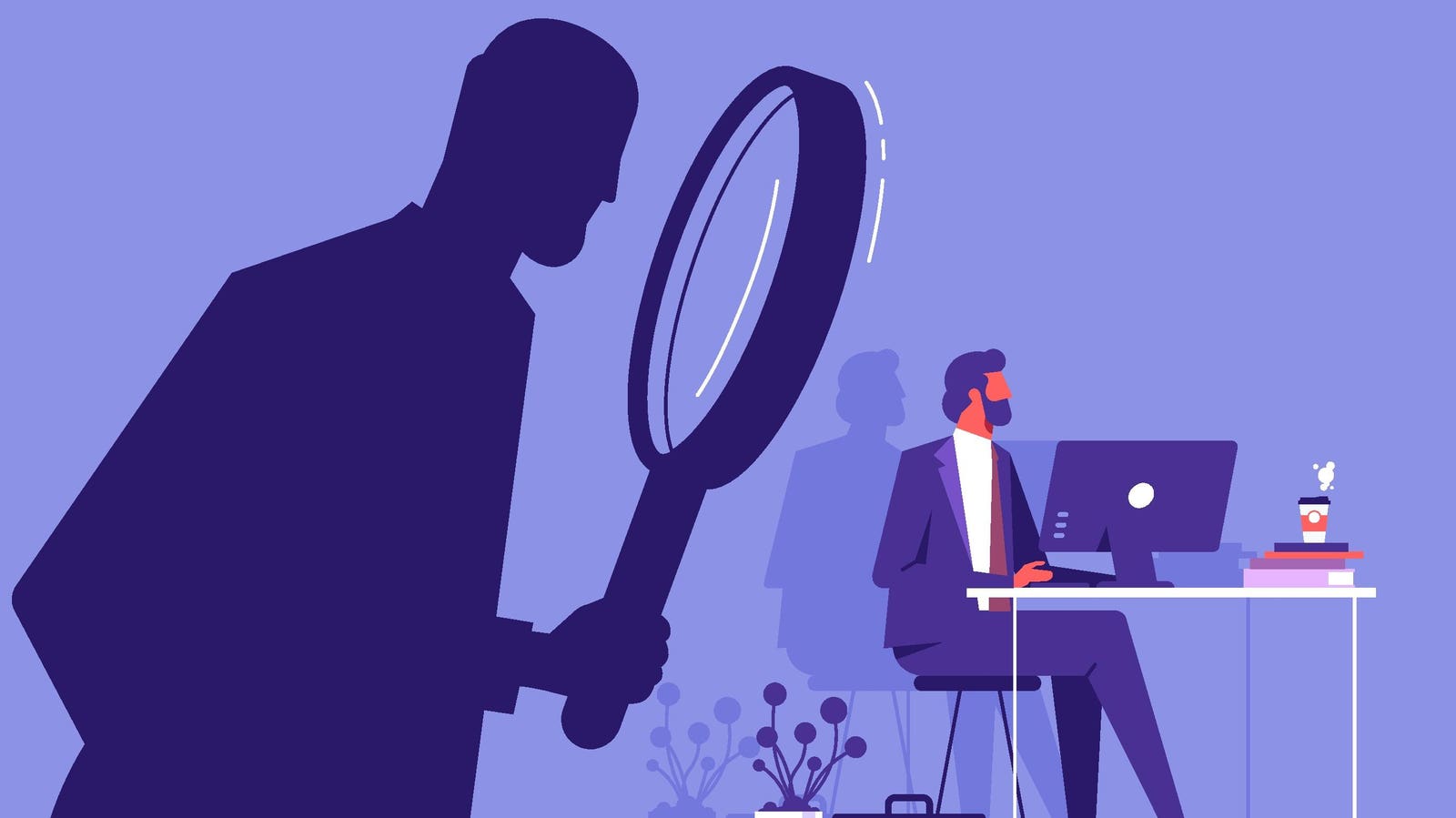
Just ahead of the holidays, two separate updates have worried employees they may now be spied on by their bosses at work. Both affect apps you’re probably already using on your phone and computer. And neither give you an opt out. So, what’s going on?
Microsoft’s update came first. Per Reader’s Digest, “Microsoft Teams is introducing a new feature that automatically detects your office location when you connect to the company Wi-Fi. This tool is designed to help organizations verify employee attendance and track who is physically present in a specific building.”
This update was initially due to go live in December, but has now been pushed back to February. Maybe because “Microsoft’s location tracking sparked a privacy firestorm,” WebProNews suggests. “Reports highlight surveillance fears, legal concerns, and employee backlash, as the (now changed) December 2025 rollout nears.”
ForbesYou Should Stop Texting On Your iPhone Or Android Phone NowBy Zak Doffman
This won’t track your location outside the office, but it will disclose when you’re not in the office, even if your virtual background makes it difficult to tell. The new feature is disabled by default, but can be enabled by company IT admin, and if they do that, you have no way to beat the system — other than coming to work, of course.
The other headline-grabbing, holiday season update is from Google. This lets companies archive your end-to-end encrypted RCS messages on company-controlled systems, in a format where they can be read by your employer despite that encryption.
This is designed for compliance, and so you can’t individually opt out. You will be warned it has been enabled, though, and can then take your sensitive messaging elsewhere. Nothing other than Google Messages is affected. WhatsApp, Signal, Facebook Messenger, Telegram and other over-the-tops are not archived.
The new Messages update works by creating a bridge between Google Messages and the archiving platforms already in use by your employer. It solves the problem of encrypted content being inaccessible beforehand. Google stresses that it’s designed for regulated industries, but it’s not limited to those. Any company can play along.
We have seen the same privacy backlash as with Teams. “Google Messages now lets your boss spy on your chats,” BGR warned. While Pocket-Lint reported that “Google Messages just got a feature your boss will love (and you won’t).”
ForbesApple Warns All iPhone Users—Do Not Use Chrome Or Google AppBy Zak Doffman
Microsoft isn’t commenting on its Teams update, but Google has responded to the coverage on the change to Messages. “Older methods for archiving text messages often relied on carrier-level logging,” Google told me, “which is incompatible with modern encrypted messaging. Our new solution allows third-party archival apps to integrate directly with Google Messages on a work device.”
Both changes affect work managed devices or work profiles on personal devices. But both play into the ongoing debate as to whether users should assume everything on a work managed phone or computer is fair game. That’s already the case with email. Microsoft offers full employer controls, while Google Workspace’s quasi end-to-end Gmail encryption is company controlled, and isn’t secured by the “ends.”
According to the U.S. Government Accountability Office: “Digital surveillance tools can provide employers with information to help improve their operations and may have positive and negative effects on workers. Sometimes referred to as ‘bossware,’ these tools include cameras, microphones, computer monitoring software, geolocation trackers, phone applications, and devices worn by workers, among other tools.”
Newsweek reviewed GAO’s latest report, warning “urgent reforms are necessary to ensure employee well-being and safeguard fundamental workplace rights. The GAO’s latest report highlights these risks and urges an examination of the widespread, multifaceted effects of workplace surveillance technologies.”
What’s clear from these latest Microsoft and Google updates is that workplace surveillance doesn’t need to be surveillance focused to trigger concerns. These new changes are not designed to monitor call center productivity, toilet or smoking breaks or any other clipboard-style metric designed to manage staff.
ForbesGoogle’s Android Warning—Hackers Gain Access To User AccountsBy Zak Doffman
But both updates highlight the art of the possible and the risk that updates released for the right reasons may be used for the wrong reasons, and there are no real technical protections built into the platforms we use. What process does your company have to safeguard any monitoring of your emails, for example? You won’t know if they do.
“More than two-thirds of U.S. workers report experiencing at least one form of electronic monitoring,” one report warned last year, with “the use of surveillance technologies cutting across class, occupational, and industrial lines.”
The bottom-line — if you have a work-managed phone or computer, or a work-managed profile on a personal device, just take care in what you store, send and share.