
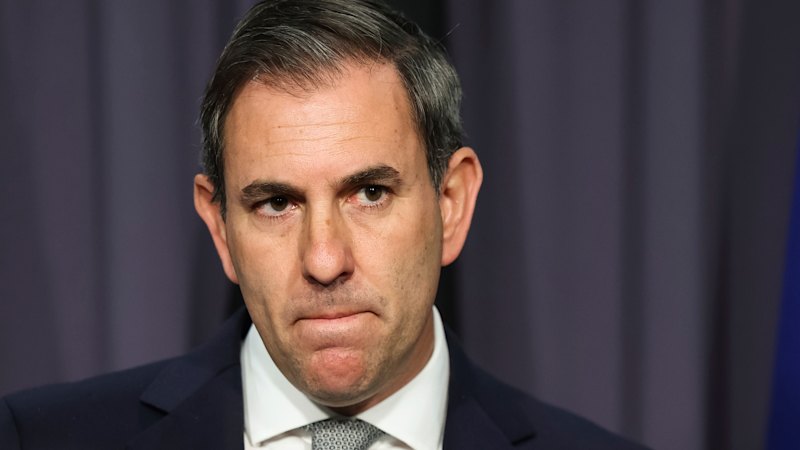
In March, Chalmers forecast this year’s deficit would reach $42.2 billion. Most analysts expect the deficit to be lower before growing again in 2026-27.
Loading
Chalmers downplayed suggestions next week’s budget update would be a “mini-budget” but revealed more tough decisions were coming.
“I’ve already announced a difficult decision that we’ve taken today as a cabinet. There’ll be other difficult decisions in the mid-year budget update as well,” he said.
A substantial shift in fiscal policy and new productivity-enhancing policies, however, are likely to be in the May federal budget for 2026-27 which Chalmers described as the “main game”.
Shadow treasurer Ted O’Brien said ending the power bill subsidy exposed the government’s handling of the budget. “Labor can’t continue to provide energy bill relief because they have run out of money,” he said.
The Productivity Commission is due within days to deliver to Chalmers its five separate reports into ways to boost economic growth. The most contentious suggestion from the commission, a cash-flow tax for all businesses, has little support within the government or the corporate sector.
There is growing pressure for Chalmers to reduce taxes on businesses in a bid to encourage more investment – pivotal to lifting productivity. Chalmers met representatives from the Business Council of Australia, which attended the August economic roundtable, on Monday.
Deloitte Access Economics used its budget update this week to argue the government should reduce the company tax rate to 20 per cent and offset that with a new super-profits tax – which would be likely to hit the resource and banking sectors – in a bid to repair the budget and increase the speed at which the economy could grow without adding to inflation.
Deloitte Access Economics lead partner Pradeep Philip said the government had made a responsible decision by ending the energy subsidies and should now make more tough decisions.
“The better way to deal with cost of living more generally is to drive supply-side reforms harder and also drive more structural tax reforms which include a tax-mix switch to take the pressure off income taxpayers,” he said.
Loading
Another area of interest is the 50 per cent concession on the capital gains tax for assets held for more than 12 months. A Greens-initiated Senate inquiry, due to report by mid-March, is examining whether the concession is adding pressure to the property market.
Deloitte Access estimates reducing the concession to 33 per cent would raise an additional $4 billion a year by the mid-2030s while reducing upward pressure on property prices.
One area the government believes it can drive cost-of-living relief is credit cards and digital wallets.
The House of Representatives’ economics committee will examine both areas in a short inquiry due to release a report by April.
Committee chair Ed Husic said that with the sharp increase in online payments, often through credit cards or digital wallets, the committee wanted to ensure the payment system was fair, accessible, competitive and affordable.
“It’s clear from existing evidence that payment schemes and digital wallets will have growing cost implications for small businesses and consumers. This inquiry offers the opportunity to do a deeper dive into that,” he said.
Cut through the noise of federal politics with news, views and expert analysis. Subscribers can sign up to our weekly Inside Politics newsletter.