
‘What’s in a word?’ is the question Shakespeare posed in Romeo and Juliet, but as the year draws to a close, the keepers of words – the publishers of the world’s dictionaries – have produced their annual picks for word of the year.
It’s a relatively new tradition, which gained popularity around 20 years ago, to try to capture the cultural mood and best sum up what’s going on in the world at the time in a single word – like a linguistic time capsule.
It’s often a long-used word that comes back into the fold with a new meaning, like Occupy, which was the word of the year in 2011.
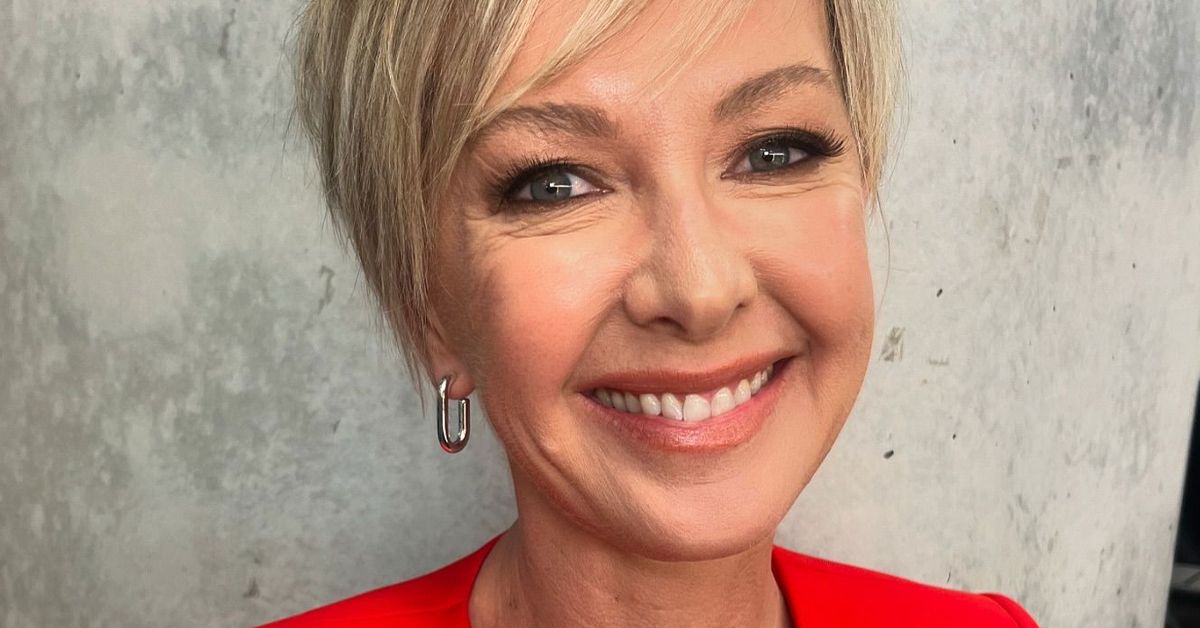
 The official words of the year are increasingly leavnig Deb Knight confused. (Instagram/@deborah_knight)
That choice reflected the protest movement that sprung up around the world, demanding more social and economic equality, starting first with Occupy Wall Street.
In 2009, tweet was no longer the noise a bird made but the social media noise the world was making on Twitter.
Increasingly, the word of the year is a new creation that becomes part of the lexicon.
Y2K in 1999 was a new word, referring to the year 2000 computer bug that was feared would shut down computer systems worldwide when the new millennium ticked over, that thankfully came to nought.
READ MORE: Meghan attempting to contact dad as he pleads ‘I don’t want to die estranged’
READ MORE: Australia’s favourite biscuit for 2025 has been revealed
READ MORE: Why royal fans can’t get over this photo of Princess Charlotte
 Famous men, like David Beckham, helped popularise the word metrosexual in 2003. (WireImage)
Metrosexual became word of the year in 2003, almost a decade after it was first created by a journalist to describe heterosexual urban men obsessed with personal grooming and fashion.
The likes of David Beckham and Justin Timberlake helped make metrosexual a commonly used word that claimed the word of the year throne.
The grammar police sometimes raise an eyebrow when the word of the year is not a single word, but multiple words or a phrase. Weapons of mass destruction was the pick in 2002 in the wake of the justification for the American allies invasion of Iraq.
Fake News claimed the word of the year title in 2017 as one of the favourite phrases used by President Donald Trump during his first Presidency to dismiss media scrutiny.
 2017 saw fake news named word of the year, thanks to Donald Trump. (AAP)
Some people lost their minds when the Oxford English Dictionary chose an emoji as word of the year in 2015, but it was a great reflection of what we were all texting each other that year.
Hashtag was also a terrific choice in 2014, considering the traction of hashtag-related trends on social media – #covid19, #blacklivesmatter, #YOLO.
Australian words of the year are, like our culture, often humorous or tongue-in-cheek.

Endangered Australian words we just don’t hear anymore
Last year’s winner from the Macquarie Dictionary was Enshittification, summing up the feeling many of us had about the decline in products and services on offer.
Democracy Sausage was a great word of the year choice in 2016, reflecting the national pastime of consuming a snag on bread on offer on election day at many polling booths, often as a fundraiser for schools and community groups.
 In 2016, democracy sausage took out the word of the year title. (AAP)
And I’m not sure if I’m just old and out of touch with popular culture or the dictionaries coming up with these words of the year are trying to justify their existence by being too clever by half, but recent picks are words I’ve never heard of and definitely never heard being used before they claimed the annual title.
Bachelor’s handbag for a roast chicken from the supermarket? It’s funny and I like it as a term to sum up the easy takeaway meal choice from the supermarket for single men, but I’d never heard anyone use that phrase before it won word of the year in 2022.
Cost of Living was definitely the dominant concern in 2023 but I’d never heard anyone use the phrase cossie livs before it was crowned word of the year.
I know Australians like to shorten words, but give me a break!
And this year’s winner from the Macquarie Dictionary?
A lot of their shortlist was bad enough, with terms like bathroom camping. When have you ever heard someone say “I’m going bathroom camping” when they go to the loo to avoid doing work or just want some me time?
How many people commonly say “I just ate that outfit” or “we just ate that game” as another way of saying they did well?
Ate might be slang, but is it seriously so much a part of the lexicon or such a reflection of the society and times we live in that it should make it to the shortlist for word of the year?
 Knight says she’s “rarely heard” the short-listed words of the year in everyday use. (Instagram)
The winning word, AI slop, might age better when we look back at the rubbish artificial intelligence has started churning out in its infancy but even that number one pick is a phrase I’ve rarely heard in everyday use.
Call me a cynic, but those sort of flash-in-the-pan words or phrases feel more like a ploy to capture a headline and have people scratching their heads about what these terms mean than really capturing the word of the year.
Clickbait would be a better contender to not only capture the growing desperation of the diluted media to capture eyeballs, but to also perfectly sum up the way some of these word-of-the-year lists are heading.
FOLLOW US ON WHATSAPP HERE: Stay across all the latest in celebrity, lifestyle and opinion via our WhatsApp channel. No comments, no algorithm and nobody can see your private details.