
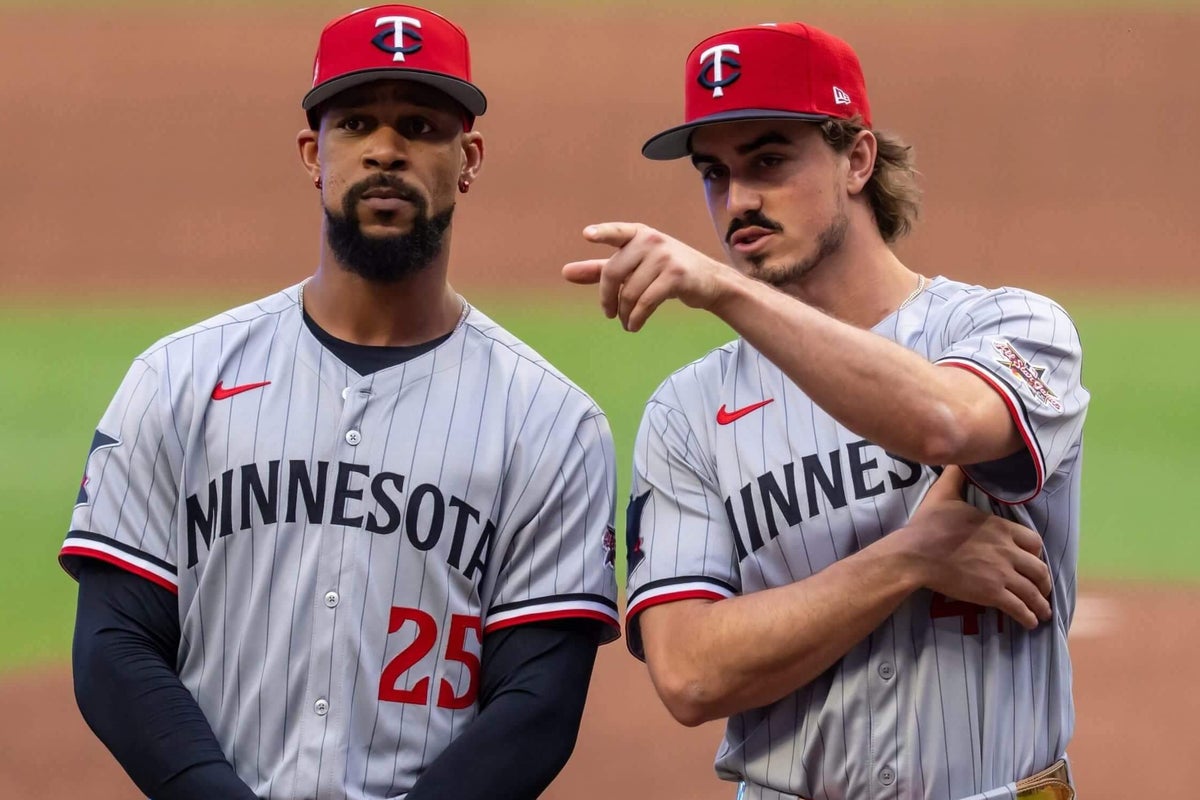
ORLANDO, Fla. — The winter meetings are but a day old, and already the industry is hearing a different tone from the Minnesota Twins, one focused on improvement rather than tearing down.
Agents and opposing teams seeking trade partners say there’s a noticeable difference in how the Twins front office is discussing its plans for the 2026 season compared to its discussions at last month’s general managers’ meetings.
Whereas before there seemed to be a lack of clarity about direction — which led to trade speculation surrounding All-Stars Byron Buxton, Joe Ryan and Pablo López — now the Twins seem more certain about their plans and are holding off on potential blockbuster deals.
Twins president Derek Falvey and general manager Jeremy Zoll confirmed the difference in tone early Monday evening. The shift is the result of several months spent convincing ownership that the foundation of the Twins’ major-league roster is worthy of an upgrade rather than a further teardown, one that began when the club dealt away 10 players ahead of the July 31 trade deadline.
“A month ago, I was direct and honest in meetings we had,” Falvey said. “I said, ‘I’m not sure I’m in a position right now to tell you exactly where we’re headed. I’m not in a position to move the ball forward much.’ Now, it’s a little more clear that we have been able to move the ball forward. … At this week’s meetings, there’s maybe a little more formal substance to some of those conversations.”
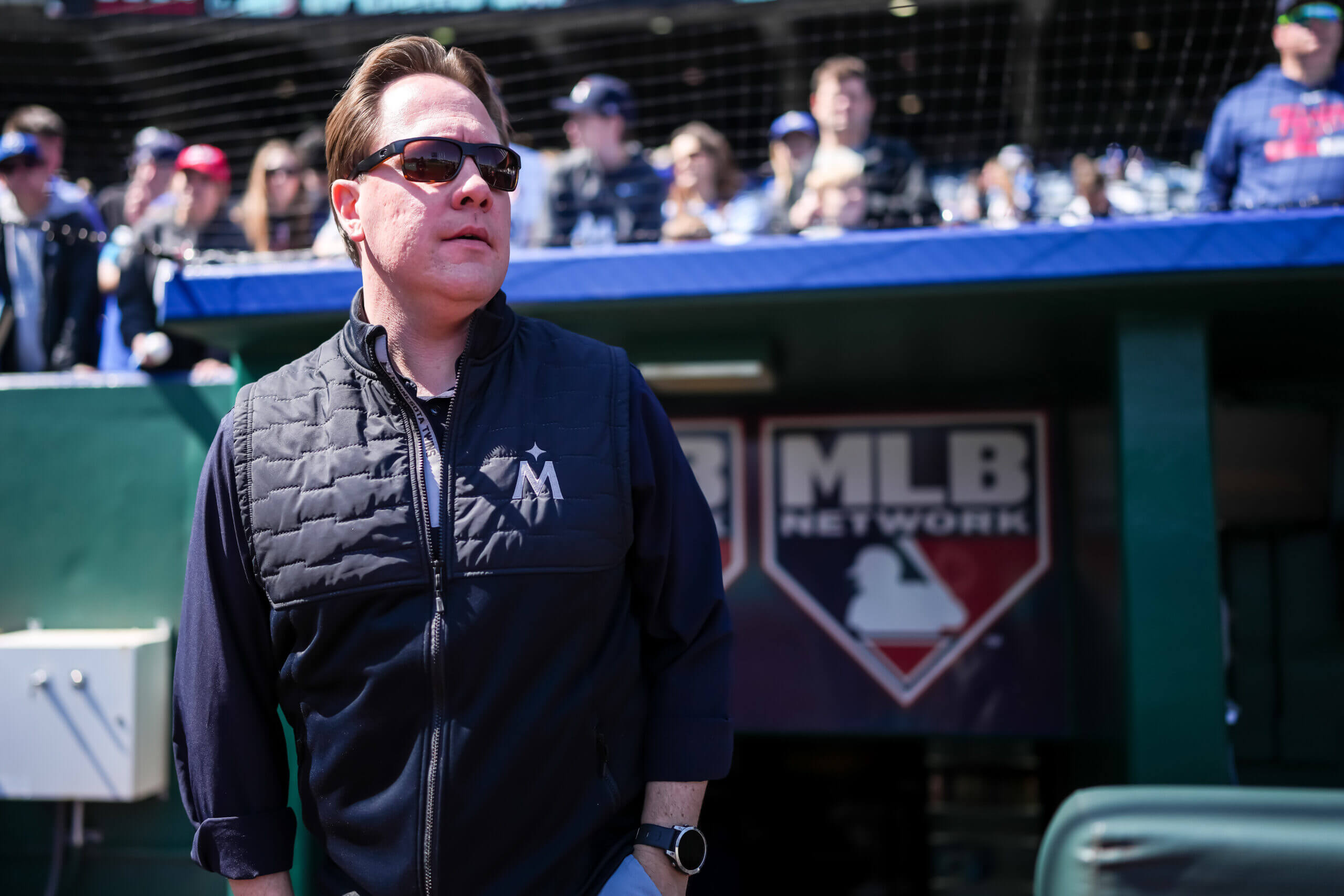
Derek Falvey has convinced ownership of a change in approach this offseason. (Brace Hemmelgarn / Minnesota Twins via Getty Images)
Falvey indicated during last month’s GM meetings that he hoped for an opportunity to start rebuilding the team’s roster, but wasn’t certain ownership wouldn’t eventually yank the ball away from him at the last minute, like Lucy and Charlie Brown.
The team’s initial messaging prompted speculation about whether the Twins would entertain trade offers for López, Ryan or both. And hearing that Minnesota might continue to sell off parts, Buxton indicated he’d be willing to waive his no-trade clause to play for winning teams.
But since arriving in Orlando this week, multiple major-league sources said the Twins have been more optimistic about their pursuits of potential free agents while signaling to teams that they’re more likely than not to retain their All-Stars.
“They have told us they are more apt to hold,” one rival executive said.
Falvey and Zoll agreed they’ve recently received ownership’s approval to build, though likely with limited resources. For the past two months with an ownership group that will soon feature two new limited partnership groups, Falvey said he’s been trying to relay the idea that the bones of the Twins’ roster are good enough to compete.
As far back as the end of the season, Falvey dreamed of building around a starting rotation featuring López and Ryan backed by some mix of Bailey Ober, Taj Bradley, Mick Abel, Zebby Matthews, Simeon Woods Richardson and David Festa. When FanGraphs recently projected the club to finish 82-80 — raising the possibility of a winning record despite last summer’s roster shakeup — Falvey used that and other projections to bolster his case to ownership about how the Twins could stack up against the rest of the league.
“Ultimately, they mean you aren’t a team that is in the full teardown mode,” Falvey said of those projections. “There’s a good baseline team here. Now, do we have holes and needs? Absolutely. But every team can say that at this stage of the year. … I was hopeful (at the GM Meetings) that we’d get to this place, but I always knew there could be different paths that we choose.”
During a Monday news conference, new Twins manager Derek Shelton said he leaned more toward the optimistic side about the roster he’d inherit. Working closely with Falvey during the hiring process, Shelton, who was named manager on Oct. 29, believed the Twins were on the way up instead of continuing to trend down.
Shelton acted accordingly during initial conversations — and in some cases, in-person meetings — with Twins major leaguers. Shelton met with Buxton, catcher Ryan Jeffers and third baseman Royce Lewis in addition to calling everyone else. Shelton had plans to meet with Ryan until he recently became a father to a newborn. Shelton also still intends to meet with López, who’s been vacationing.
“My assumption when I took the job was those three guys were going to be part of our team,” Shelton said. “When I had the conversations with them, it was more like, ‘Hey, I’m planning on you being here, and I want you to be part of this, and we’re going to build.’”
While they’re satisfied the foundation of the operation is strong enough to support trying to win the American League Central, the Twins’ brain trust recognizes there’s an abundance of work to be done. Whereas the rotation boasts depth, the bullpen needs fortifying. Minnesota also knows it must improve upon a lineup that finished 23rd in the majors with 678 runs scored.
“Bullpen feels like the area that, after we went through what we did at the deadline, rebuilding that group and reinforcing in that space, I think would give us a chance to push forward,” Zoll said. “And then on the offensive side, another bat or two with some thump, with some impact, to bolster a group that we’re excited about and that young core that we’re excited to keep growing with. That’s kind of the biggest opportunities and needs on our mind.”
Additionally, the Twins acknowledge they’ll need to be imaginative.
As assembled, the team’s payroll sits at roughly $95 million. Neither Falvey nor Zoll would say how much Minnesota has to spend, though early indications are that figure won’t approach the $135 million Opening Day payroll of a season ago. Though nobody’s offering specifics, it seems plausible the team could end up with a payroll in the $110 million range.
Even with limited resources, Falvey sounded pleased to be in a place where the Twins are trying to be competitive instead of continuing downward.
“If we have the types of performances from the group that we have right now, that we think they’re capable of, then we put ourselves right in a competing spot even with maybe a lesser payroll than some of the bigger spenders,” Falvey said. “We feel we can do that. Now, it’s going to take some creative work in trying to figure out how to plug some holes. We’re going to need some guys to step up. But that’s probably always going to be our situation to some degree.”
— Mitch Bannon contributed to this report