
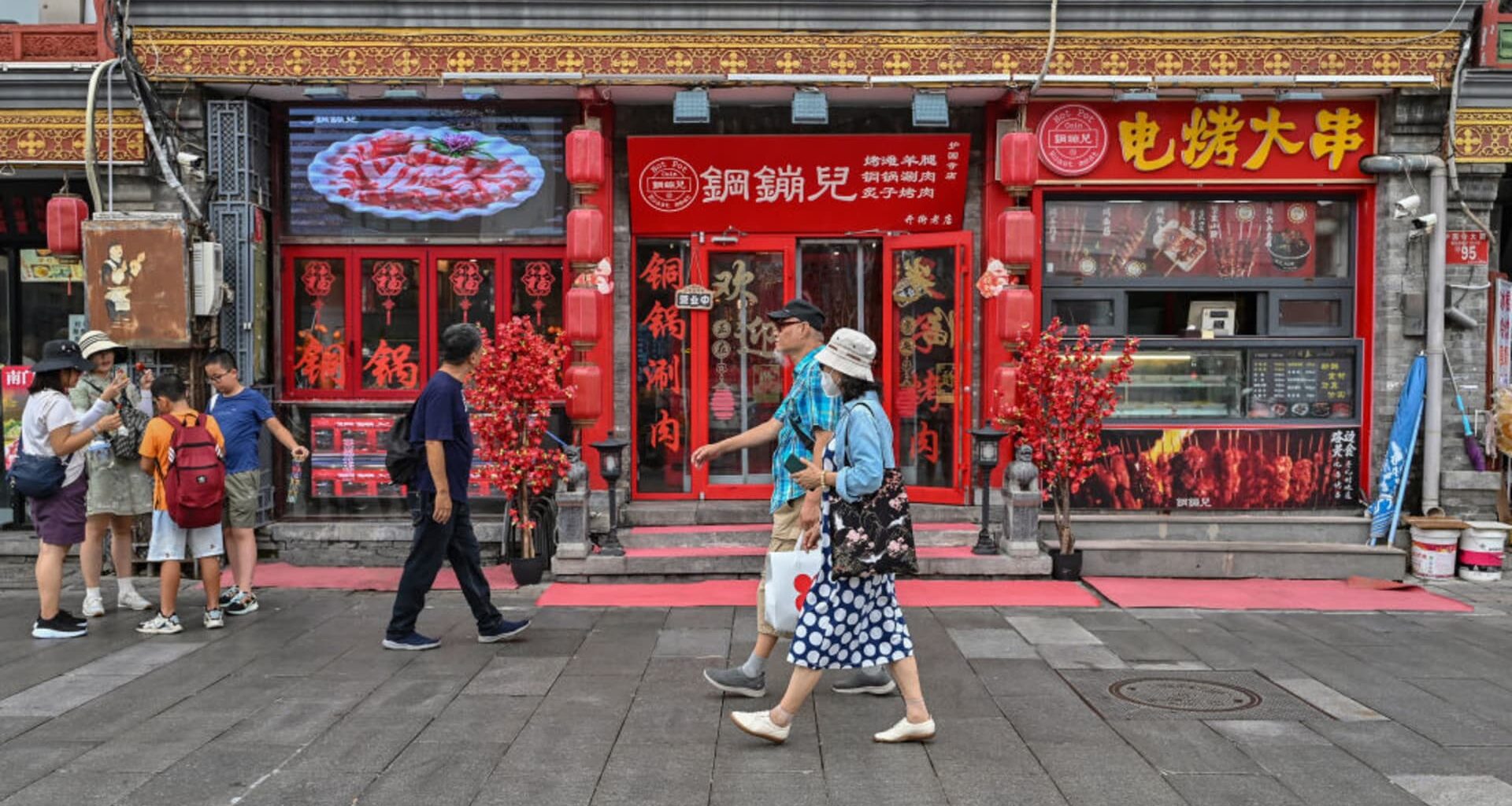
People walk along the Huguosi street, Xicheng district, a dedicated food street in Beijing on August 23, 2024.
Adek Berry | AFP | Getty Images
China’s consumer inflation accelerated in November to the highest level in nearly two years while producer price deflation worsened, underscoring the challenge policymakers face in reviving domestic demand amid persistent trade tensions.
Consumer prices edged up 0.7% from a year earlier, its highest level since February last year, National Bureau of Statistics data showed Wednesday. The increase followed a 0.2% rise in October and matched the 0.7% gain expected in a Reuters poll of economists.
Factory-gate prices fell 2.2% in November from a year earlier, missing the forecast of a 2% decline and extending the deflationary stretch into its fourth year. That was compared with a 2.1% fall in October.
Core inflation, which excludes volatile prices of food and energy, was up 1.2% year-on-year in November, unchanged from the rise in the prior month.
Economists warned that deflationary pressure on the world’s second-largest economy will persist into next year as the protracted housing downturn and weak labour market conditions continue to weigh on household spending, calling for fresh policy measures to spur demand.
While the economy slowed to its weakest level in a year in the third quarter, it appears to be on track to reach Beijing’s annual growth target of “around 5%” this year, supported by the resilient exports as manufacturers ramped up shipments to non-U.S. markets.
China amassed more than $1 trillion in trade surplus in the first 11 months of the year, topping the full-year record set in 2024, as the country navigated ongoing trade tensions and growing economic protectionism around the world.
In a key meeting earlier this month, the Politburo, top decision-making body of the ruling Communist Party, named expanding domestic demand and rebalancing supplies among the top economic priorities for 2026.
“Although policymakers maintained their easing bias, they appeared less inclined towards broad-based stimulus measures,” said Lisheng Wang, China economist at Goldman Sachs, noting that policymakers may need to strengthen their easing rhetoric again and step up pro-growth policy efforts next year to offset the drag from the property sector and labour market.
Investors and economists are watching closely the annual Central Economic Work Conference expected in the coming days, where policymakers will set key growth targets and policy priorities for next year. The official figures will not be made public until the annual parliamentary meeting in March.
This is breaking news. Please refresh for updates.