
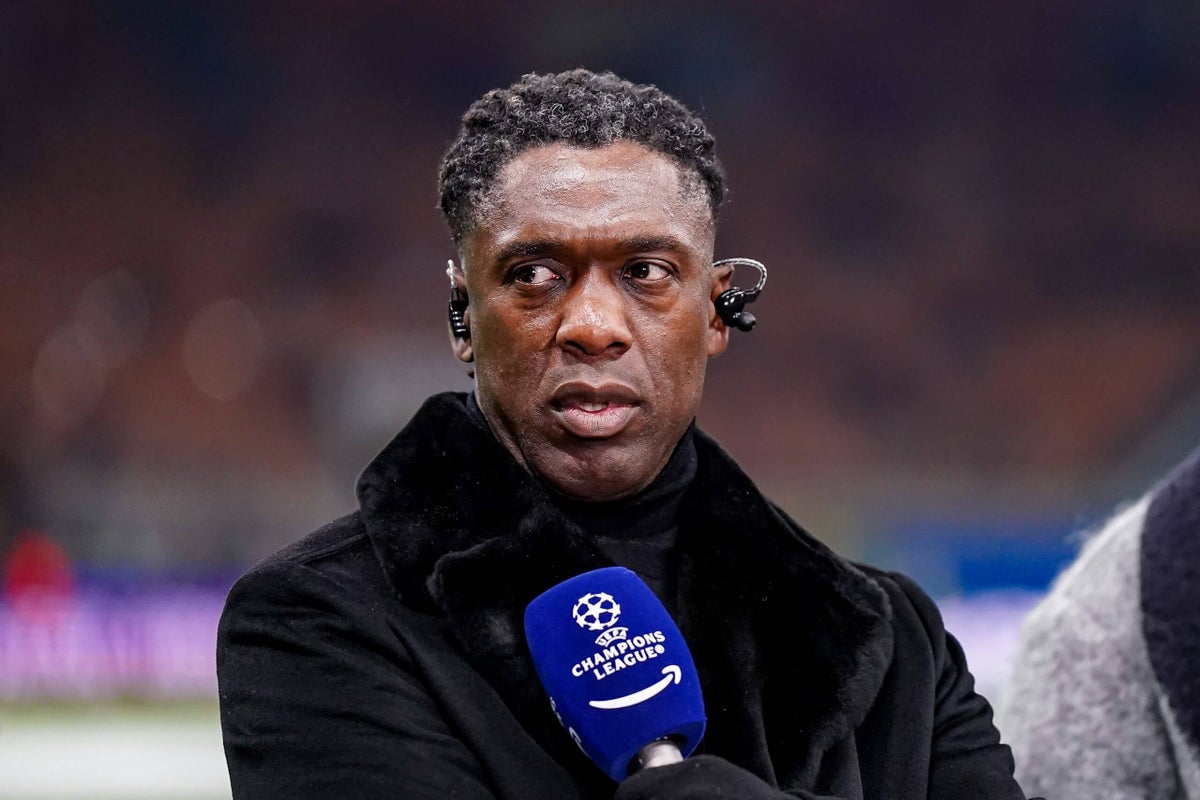
There are very few things that most people agree about in football. And, on balance, that’s probably for the best.
But one viewpoint everyone seems aligned on is that Clarence Seedorf was a brilliant player.
It’s the perfect opinion to hold. He quite clearly was a brilliant player, but in most teams he played for, he wasn’t the most prominent, or most flashy, or most obviously brilliant one. So if you said, “What a player Clarence Seedorf was, by the way”, then you were simultaneously correct and showed that you know more about football than the surface-level viewer.
Everyone loved Seedorf the player. And now, it seems that everyone loves Seedorf the pundit, too.
The Dutchman has been a regular part of Amazon Prime’s (very good) coverage of the Champions League in the UK, which only extends to one game per match week, but probably benefits from that: it’s usually the biggest fixture of the round, so people watch it and become familiar with it, but it’s not on so frequently that it becomes ubiquitous and potentially irritating.
His main role is as a pundit, and he offers the sort of considered analysis you might expect from someone with not just his experience, but his obvious intellect. He doesn’t particularly pick apart tactical systems or get deep into the weeds of how a game was won or lost, but it’s the little observations that make him compelling.
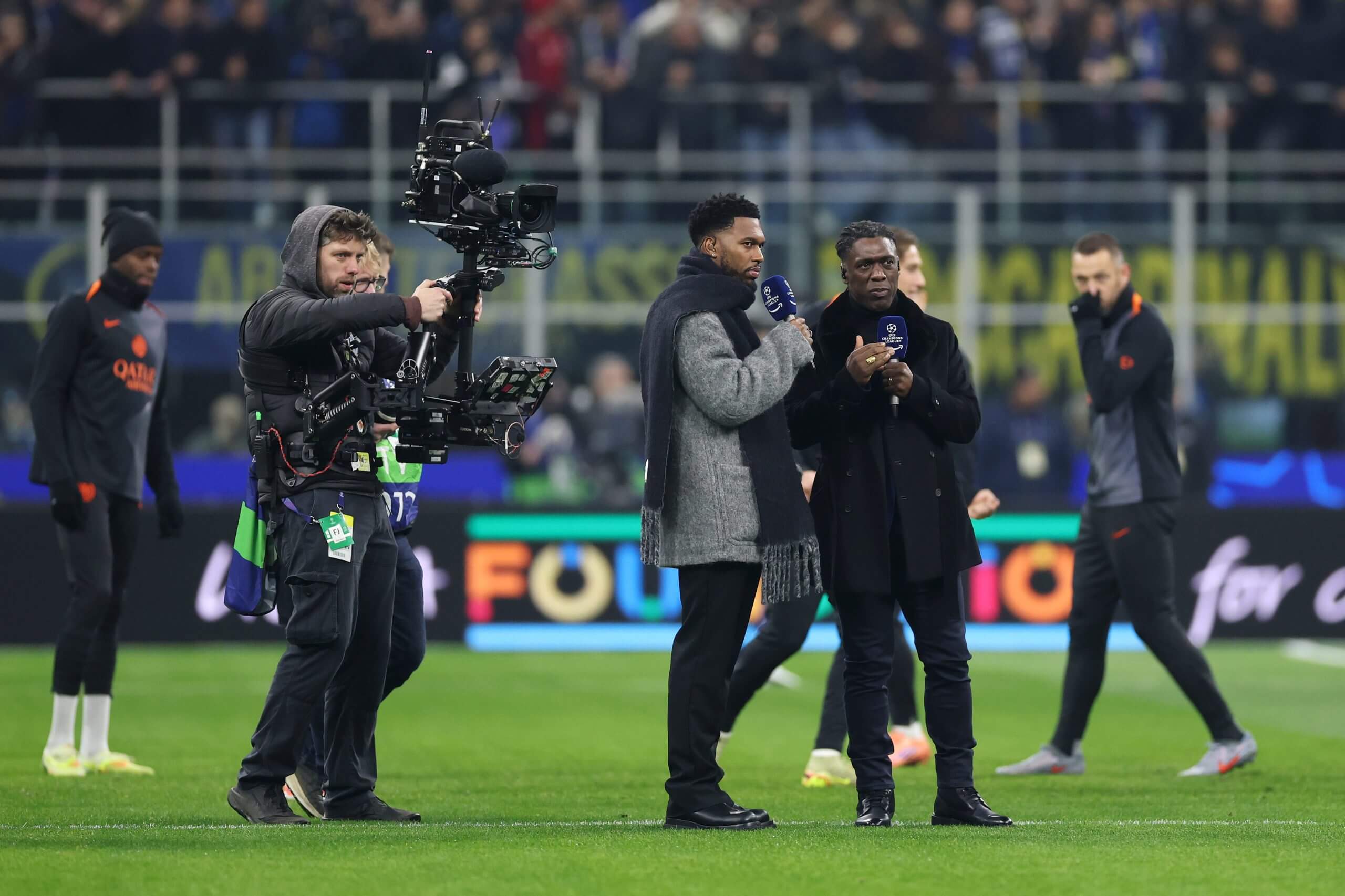
Daniel Sturridge with Clarence Seedorf at San Siro (Justin Setterfield/Getty Images)
At half-time of Liverpool’s 1-0 win over Inter at San Siro on Tuesday, for example, he explained succinctly how Virgil van Dijk should have better defended a headed chance from Lautaro Martinez with a terrific economy of language. Seedorf has forgotten more about football than most of us will ever know, but that’s no use without being able to communicate it well to the layman.
All of which is great, but it is sort of what you want, or even expect from a high-profile former player turned pundit. What you don’t necessarily expect quite so much is that they also turn out to be a highly skilled interviewer.
On Tuesday, Arne Slot came over to the Amazon pitchside desk for his post-match interview, where Seedorf was alongside presenter Gabby Logan and fellow pundits Daniel Sturridge and Luis Garcia.
Logan asked first about the game, but then about the topic everyone has been talking about: Mohamed Salah, left at home after his now infamous “thrown me under the bus” remarks at the weekend.
Slot gave the stock answer you’d expect in that sort of situation — “these players (that won the game) deserve that we speak about them” — at which point Seedorf said: “I don’t exactly agree on that.”
“Oh, you’re a journalist now?” joked Slot to his countryman, but the thing is: yes, he is, and, as it turns out, a really good one, because he managed to get the best answer of the night out of the Liverpool head coach.
Seedorf asked if Slot “has the intention” to bring Salah back into the fold, and again that could have been answered with a few stock phrases, but Slot instead appeared to suggest that it should be Salah who makes the first move. “The first thing should be: does the player think he’s made a mistake? Should the initiative come from me, or from him?”
Slot is a bit more likely to give interesting answers than some managers (his line last weekend about Ibrahima Konate being “too often at the crime scene” was superb, and more cutting than you’d expect about one of his own players), but it was fascinating how Seedorf managed to squeeze some more juice out of him.
Seedorf’s skill is that he uses his avuncular personality as a way of helping to make the subject feel like they’re not being hounded. There’s a directness to what he’s saying, but the edge is taken off. That’s not just an appealing human quality, but an effective one from a journalistic point of view.
Slot has been asked a billion questions about Salah in the past few weeks, but it’s easy to offer a bland, nothing-y answer when the questions are coming from a sea of journalists in a press conference. When the query is coming from actual Clarence Seedorf, who then laughs and puts his arm around your shoulders, you can see how his guard would drop.
It’s classic charm-and-disarm, to make the subject feel like you’re just two guys having a chat, even though you’re standing there with a microphone and a camera in your face and millions watching from their sofa. The fact that Slot then tried to (slightly unconvincingly) walk back his comments when speaking to the written press shortly afterwards, suggests he knew he had possibly given too much away.
There is probably an element of local reverence here: this was a Dutchman who had a limited playing career, talking to a Dutchman who had one of the great playing careers of all time. Slot and Seedorf are around the same age, but it’s inevitable a guy who was a journeyman midfielder for a series of middling Eredivisie clubs would be just a little bit starstruck by a guy from the same country who won Champions Leagues with three different teams.
But that is almost to take away how good Seedorf is.
The instinct is to want more, to have him on every game possible, but perhaps it’s better that we see him relatively sparingly.
You wouldn’t appreciate wagyu steak quite as much if you had it for lunch every day.