

The world’s best-known investor, Warren Buffett, famously said he wants to leave his children, “enough so that they would feel that they could do anything, but not so much that they would feel like doing nothing”.
Buffett, who turned 95 this year, is giving 99 percent of his US$150 billion fortune to charity. The charitable foundations set up by each of his three children will get to give away US$500 million between them each year.
NZ’s wealthy aren’t in the same league as Buffett but financial advisory firm, Craigs Investment Partners, notes that NZ$1.6 trillion is predicted to pass to the next generation over the next 25 years as part of the Great Wealth Transfer.
Kiwis driving this transfer will determine the wider social benefit of the Great Wealth Transfer for decades to come.
“The challenge is going to be how we protect that wealth and grow generosity through the next generations so it’s enduring. How do we ensure next generations have the support, insights and skills to effectively manage their wealth. We’ve all heard about the Lotto winners (who eventually end up with very little) because managing sudden wealth can be a challenging thing,” says Arron Perriam, director, Philanthropy and Intergenerational Wealth at Craigs.
Perriam’s is a newly created role at Craigs, aimed at supporting and advising clients in all aspects of philanthropy. He was previously national executive director at Community Foundations of Aotearoa NZ.
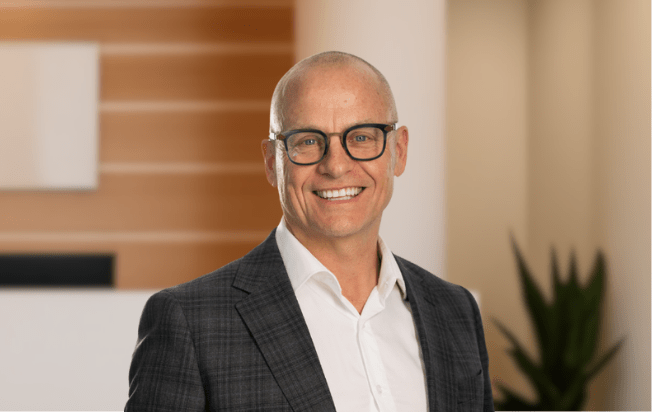 Arron Perriam,dDirector, Philanthropy and Intergenerational Wealth at Craigs Investment Partners. Photo: Supplied
“In the wider context of this intergenerational wealth transfer we have a wealth phenomenon that we haven’t seen in modern history, and when you look globally you see the increasingly important role of financial advisers in supporting clients interested in philanthropy.”
“The wealth transfer is active now and is really going to ramp up over the next two decades. Initially, wealth is likely to transfer horizontally to the surviving partner, before transferring vertically to the next generation. What does that look like for the next generation? Do they feel prepared and ready to receive wealth? If they have philanthropic aspirations what does that look like, what are the tools and support that are available to them? At Craigs, we need to be confident holding those conversations and supporting our clients.”
Those interested in philanthropy certainly have plenty of choice as to where their money could go, the critical thing is having trusted information and trusted partners.
New Zealand has 28,000 charities registered under the Charities Act 2005. Their annual income is more than $21 billion annually and the total philanthropic spend is estimated at NZ$3.8 billion annually. The sector is intricately woven into the fabric of our society.
The rise of donor-advised funds
The complexities involved in donating, bequests (leaving money in your will) and endowments have seen donor-advised funds become increasingly popular.
“Effectively, it is a fund that is created underneath the structure of, say, a Community Foundation, where the donor has the ability to direct where funds go, without having to take the ownership and responsibility of establishing a charitable trust,” explains Melody Mobsby, Auckland Foundation chief executive.
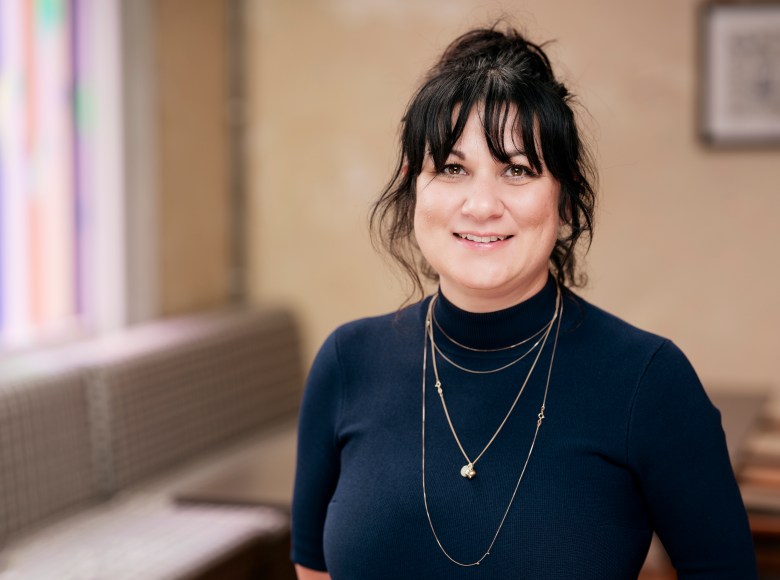 Melody Mobsby, Auckland Foundation Chief Executive. Photo: Supplied
“It’s giving you the opportunity to have all the joy of giving without all the compliance admin and so on.”
Donor-advised funds began in the United States over 100 years ago and have been growing across the world since then. Sir Stephen Tindall brought the model to New Zealand over 20 years ago – the first donor-advised funds started around 2003 with the establishment of the Acorn Foundation in Tauranga. Craigs Investment Partners were one of the first corporates to donate to this fund.
Donor-advised funds run by community foundations throughout New Zealand are estimated to have $200 million in funds under management and have granted over $115 million to local communities.
Auckland Foundation has 90 donor-advised funds.
Mobsby says she has noticed strong themes emerge in the type of charities donors with donor-advised funds are choosing to support.
“For a lot of people, it’s education. They see it as that hand up to help people out of poverty or out of their circumstances. And so education is always something that’s at the top of a lot of people’s lists.”
Donors with donor-advised funds can have as much involvement in the process as they want, says Mobsby.
“Honestly, it’s one extreme to the other, everything in between. And I think because people are people, your natural way of being is kind of where you fit on that spectrum. So, if I was to put a percentage on it, I’d almost say 75 percent are a little bit more hands off, and 25 percent are more hands on.
Piripi Kingi and her family fall into the latter category. They like to see first hand what impact distributions from their Auckland Foundation donor-advised funds are having. The family first became interested in charity when their children wanted to pool their pocket money to help kids who were going without Christmas presents.
“In the beginning we did it ourselves, but it is like a family that takes on a cat or a dog, and everybody is keen and wants to feed it but after a while who gets to end up doing it? It is mum, isn’t it?”
“After a while I found I was doing all the work and I was getting a bit over it. Donor-advised funds are a good idea – someone else will actually do all the work.”
“We expect them (Auckland Foundation) to know who is doing the best work in the particular segments. Who’s doing the best work in women’s refuge, who is doing the best work for troubled children? That is what we rely on them to do, to tell us where we can safely direct those funds.
“I cringe every time I hear someone is setting up their own charity because NZ has a lot of charities and charitable trusts, probably more per capita than anywhere in the world, and we have all this duplication. You need a manager, a salary, car, office space and photocopier. You generate all these extra expenses.”
Generational change
Perriam says investment advisers at Craigs are being upskilled to support clients in their philanthropy, particularly as the Great Wealth Transfer builds.
“Generally it is the client raising the question about giving, the adviser has held a valued relationship with the client for decades and the client will ask the adviser what they know about charitable giving.”
Perriam also thinks donor-advised funds are one of the “good giving structures” as they allow a donor to be specific about where and how the money is to be used, but ultimately it is important the client is supported and able to discern the right giving structure for them.
“An endowment is an enduring gift invested in perpetuity, in 50 years or even 500 years it will be granting exponentially more than what gift was given initially; this is important to some client donors, the legacy impact is so significant over time.”
He says donors need to be supported in their due diligence before setting up a donor-advised funds or similar, and professionals like their investment adviser, accountant and lawyer, would typically be involved.
“Donors like to make sure charitable organisations have independent boards, meet statutory reporting requirements, produce audited accounts where required, are well connected to community, and have good professional staff in place.”
Perriam reflects on the fact different generations have diverse relationships with charitable causes. In the past, strong volunteerism and memberships have played a major role, along with giving money, and it is important that during the Great Wealth Transfer we don’t lose sight of the incredible contributions of previous generations, he says.
“When I look back to my grandparents, I think they called them the ‘silent generation’, they didn’t talk a lot about giving but they just turned up and did stuff. When I look at my parents’ generation, as boomers, they grafted away, were conservative and not big spenders. Then I look to my nieces and nephews, and they are very values- and cause-driven, and very interested in geo-politics, justice and the environment.
My hope is that our generation can be a responsible bridge drawing on the wisdom and wealth of previous generations, that we lead conversations and create opportunities for the responsible stewardship of wealth. At Craigs, if we do this well, we can help to create a foundation for thriving communities and a legacy of care for future generations to follow.
Disclaimer: This article is general in nature and is not financial advice. It does not take into account your financial situation, objectives, goals, or risk tolerance. All investments involve risk and can go down as well as up. Before making any investment decisions Craigs Investment Partners recommends you contact an investment adviser. Craigs Investment Partners Limited is a NZX Participant firm. To talk to one of Craigs’ financial advisers, please call 0800 272 442. The Craigs Investment Partners Limited Financial Advice Provider Disclosure Statement can be viewed at craigsip.com/tcs. Visit craigsip.com.