
New research shows that elite cross-country racers aren’t just powerful – they’re masters of resisting fatigue.

Piper Albrecht
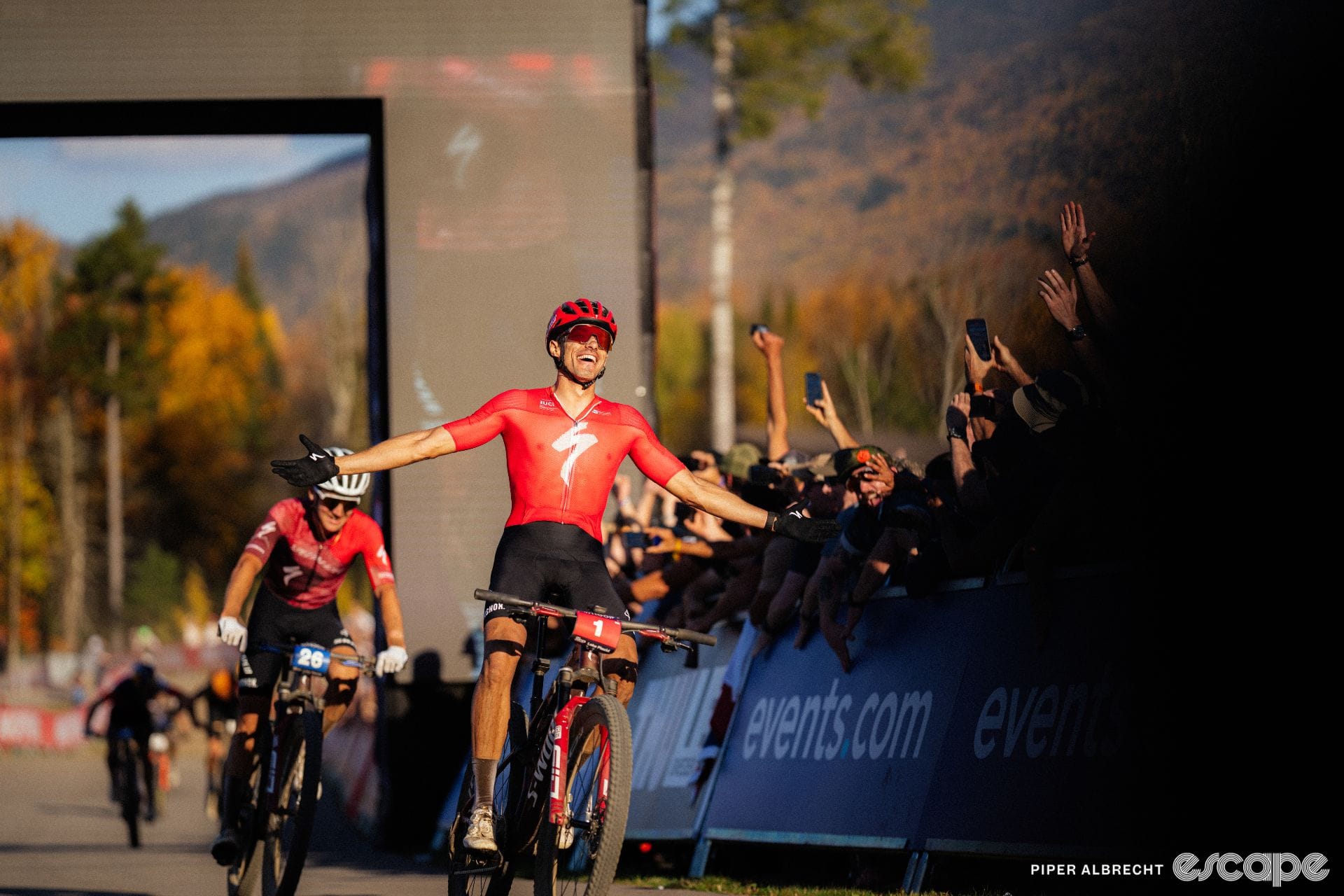
It’s the final lap in Mont-Saint-Anne, the last round of the 2025 UCI Mountain Bike World Cup. Charlie Aldridge is leading a select group of four as they hit the final climb – the race is in pieces with riders scattered across the Canadian hillside. In the switchbacks, Aldridge jumps out of the saddle. For Martín Vidaurre and the remaining chasers, this effort is one too many, and all they can do is watch as Aldridge extends his advantage, charging toward his maiden XCO World Cup victory.
It’s moments like this that sum up what makes elite XC races so difficult to win. Races last 75 to 90 minutes, but the effort is anything but steady. Short, punchy climbs one to three minutes long are punctuated by technical descents, sudden accelerations, and all-out sprints. Riders spend the race bouncing between max efforts and fleeting recovery windows. Success demands a combination of raw strength backed up by the ability to go deep into the red repeatedly.
This is what it takes to win a World Cup XC race
An exclusive look at overall series champion Christopher Blevins’ race data reveals what it really takes to win at the highest level.
Across a World Cup season, new faces occasionally crack the top 10, but the podium is dominated by familiar riders. Success at this level cannot be viewed solely through the lens of race craft or FTP – there’s a physiological edge that separates the top athletes from the rest. On paper, you’d expect it to just be about huge engines and sky-high VO2max. But a new study published in the Scandinavian Journal of Medicine & Science in Sports shows just how pivotal fatigue resistance can be in race results.
Analysing almost 700 World Cup-level race files from 140 elite athletes (although exclusively male), the researchers have built a compelling model of what it actually takes to race at the front in elite XC mountain biking. The study quantifies how power declines over the course of a race and highlights how races are decided. The key finding? The world’s very best riders manage to combine world-class power with a remarkable resistance to fatigue, holding onto crucial watts for when it matters most.
What did the research do?
The authors of the study analysed 693 race files from 140 elite XCO riders competing in World Cups and top-level Continental races between 2020 and 2024. Instead of lab tests or time trials, the studies were based on raw power meter data from actual race efforts. More later on whether that is a good thing.
From each file, they collected the maximum mean power (MMP) – the highest average power sustained for a specific, continuous time duration – over 5 seconds, 30 seconds, 1 minute, 3 minutes, and 5 minutes. Crucially, they looked at these efforts in two polarised contexts, which they called fresh state and fatigued state.
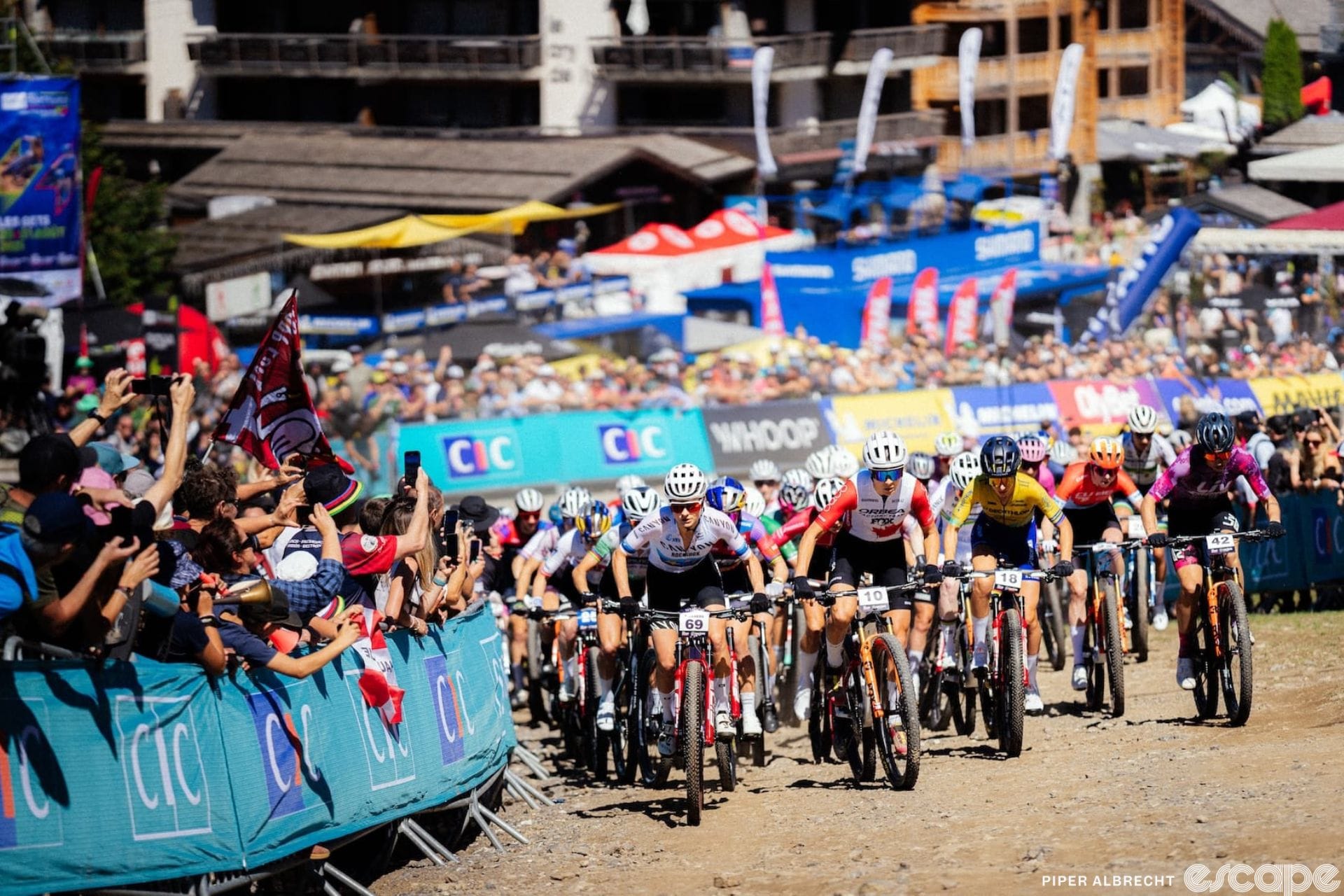 Power data from the opening lap was used to form the ‘fresh’ dataset.
Fresh-state efforts were captured during the opening lap, while fatigued-state efforts came from the final lap, allowing a direct comparison of how athletes’ power does, or doesn’t, collapse over race duration.
From this, they built a large-scale set of averaged power profiles that highlights how the top riders’ physical abilities differ from those behind them. So they split the field: the top 10 and the chasing pack to provide comparative datasets. The study is far from perfect, with a few caveats that could influence the data, but as a trend analysis of what is actually happening in elite racing, it is insightful.
This post is for paying subscribers only
Subscribe now
Already have an account? Sign in
Did we do a good job with this story?
👍Yep
👎Nope