
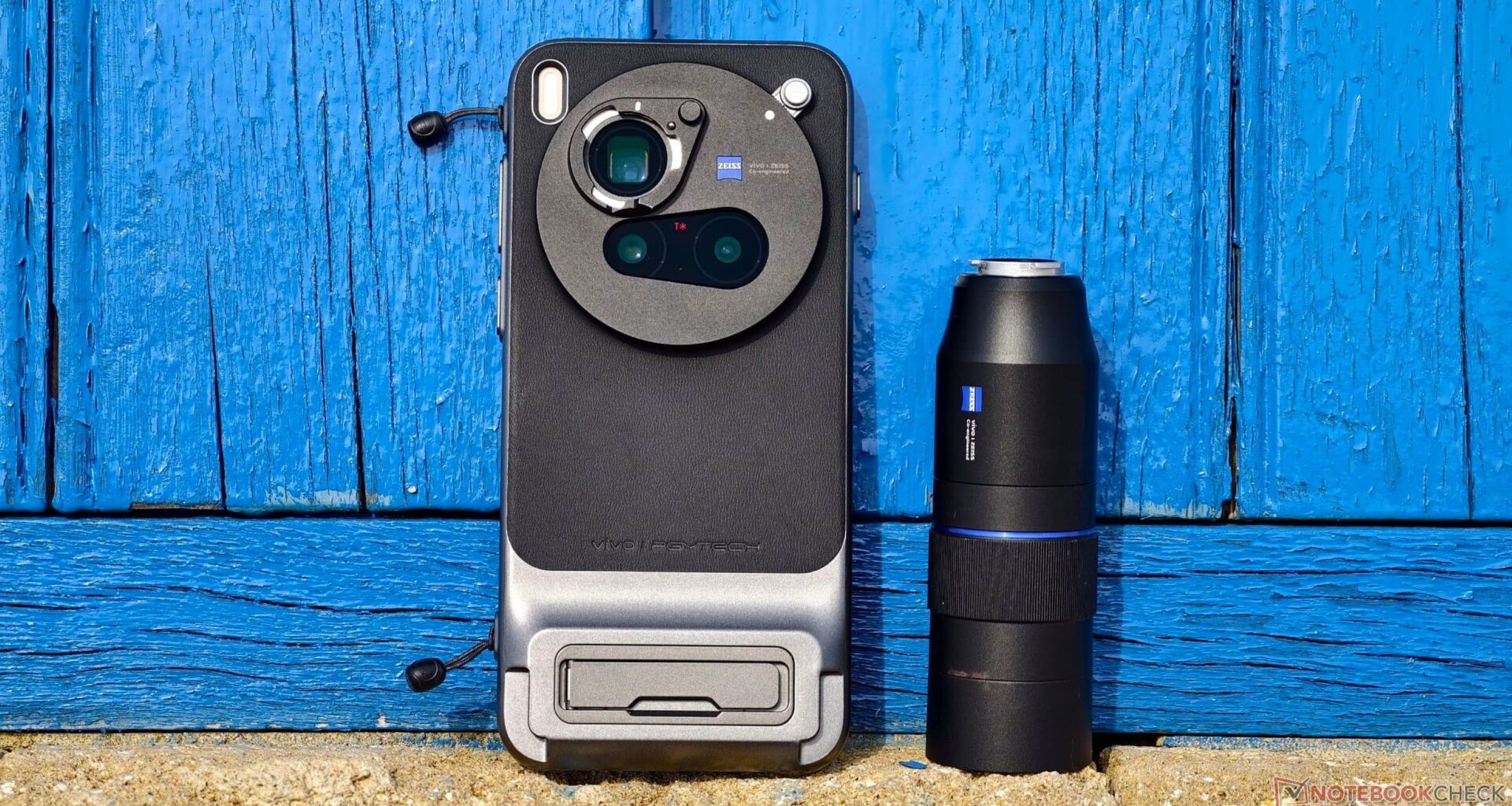
Anyone who likes to look far out into the world will really benefit from the Zeiss teleconverter. Subjectively speaking, the images are natural, less blurred, and more detailed — the AI doesn’t have to hallucinate as much.
In low light, you should probably provide some stabilization, which is recommended anyway when using an external lens, as this changes the phone’s center of gravity considerably and you need a steady hand.
With the X300 Pro’s successor, I would like to see communication with the software in the camera app so that shots with the lens are marked accordingly and the mode works even faster. Of course, I would prefer an optical 8-10x zoom directly in the smartphone, so you don’t have to carry another attachment with you.
I only used the camera grip intensively on one day, but it’s a cool accessory for anyone who appreciates the feeling of a real camera in their hand. Particularly, it also replaces the shortcut button as the camera shutter release and has an additional battery on board.
What I would like to see from Vivo in the future is a dedicated camera button on every model, like on the Vivo X200 Ultra, a more logically structured and tidy camera app, and camera updates for older models.
In the second part of this review, which will probably be published around Christmas time, I will compare many more photos from Cyprus (and a few from Malta) between the Vivo X300 Pro, the Vivo X200 Ultra, the Vivo X100 Pro, and the Samsung Galaxy S23 Ultra, so stay tuned for that.