
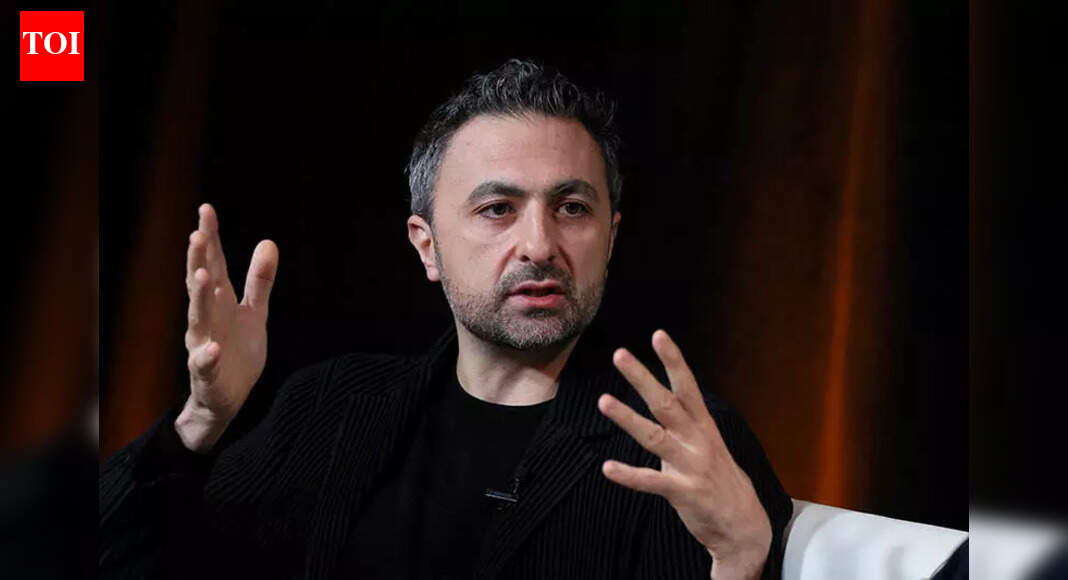
 Microsoft AI chief Mustafa Suleyman reveals his working-class London upbringing shaped his tech vision. The DeepMind co-founder, whose Syrian taxi driver father and nurse mother urged him to learn a trade, lived independently from age 16 before dropping out of Oxford to help Muslim youth post-9/11. Now he champions AI for social good and universal basic income. Microsoft’s AI chief Mustafa Suleyman says his mother wanted him to quit school at 16 to become a carpenter or electrician—advice the 39-year-old DeepMind co-founder decidedly ignored on his path to becoming one of tech’s most powerful executives. In a Bloomberg interview, Suleyman revealed how his working-class upbringing in subsidized housing with a Syrian taxi driver father and NHS nurse mother shaped his vision for artificial intelligence, including his advocacy for universal basic income and what he calls “humanist superintelligence.””My parents always thought I should go get a trade — my mum would often say to me, You should be a carpenter or electrician, leave school at 16,” Suleyman told Bloomberg’s Mishal Husain. Growing up in north London during the 1980s and ’90s, his family was “pretty working class” and “didn’t super value education,” he said.
The early years that forged Suleyman’s career
Suleyman’s path took a dramatic turn at age 16 when his parents separated, leaving him and his younger brother to fend for themselves. “Me and my younger brother did live on our own for a few years,” he confirmed in the Bloomberg interview, though he characterized the experience with youthful resilience: “When you’re that age, you are precocious and overconfident and fearless.”Despite his parents’ expectations, Suleyman excelled academically. After studying hard at age 10 for entrance exams, he attended what he described as “essentially like going to a private school” and eventually gained admission to Oxford University. However, his time at Oxford’s Mansfield College was short-lived. At 19, driven by a desire to “change the world and get stuff done,” he dropped out to co-found the Muslim Youth Helpline.
Dropped out of Oxford to help muslim youth after 9/11
The Muslim Youth Helpline became one of Britain’s largest counseling services of its kind, addressing a critical need as young Muslims navigated identity struggles in a post-9/11 climate marked by suspicion and hostility. Suleyman described it as “a non-religious, non-judgmental listening service for young British Muslims, who after 9/11 were dealing with identity crisis, lack of connection to community, family, parents, bullying.” Having personally experienced anti-Muslim sentiment during that period, he understood the urgency firsthand.That social mission eventually led him to co-found DeepMind in 2010, the pioneering AI company later acquired by Google for $650 million. Now at Microsoft, where he leads the company’s consumer AI push, Suleyman is championing what he calls “humanist superintelligence”—AI that remains aligned with human interests.His working-class roots continue to influence his vision for technology. “It comes from a place of experiencing the rougher end of things a little bit and having a desire to try to do the best we can with the short life that we have,” he told Bloomberg. He advocates for universal basic income as AI transforms work, arguing that “we already live in a world of abundance, it’s just poorly distributed”—perspectives that set him apart in Silicon Valley’s tech leadership.