
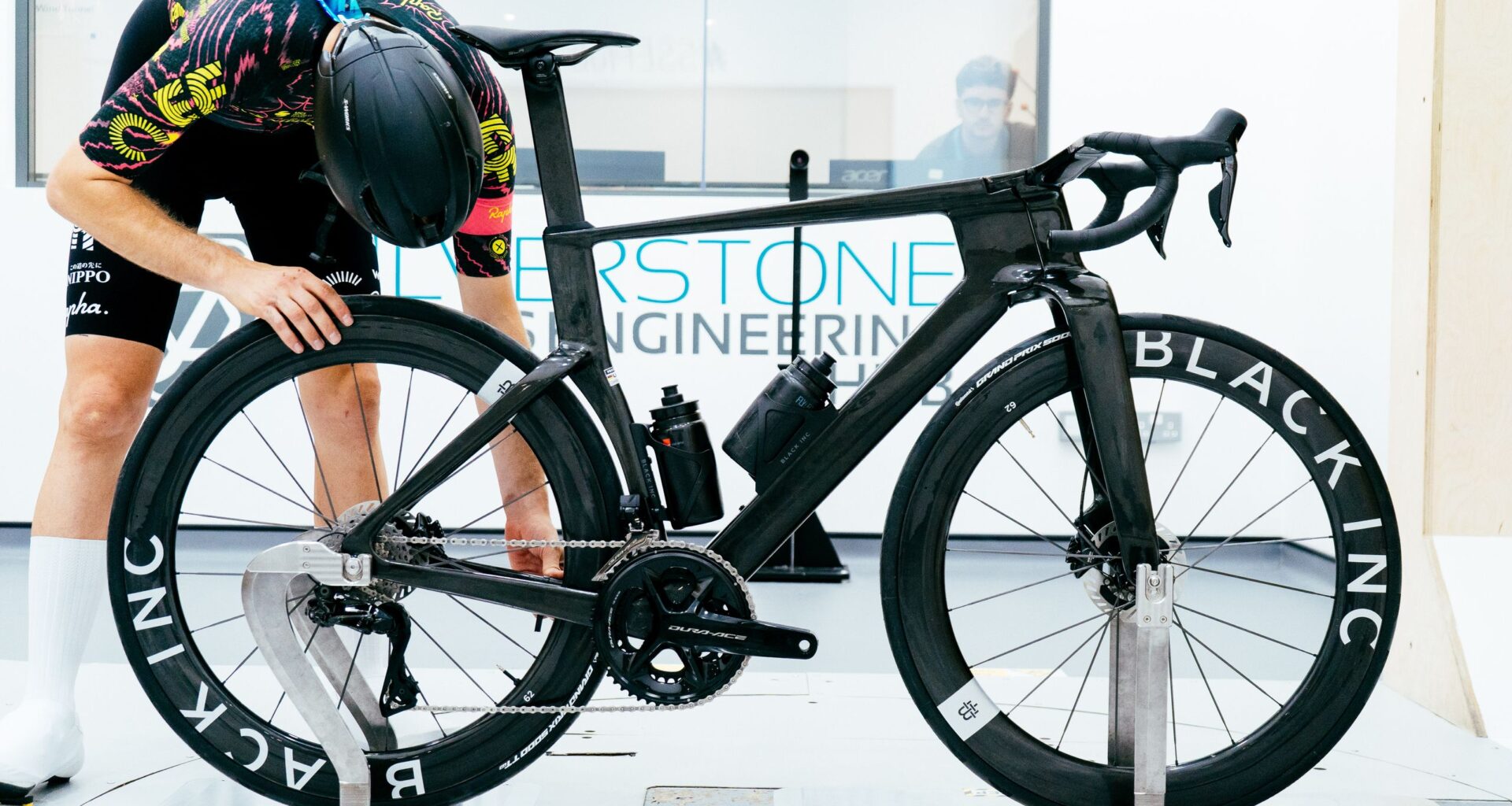
On the opening morning of the 2025 Critérium du Dauphiné, it wasn’t a first battle of the season between Tadej Pogačar, Jonas Vingegaard and Remco Evenepoel that grabbed the headlines, but the sighting of an unbranded, bare carbon, and extreme-design Factor bike parked outside the Israel-Premier Tech bus. A dedicated out-and-out aero machine with a wildly narrow leading edge, and super wide forks akin to the Hope HB.T track bike.
Four days later, it demonstrated its effectiveness as a high-speed weapon, as Jake Stewart triumphed on stage 5 – pointing to the then-prototype bike as he powered across the line. The squad continued to use it throughout the season, including at the Tour de France, but details on the bike remained scarce in the months following its debut.
You may like

The Factor ONE on the far right stands out even in the outlandish class of 2025 Aero bikes (Image credit: Will Jones)The Test
In case you aren’t familiar with our testing process, here’s a refresher of how we conducted the wind tunnel tests.
To start, we used the bike in its off-the-shelf specification, but with a couple of key non-variables to ensure data between bikes is more consistent.
You may like
We tested the bike in three conditions: bike-only, bike with rider, and bike-only with ENVE SES 4.5 wheels. The bike had a 56cm frame, and its geometry was matched up as identically as possible to other bikes on test. In keeping with our empirical testing, a 25mm Continental GP5000 ST R front tyre was used for the first two tests, as a result of the bias given to the front tyre and impact on drag as the first point of contact for the airflow.
The same inner tube valve length and tyre pressure were used across all tests, and the standardised Enve wheel testing used 28mm GP5000 S TR tyres as opposed to the 25mm option for a more modern-use-case comparison. Given the design incorporates aero bottle cages, those were used, and Elite Fly bottles were fitted. As with all of our tests, no computer mount was fitted.
Our rider’s test kit remained consistent across all testing, and the wind tunnel also neatly created an ‘Edge’ or ghost outline of the rider to ensure the same position is held from test to test.
Each test was conducted at 40km/h, representative of a faster pace for amateur riders, with yaw angles of -15°, -10°, -5°, 0°, 5°, 10° and 15°. For bike-only, we captured for 10 seconds per run, and for bike-and-rider tests, 30 seconds per run at a pedalling cadence of 90 RPM.
Another note is that the confidence and margin for error on tests have also been calculated as follows:
Swipe to scroll horizontallyHeader Cell – Column 0
Rider on bike
Bike only
CdA (+/-)
0.0021m2
0.0004m2
Watts (+/-)
1.73w
0.33w
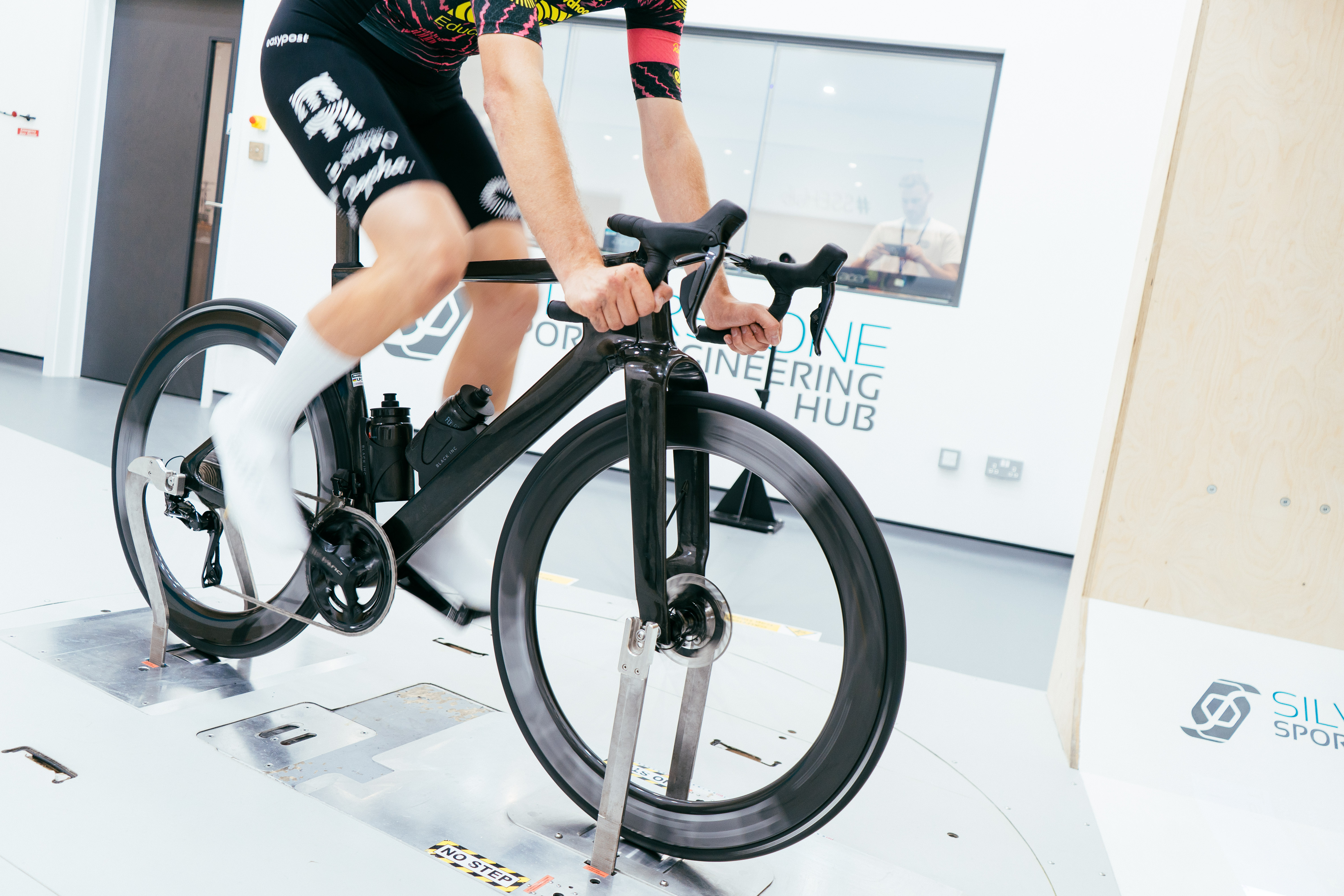
The front end is particularly outlandish (Image credit: Will Jones)The results: Bike on its own
CdA is a measure of aerodynamic drag; effectively a combination of its ‘drag’ or how easily air passes over its surface, and its ‘area’ or size. This is where the Factor ONE took quite a clear win. At 0° yaw – effectively a direct headwind, the Cervélo is marginally faster, but the way the bike remains fast at all wind angles is an engineering feat.
Upon weighting the CdA at different yaws to account for real-world conditions, and then working out the average, the Factor ONE has a CdA of 0.0747, a good chunk ahead of the Van Rysel RCR-F in second place on 0.0772.
This meant that at 40km/h, the Factor required only 61.51w of power, two watts better than the next best and a huge 40.28 watts faster than the Trek Émonda ALR.
The results: Testing with a rider
Once we put a rider on the bike, things changed a little more. At lower yaw, the Factor was comprehensively the fastest bike on test, at a CdA of 0.3188m2, compared to the next best Cervélo S5 on 0.3260m2. However, the Cervélo then climbed ahead on the wider yaw angles.
Here we have confirmation that across the range of wind angles, the Cervélo S5 actually wins out, but by a mere 0.0001 CdA, an infinitesimally and incomprehensible margin, and one that falls well within our error margin. There is then a slight gap to the Colnago Y1RS at 0.3363m2, while the next best dedicated aero bike is the Dare at 0.3387m2.
This meant that at 40km/h, the Factor requires 273.17 watts, 0.05 watts more than the Cervélo on average, which, again, is well within our error margin on the day. It is 3.61w faster than the Colnago Y1Rs and 27.53w faster than our ‘baseline’ budget bike, the Trek Émonda ALR.
Standardising the wheelset
Of course, the Factor ONE has been designed with the Black Inc 62 wheels that it comes with off-the-shelf. When we switch out to the control set of wheels, things do shift a bit. At 0° yaw, the Colnago Y1Rs – a bike which is supplied with these wheels on higher specs and used by the UAE Team Emirates-XRG squad – is fastest, but once again, the ability of the ONE to remain fast across all yaw angles is unmatched.
Although low yaw angles are more common in real-world situations, this ability to remain fast over all wind angles should help it in bunch racing or windier conditions where the wind angle is less consistent or stable.
Once weighted and averaged, Factor still wins, with an average CdA of 0.0761m2, a deficit of 0.014m2 compared to using the Black Inc wheels.
The Dare and Colnago are the biggest climbers, with Cervélo dropping down the charts.
This equates to 62.65 watts of aerodynamic drag when tested at 40km/h, and equates to a 1.14-watt worse performance than when specced with the Black Inc 62 wheels.
This tells us that Black Inc’s wheels are marginally faster in this bike than the Enve wheels, albeit with the caveat that they were fitted with narrower 25mm tyres, so not a perfectly apples-to-apples comparison.
Comparing to our baseline
Comparing to our baseline bike, which is our flagbearer for the traditional, round tubed, externally-routed, shallow-wheeled bike you may have sitting at home, you stand to save 40.28 watts in a bike-only test. This is the fastest bike we’ve ever tested in our wind tunnel tests.
In a more real-world-applicable rider-on comparison, you stand to save 27.53 watts. This, admittedly, is a fraction of a watt behind the Cervélo S5, but well within our error margin, so Factor can also claim the top-spot here. Especially given the Cervélo was specced with a single chainring and no front derailleur, which is said to be worth around a watt at these speeds.
When we look at the combined testing, with our 2025 test and the 2024 superbikes test. You can see the clear distinction between dedicated aero bikes such as the Factor ONE and Van Rysel RCR-F, and the more all-round bikes such as the Specialized Tarmac SL8 and Trek Madone SLR Gen 7.
What’s really impressive though, is that in the bike only test, the difference between the ONE and 2nd place is bigger than the difference between 2nd and 7th. Not forgetting that two watts is still only a small saving, this is a storming victory in the context of this test.
How does it compare
Despite being the fastest, the Factor ONE is also one of the lighter bikes that we had on test. At 7.35kg in our unpainted size 56cm test sample, it’s far from a heavyweight machine, and outperforms those near it in the table.
Even though the Specialized we tested weighed a rather close 7.18kg, this was with pedals and bottled fitted, so not the fairest comparison against the Factor, which we erronously tested as a bare bike. We’d expect that to be hitting closer to 6.8kg in a comparable setup.
An interesting point to note, though, is that the ONE was not used by any of the Israel-Premier Tech riders on stages that didn’t have a mostly-flat route. At face value this points to Factor working on a two-bike race lineup, with the Ostro sitting alongside the ONE (perhaps three with the featherweight O2). It’s not conclusive, though, given the team only had a handful of these at their disposal.
The geometry of the bike is quite extreme, with a similarly broad and straight seatpost to the Cervélo S5 and Scott Foil, but without the compliance claims that come with those bikes. Lots of deep tubes are also paired with quite a unique front-end geometry, as well as bars that resemble the Colnago Y1RS bars. It’s certainly a low-slung bike, but Factor has ensured a good range of geometry with virtual stem lengths of 110-150mm and stack adjustment of 35mm.
Image 1 of 8
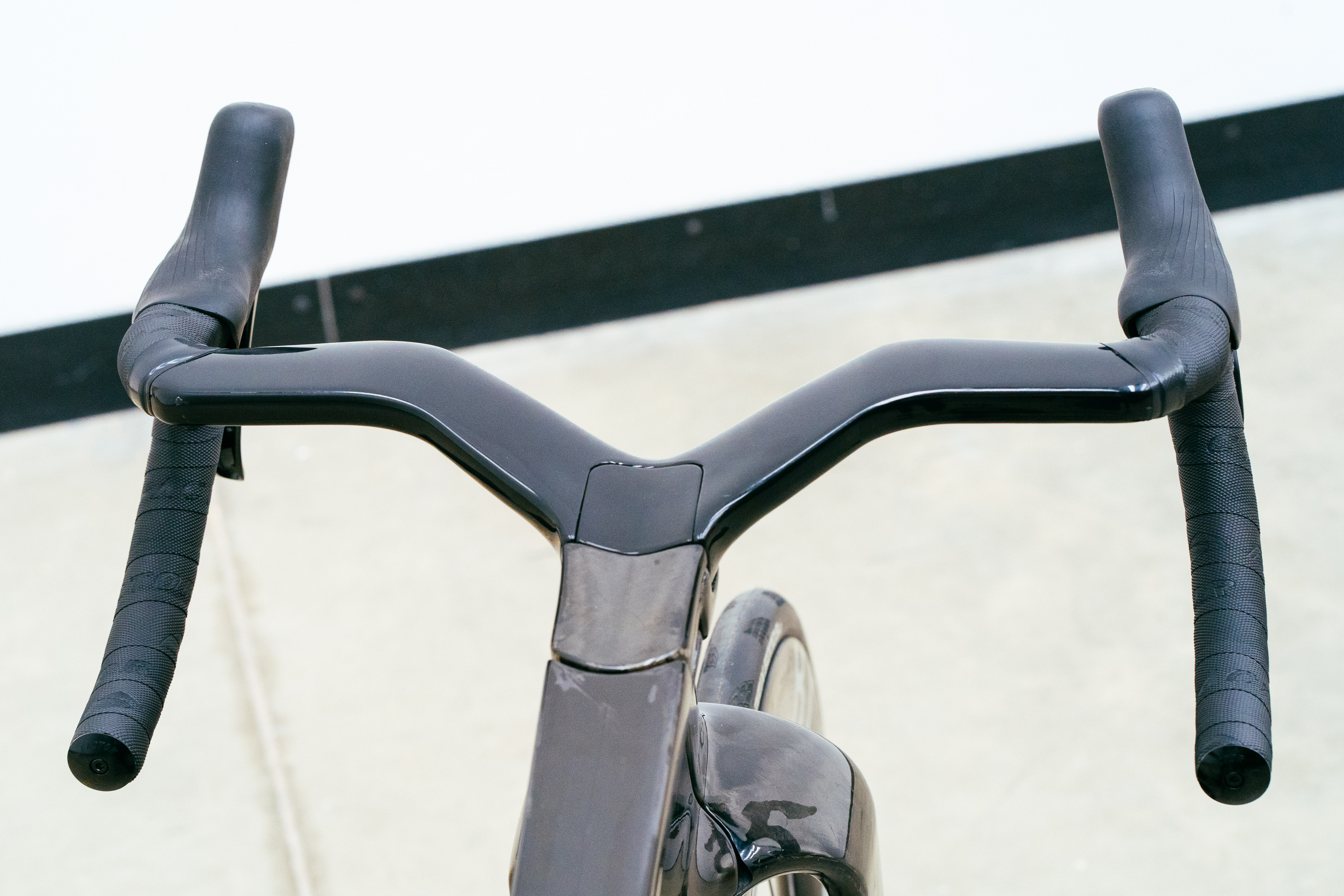 Those bars do have some adjustment, but the design remains aerodynamic. (Image credit: Will Jones)
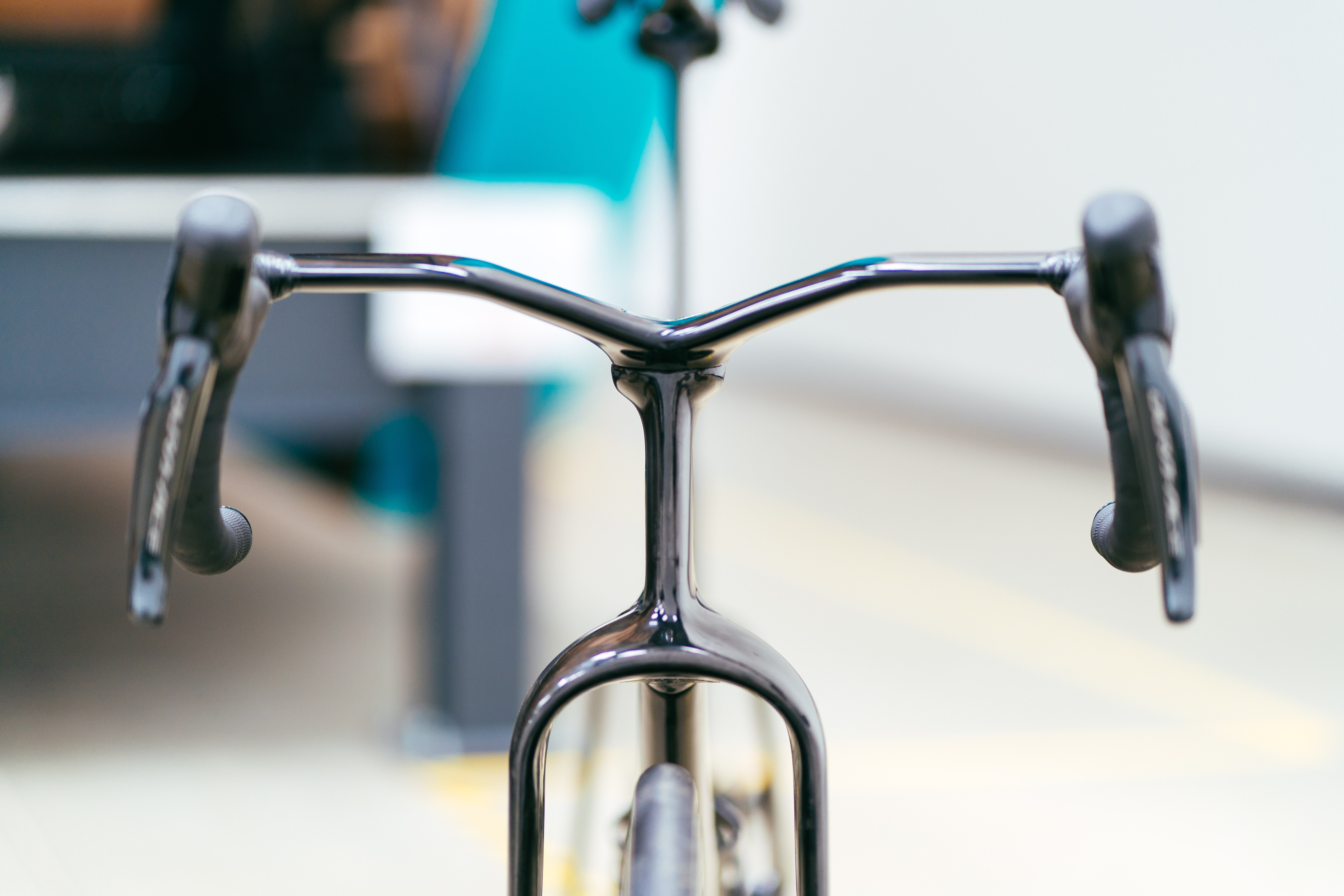 The front end is extraordinarily narrow with flared forks(Image credit: Will Jones)
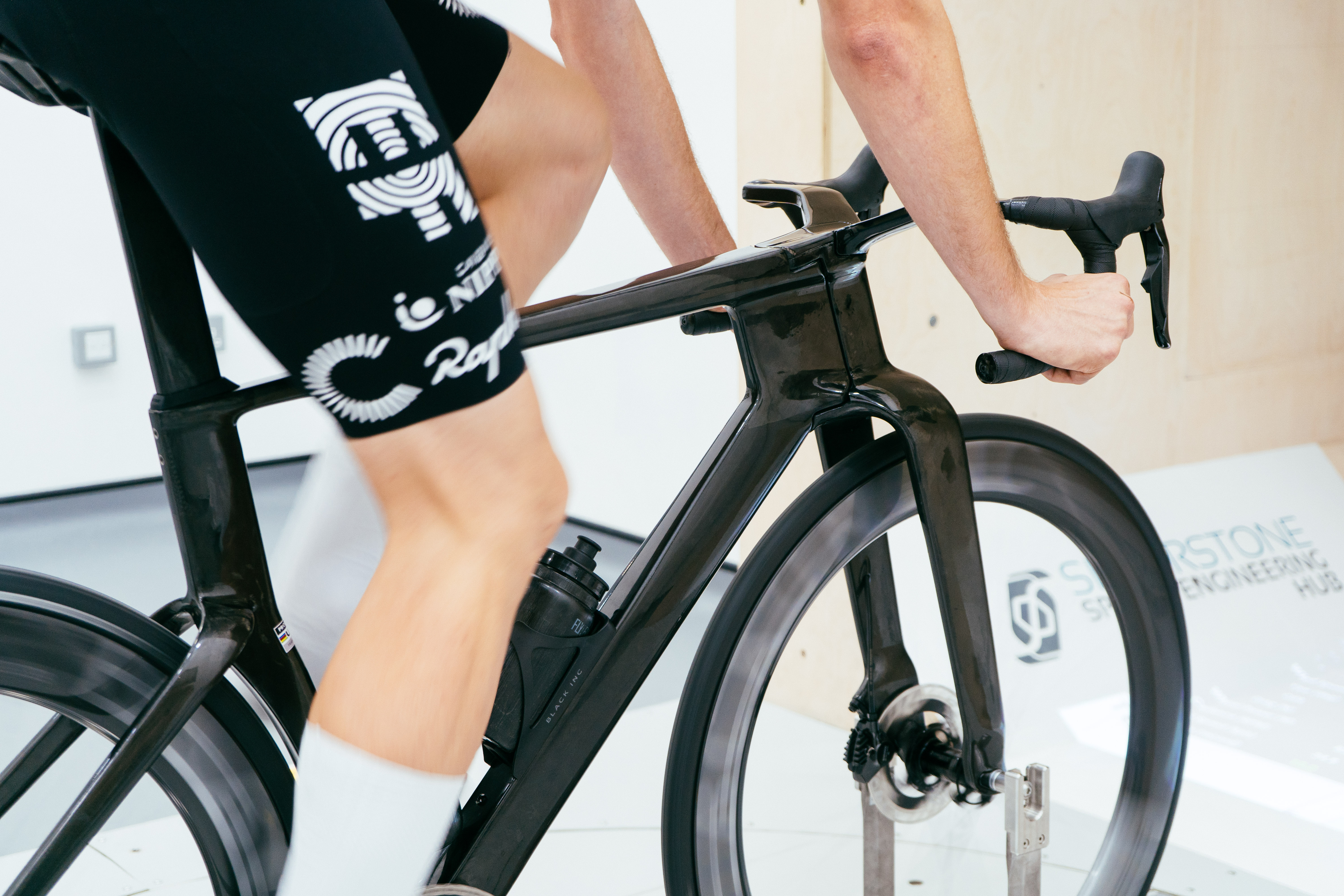 From the side it looks somewhat ‘normal'(Image credit: Will Jones)
 The bayonet fork and deep headtube makes for a huge effective tube depth(Image credit: Will Jones)
 Another super narrow front view(Image credit: Will Jones)
 Compared to the Ostro VAM 2 in the foreground the One is a very extreme looking bike(Image credit: Will Jones)
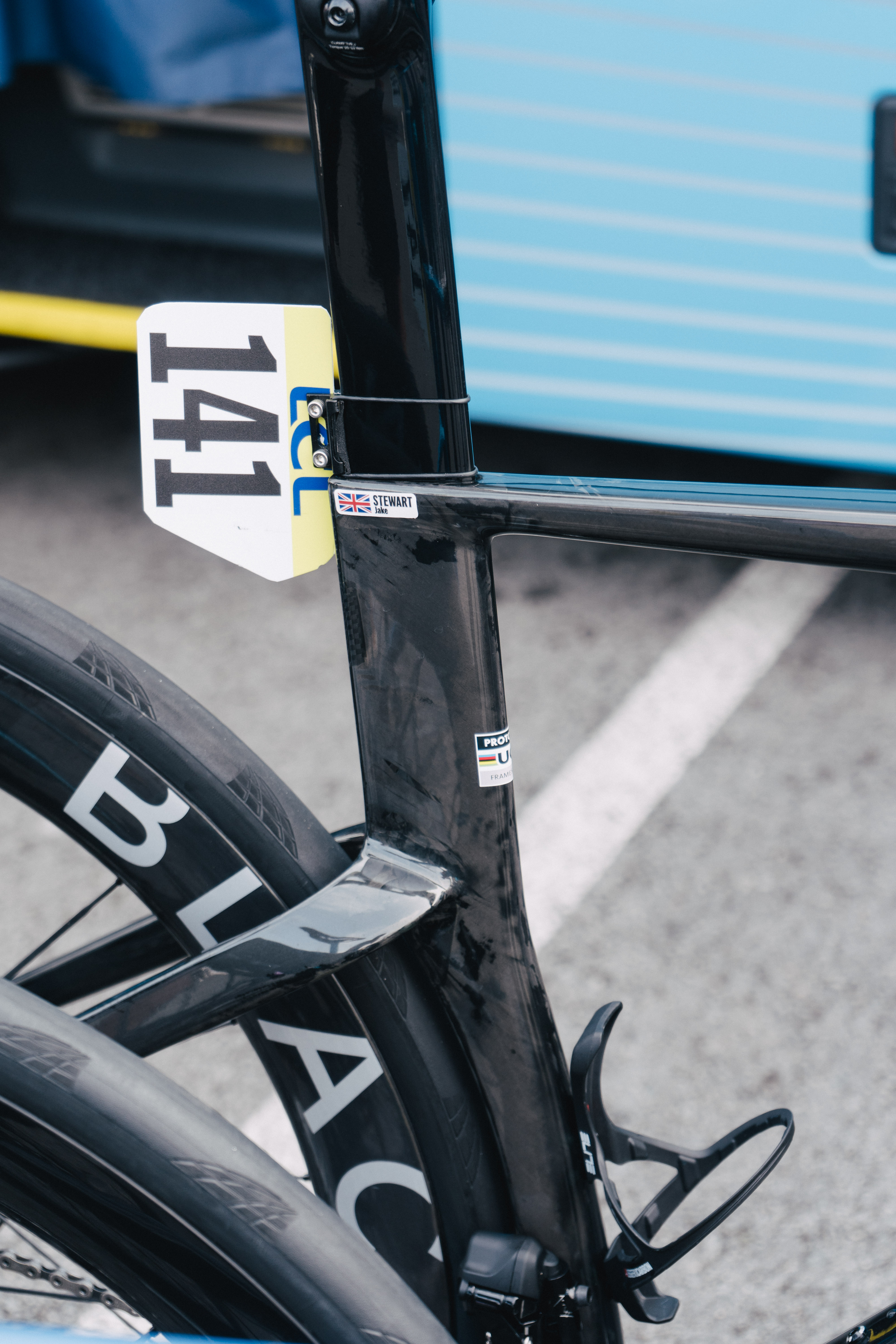 A very upright seat tube and seat post look more akin to a TT frame(Image credit: Will Jones)
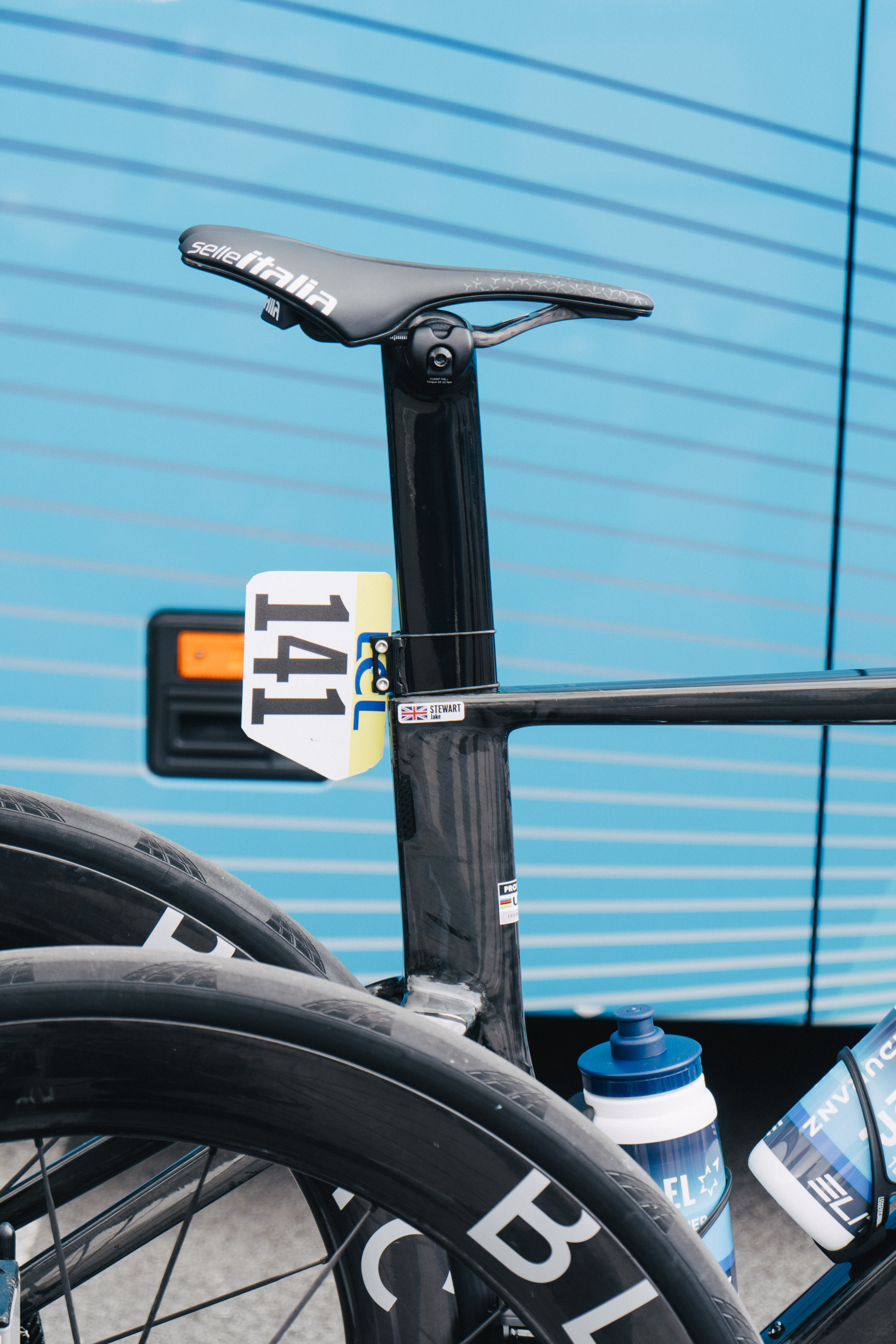 Limited compliance at the saddle clamp(Image credit: Will Jones)Conclusion
The Factor ONE is certainly what I would call the epitome of aero road bikes.
It’s perhaps not a bike you’ll choose to buy for leisurely local group rides or doing long sportives, but if you want to race and like to adopt a racy, forward position with narrow bars and short cranks, it’s among the best aero road bikes on the market right now, the fastest bike we’ve ever tested, and for flat races and bunch sprints, our data syggests that it’s an absolute rocketship.
It’s an unapologetically pro-spec bike, even if it will not immediately feature in the WorldTour thanks to the brand’s recent pull-out from its previous team.
Add to that a low weight by comparison to many aero bike alternatives, and it’s an impressive race machine. Just be sure to get your stretching sessions in if you do opt to splash out on this one-of-a-kind bike.