
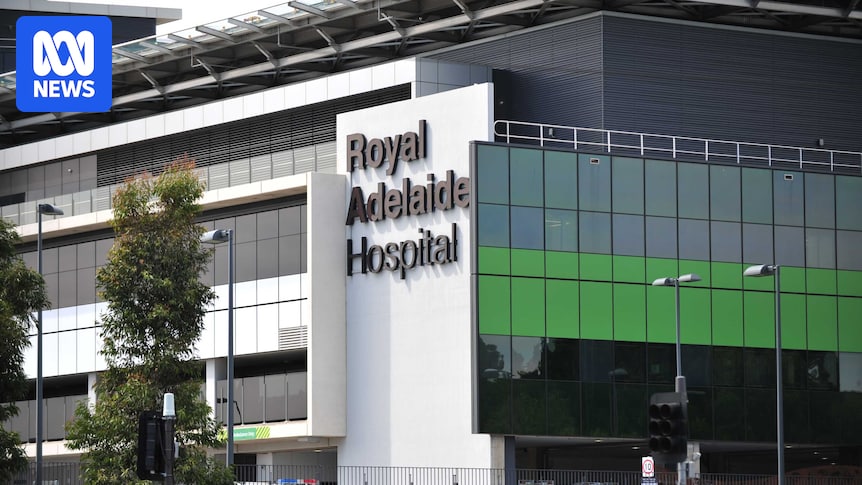
South Australia will catch up with other mainland states from mid-2026 when cutting-edge technology to treat blood cancer becomes available at the Royal Adelaide Hospital.
Chimeric Antigen Receptor (CAR) T-cell treatment involves collecting a type of white blood cell from a patient, genetically modifying them, then re-infusing them into the patient’s body so they can multiply and attack cancer cells.
The government said it allocated $2.8 million in its 2025-26 budget to lay the foundations of a CAR T-cell therapy service as part of its Central Adelaide Local Health Network Cancer program, and it would be available from the middle of next year.
Adelaide woman Steph Walker launched a petition last year to bring the therapy to SA after her father was referred to Melbourne for six to seven weeks for CAR T-cell therapy.
Push for groundbreaking cancer treatment in Adelaide
“Everyone who has been a cancer patient, or knows a cancer patient, knows how immunocompromised they can be,” she told ABC Radio Adelaide.
“To put an immunocompromised patient on an aeroplane with the general public is super dangerous, let alone the side effects from cancer treatments while being out of home or away from the hospital.”
When her father was accepted for CAR T-cell treatment in Melbourne, it required both Ms Walker and her husband to step away from work, along with her mother as she supported her husband “in a new state with no support or family”.
He had already undergone three stages of cancer treatment, including chemotherapy and radiation, and was told there was only a 20 per cent chance of success.
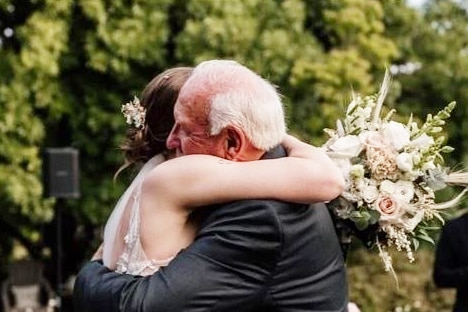
Steph Walker said her father was diagnosed with cancer two weeks after her wedding. (Supplied: Steph Walker)
“He got the treatment and I believe it was a check-up three weeks later, he was completely cancer-free,” Ms Walker said.
“Unfortunately, after all the treatment he endured followed by the CAR T, he passed away three months later.”
Adelaide haematologist Pratyush Giri last year said it was “suboptimal and risky” to send critical cancer patients interstate for specialised treatment.
He said there was also an assumption that the family of a CAR T patient would be able to help them live independently for at least a month interstate after a week in hospital, which was “often difficult with elderly patients with little support”.
An emerging technology
Health Minister Chris Picton said the service at the Royal Adelaide Hospital would initially treat a small number of patients but would scale up over time.
“This has been an emerging technology over the past few years,” he said.
“Patients from SA have been able to travel predominantly to Melbourne to get this treatment, which is disruptive and it does take time.
“We’re really delighted that we’re going to bring it here to SA, so thank you to Steph for raising the issue, and for other people who have raised the issue.
“It’s certainly something we have been working with our clinicians on for some time and this is one of the first steps since we established in the past few months our comprehensive cancer network here in SA.”
‘Living drug’ keeping cancer patients in remission
He expected dozens of people each year to benefit from the treatment, “particularly those patients who have blood cancers where our first-line and even second-line treatments haven’t been successful”.
“We’ve seen great benefits in using it, are becoming more experienced around the world in using it, and we think this will continue to grow with an aging and growing population,” Mr Picton said.
He said patients in the meantime would continue to be supported to travel interstate to receive the treatment for “every step along that journey”.
“Obviously that’s provided free of charge as public patients in Australia,” Mr Picton said.
While it was too late for her family, Ms Walker welcomed the announcement.
“It will be amazing, the stresses that kept us up at night … my idea behind the petition and my letter and fighting for this was so no other family had to endure what we went through,” she said.