
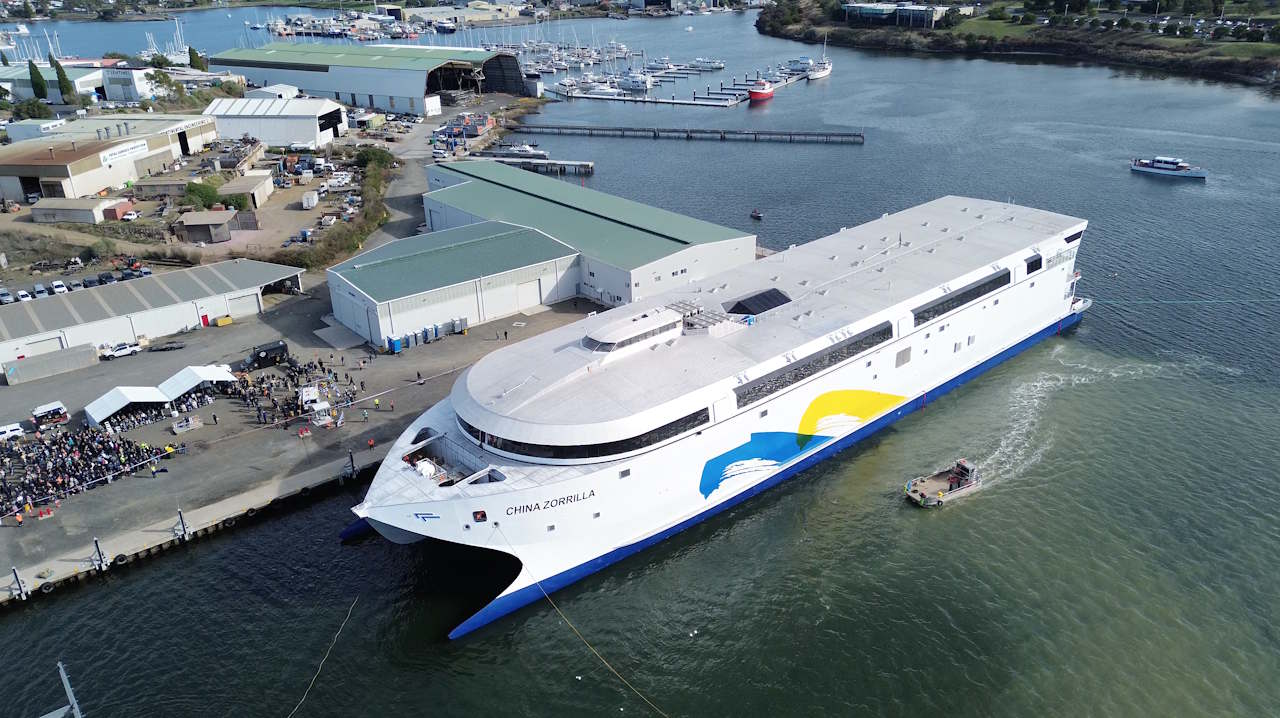
Australian shipbuilder Incat Tasmania has achieved a historic milestone, powering up the world’s largest battery-electric ship ever constructed that was built at its shipyards on the River Derwent north of Hobart.
The milestone was celebrated on Sunday in front of numerous dignitaries including Australia’s trade minister Don Farrell, Tasmanian oremier Jeremy Rockliff, and Tasmania governor Barbara Baker.
The milestone was part of the first e-motor trial for the vessel currently known as Hull 096, which the company claims is “the world’s largest battery-electric ship and the largest electric vehicle of any type on the planet”.
Hull 096 is being built for South American ferry operator Buquebus and was originally intended to be a LNG-powered ferry named China Zorrilla before revisions were made during the pandemic.
Measuring 130-metres in length and capable of carrying 2,100 passengers and more than 220 vehicles, Hull 096 also boasts the largest battery-electric propulsion system ever installed on a ship.
When fully operational, the vessel will be powered by more than 250 tonnes of batteries, delivering over 40 megawatt-hours (MWh) of installed capacity – four times larger than any previous maritime battery installation in the world.
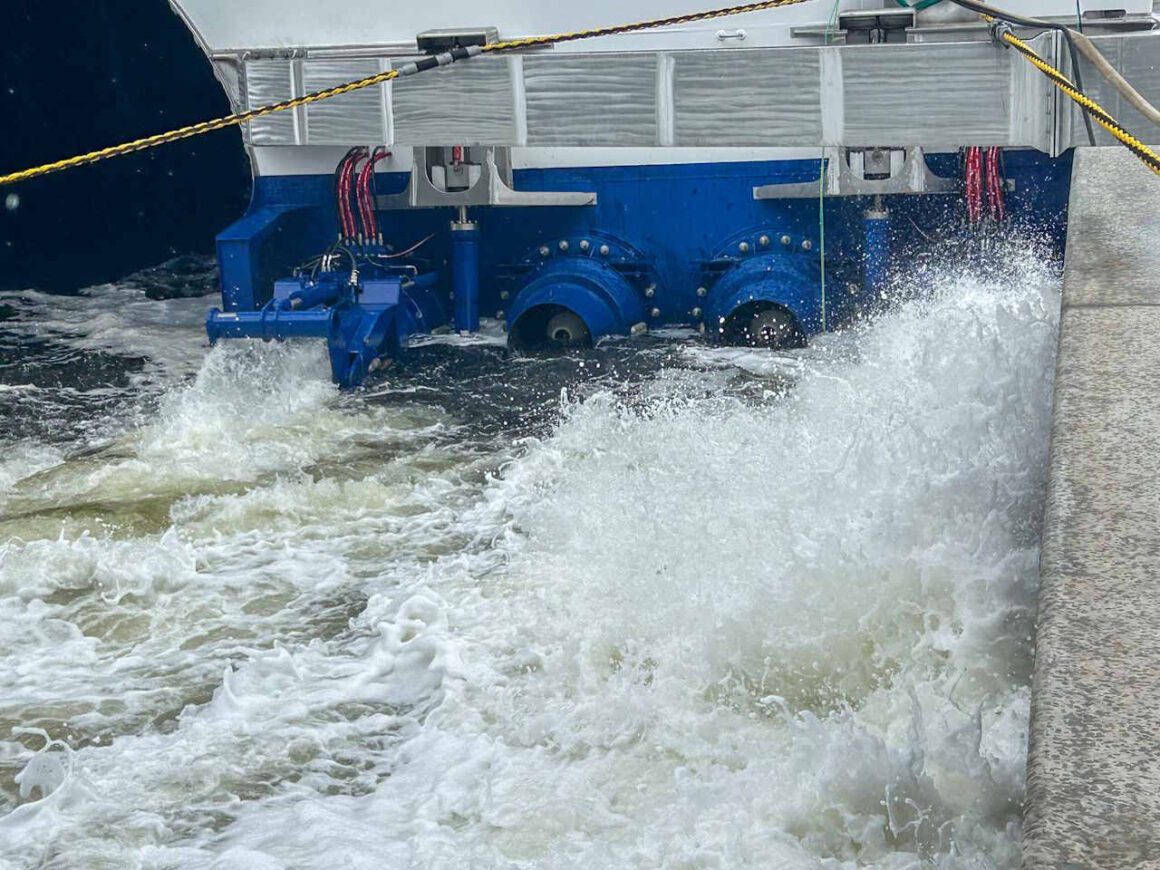 Image Credit: Incat Tasmania
“This is the first time a ship of this size, anywhere in the world, has been trialled under 100 per cent battery-electric propulsion,” said Robert Clifford, Incat Chairman.
“It’s a remarkable achievement by our workforce and a turning point for shipbuilding.
“Tasmania has been at the forefront of international aluminium shipbuilding for decades, and today’s milestone shows we are now leading the world in the next era – sustainable, high-performance vessels at scale.”
Clifford had the privilege of being the one to power up the waterjets during the e-motor trial on Sunday.
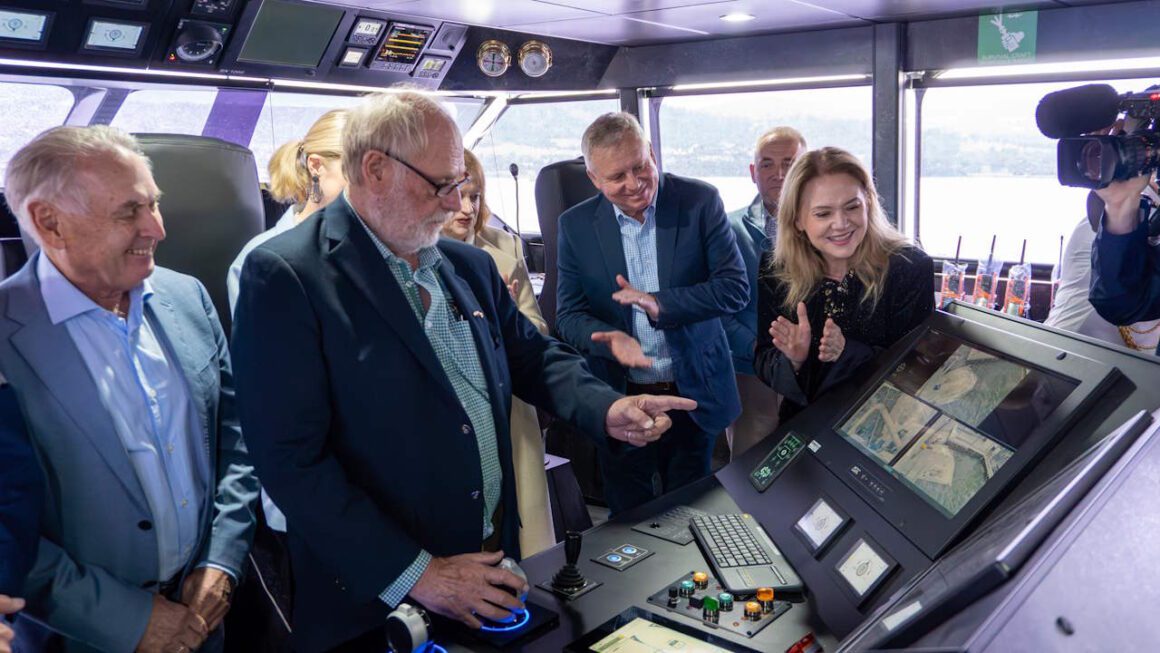 Image Credit: Incat Tasmania
Hull 096 was officially launched in May at Incat’s shipyards and will now complete a series of before it eventually departs for its eventual destination in South America in the coming months.
This is just the latest milestone for Incat Tasmania, which in recent months has also secured contracts to build three battery electric ferry for Danish ferry operator Molslinjen.
Incat Tasmania announced in July that Molslinjen had selected it to build two new battery electric ferries for the busy Kattegat route between Jutland and Zealand, and followed that up earlier this month with the news that Molslinjen had ordered a third electric ferry.
Each of the three high-speed ferries will measure 129 metres in length and will be 100 per cent battery powered, featuring a 45 MWh battery system and carrying capacity for up to 1,483 passengers and 500 cars while operating at speeds over 40 knots.

Joshua S. Hill is a Melbourne-based journalist who has been writing about climate change, clean technology, and electric vehicles for over 15 years. He has been reporting on electric vehicles and clean technologies for Renew Economy and The Driven since 2012. His preferred mode of transport is his feet.