
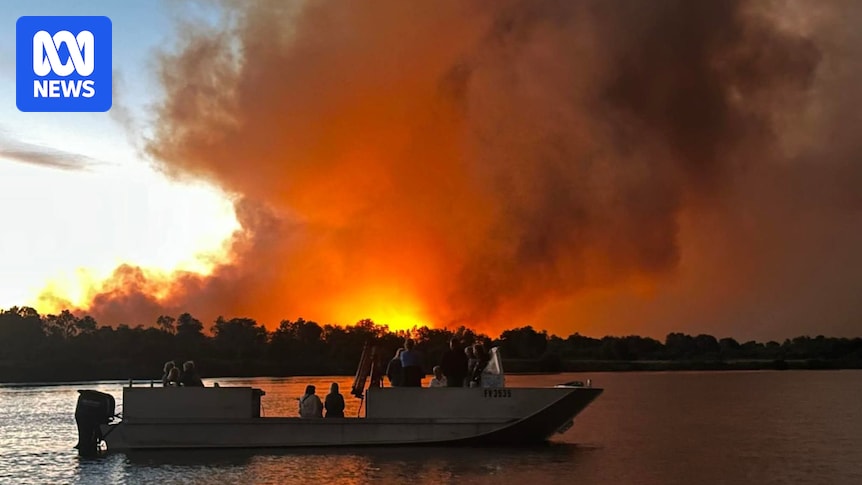
In the wake of a bushfire that destroyed 19 homes and damaged dozens more, residents of an east coast Tasmanian town have expressed frustration at a lack of action to reduce bushfire risk from registered fires.
Dolphin Sands residents said they have for years warned authorities and called for tighter restrictions in their fire-prone community, but no policy changes have followed.
Earlier this month, a landowner had covered a registered burn with sand to extinguish it — a week later, it reignited and turned into a blaze that destroyed or damaged 33 houses.
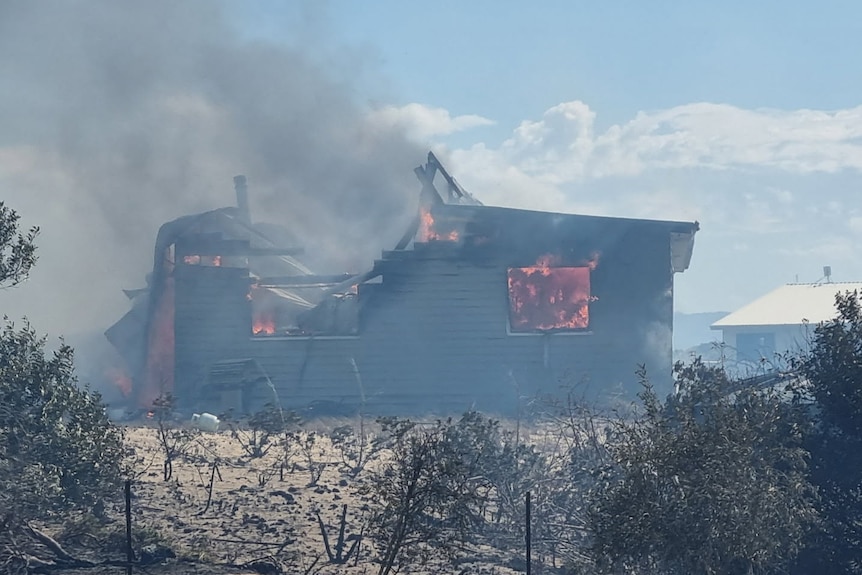
Rhian and Sam Peltzer’s home was among those lost to the December bushfire. (Supplied: Rhian Peltzer)
In letters seen by the ABC, two Dolphin Sands residents warned the Tasmania Fire Service (TFS) and the state government in 2019, 2021 and 2024 about the risks of planned burns escaping, which they said was the most common cause of out-of-control bushfires in the region.
Stevie Davenport, who has lived in the community for 34 years, wrote in a 2021 letter that she felt only TFS-controlled burn-offs should be permitted.
“I plead with you to do whatever we can to ban fires at Dolphin Sands, unless undertaken as fuel reduction burns, under appropriate conditions, by the Tasmania Fire Service,” she wrote to the Tasmania Fire Service in 2021.
She said she would now be calling for a year-round ban on lighting fires in any circumstances across the region.
“It’s frustrating, but frustration is not a useful emotion. It’s a matter of getting on and changing things,” Ms Davenport said.
“We’re going to encourage community members to contact politicians.
“Get on board with the potential action of not allowing fires at Dolphin Sands or similar regions of vulnerability at any time of year, under any circumstances.”
The TFS said a blanket ban was not considered reasonable “as fire has a range of legitimate uses in Tasmania, and the TFS is aware of many instances where fires have been safely managed without incident in Dolphin Sands and other places”.
“TFS is working to improve community education on the safe use of fire and the legal responsibilities of people who light fires.”
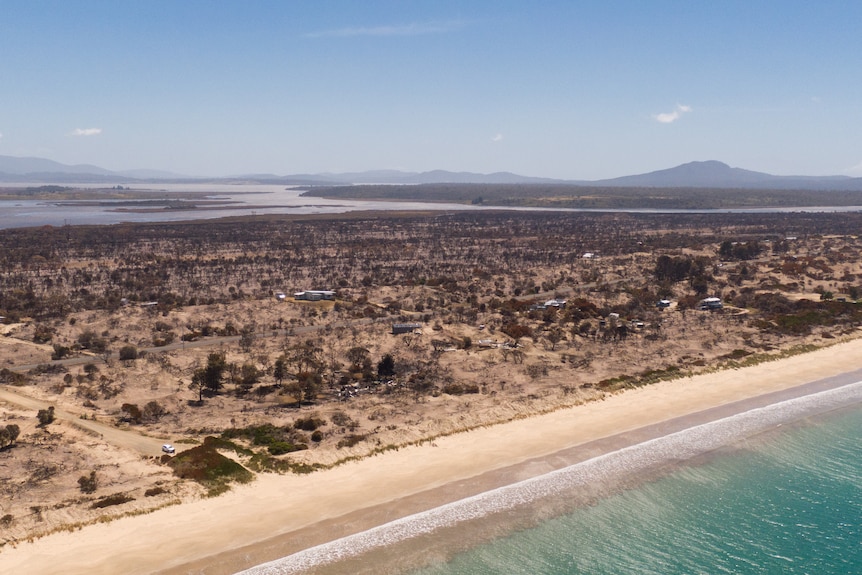
The 700-hectare blaze tore through the town in early December. (ABC News: Luke Bowden)
Speaking to the media on Tuesday, Tasmania Fire Service Commissioner Jeremy Smith said the TFS hoped to “co-design” a bushfire plan with the Dolphin Sands community.
He said further fire lighting restrictions could be considered.
“If the community would like that type of restriction in place for a period of time, we certainly would look at that as a suitable outcome,” he said.
“However, people also have the right to cook and keep warm.”
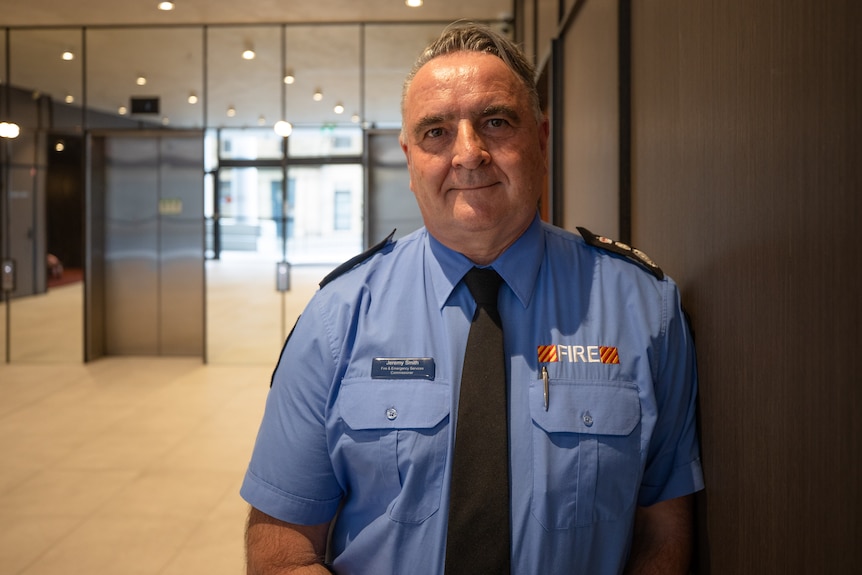
The Tasmania Fire Service’s Jeremy Smith said the TFS wanted to work with the community on a bushfire strategy. (ABC News: Luke Bowden)
Deputy Premier of Tasmania Guy Barnett also said “there would be learnings” from the recent fire.
The peninsular community of Dolphin Sands has been under threat from bushfires on a regular basis, with incidents in 2012, 2013, 2019, 2021, 2022 and 2023 — before the fire this month.
‘Most’ bushfires from planned burns
Ms Davenport said she had been collecting bushfire records since 2009, which showed planned burns triggered more than half of those in the Dolphin Sands region.
She said a further 26 per cent were caused by machinery.
Despite another fire crisis, some still won’t leave ‘heaven on earth’
While the TFS said it was awaiting data on bushfire causes, TFS Commissioner Smith said around 50 per cent of fires in the region came from an ignition source “like a burn-off” or machinery.
Ms Davenport attributed the trend to the region’s fire-prone environment.
Dolphin Sands, north-east of Hobart and not far from the world-famous Wineglass Bay in Freycinet National Park, is on a long peninsula, with only one road in and out.
It is lined with “highly flammable” vegetation, has dry, sandy soils and is prone to strong winds.
Ms Davenport said while most people conducting planned burns were trying to reduce bushfire fuel loads, there were ways to do so that did not require fire.
Bushfire was ‘foreseeable’
Jenny Topfer, another resident of Dolphin Sands, found the recent devastation hard to stomach.
“It makes me angry,” she said.
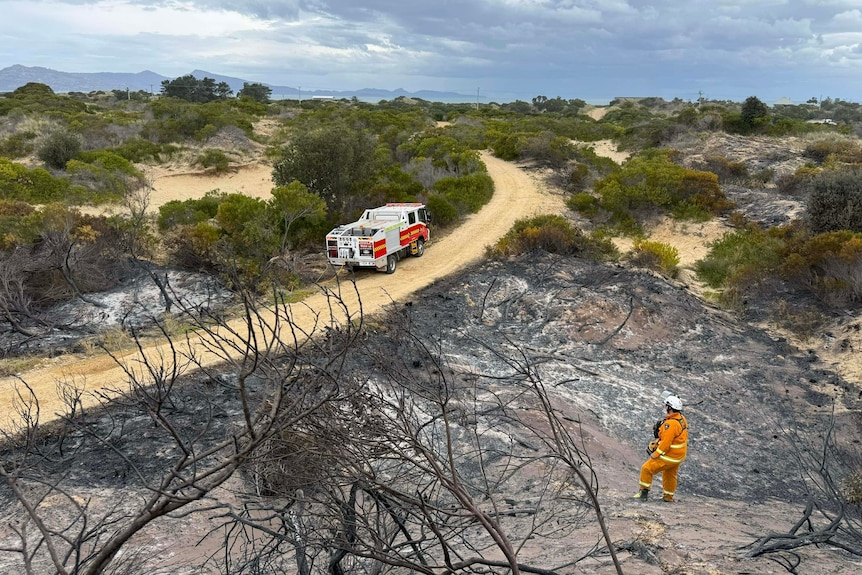
At least eight bushfires have broken out on the peninsula in the past 15 years. (Bridgewater Fire Brigade)
“This particular disaster, which I believe is one of the worst in Tasmania, never mind Dolphin Sands, was foreseeable and 100 per cent preventable.”
Ms Topfer wrote to the Tasmania Fire Service and Fire and Emergency Management Minister Felix Ellis in February last year, calling for stricter regulations and warning that the Dolphin Sands environment put it at particular risk.
“Furthermore, fires can appear to have been extinguished but in fact are alive beneath the sand, and embers are re-ignited under some circumstances, often days later,” she said in the 2024 letter.
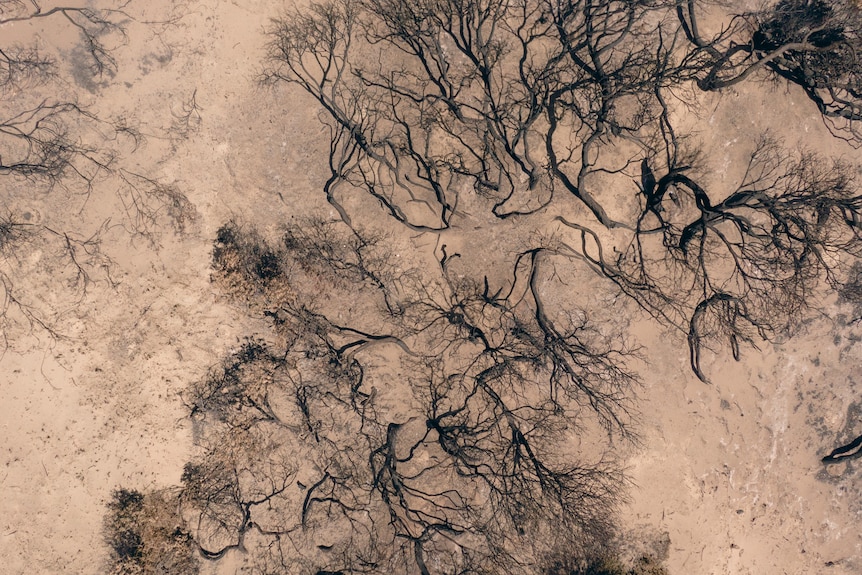
Authorities confirmed a registered burn escaped to cause the bushfire. (ABC News: Luke Bowden)
But the Tasmania Fire Service’s response — dated March 8, 2024 — said while Dolphin Sands had a “somewhat higher” fire risk, it would not move to ban fires.
“The fire data shows that even should the conscious lighting of fires be stopped, there would remain significant potential for ignitions due to arson, accident, or negligence,” the letter said.
“Furthermore, the prohibition of fire would potentially disadvantage those wishing to manage fuel on their land and may impact the legitimate enjoyment of landholders and visitors.
“Having considered the situation, at this time Tasmania Fire Service would not seek to impose a permanent total exclusion of fire in the Dolphin Sands area.”
Ms Topfer agreed residents could remove fuel loads without starting fires, by chipping or physically removing vegetation and taking it somewhere safe to burn or burying it.
She and three other residents, including Ms Davenport, also wrote to the local Glamorgan Spring Bay Council, to propose a draft bushfire reduction strategy.
“While they were sympathetic, I guess nothing happened,” she said.
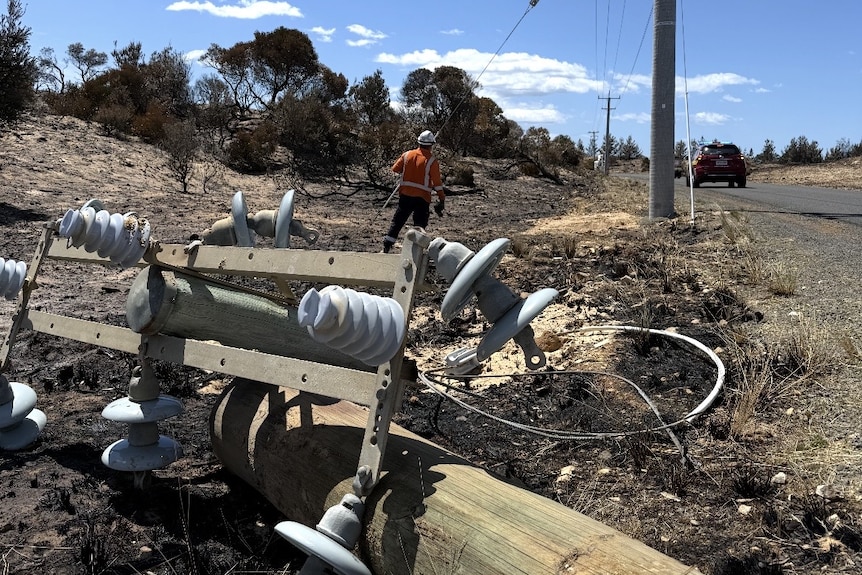
Residents faced extended power outages after the bushfire. (TasNetworks)
Resident hopes blaze brings change
Resident Ian Helmond said keeping vegetation in check had saved his house from the fire, but his sauna had burned.
He also hoped the recent fire would lead to change and said a project to upgrade power poles to concrete was an example of a good initiative to reduce fires and road blockages.
“When the fire goes through, the poles catch fire, they fall down on the road,” Mr Helmond said.
“You will have to wait for TasNetworks to come along and clear it, and that can take quite a while.”
“Stopping people from lighting fires in the first place … would be pretty good,” he said.
“I would hope that we can make it a special area for fires. I mean Freycinet National Park over there, you can’t light a fire in that.”