
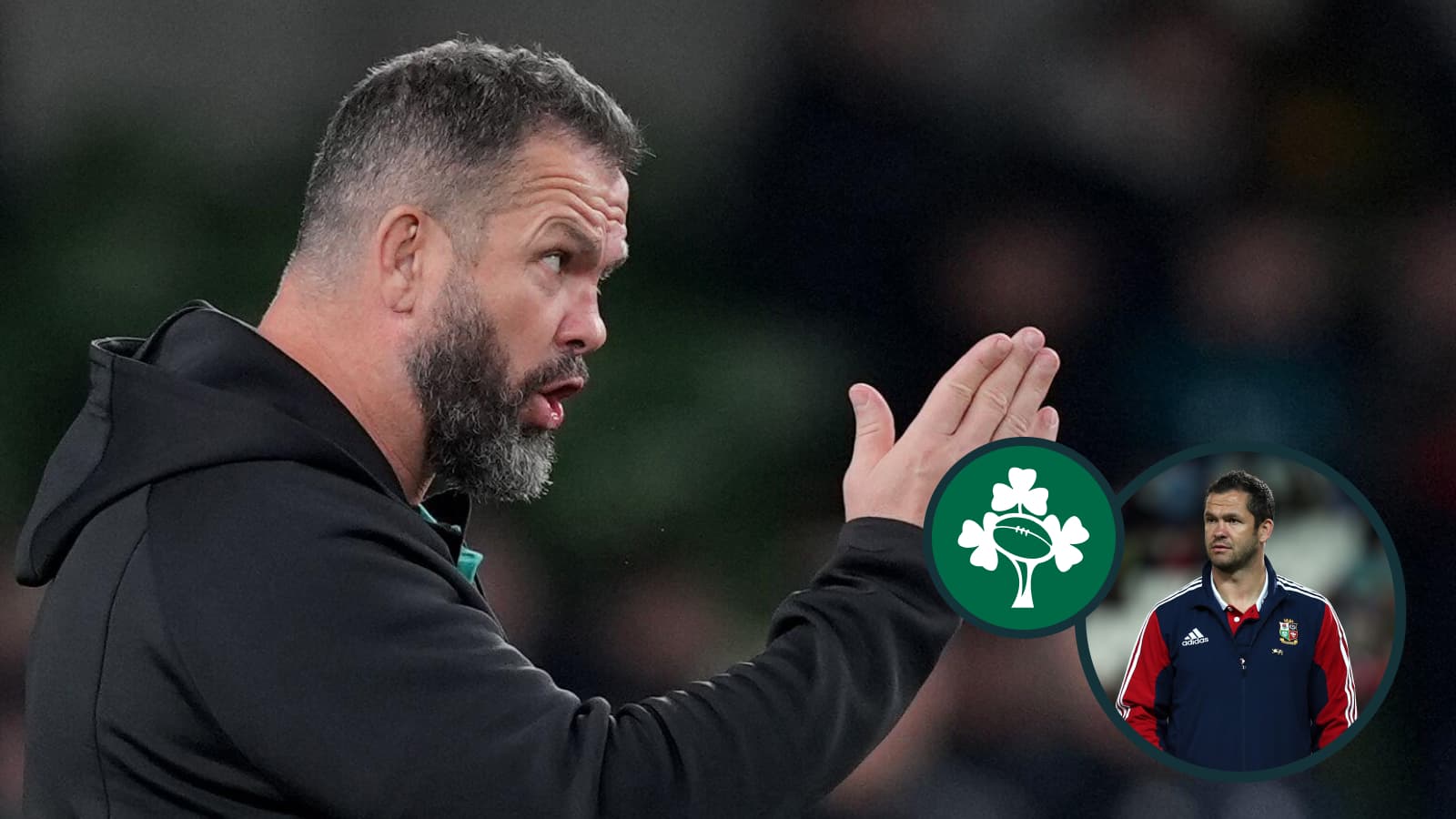
Andy Farrell has revealed the thing said about the Ireland camp that “p***** me off” while he has also distanced himself from the infamous “hurt arena” speech he made on the 2013 British and Irish Lions tour.
With the four-match Autumn Nations Series finishing for the Irish with two wins and two losses, Farrell has begun plotting for the upcoming 2026 Six Nations which starts on February 5 for Ireland away to France, the defending champions.
The 2025 series-winning Lions coach has also been promoting his autobiography, The Only Way I Know, and doing some corporate speaking.
One of his markings was the recent Christmas lunch hosted in Dublin for clients of non-bank lender Capitalflow. Farrell was interviewed on stage by Alan English, a former national newspaper editor who now works for online platform The Currency as an associate editor.
“It was a bit gimmicky…”
A chunk of that Q&A has now become public, including the coach’s reflection on the blood and thunder speech he delivered when assisting Warren Gatland on the Lions tour to Australia 12 years ago. Dismissing it now as gimmicky, he explained that it is something he would never do again.
“I’m a little embarrassed with that speech, but at the time I thought it was something that was needed,” said Farrell about his demand that the Lions take the Wallabies to the hurt arena. “That type of macho bull****. A speech like that, you’re not actually being yourself, you know?
“When you sit up and write something, and you’re trying to memorise it word for word, that’s not you being your actual self. I would have come on leaps and bounds from that.
“Even though it still gets talked about to this day, for me it was a bit gimmicky. At the time, in 2013, it was what was needed. You judge yourself on how that came across to a group at that time. Was it okay? Maybe, yes. But would I do it again? No.”
New ‘zero interest’ Rugby World Cup format dismissed as ‘absolute dog s***’ by ex-Ireland star
One thing that has been said regularly about Farrell’s Irish set-up since 2020, compared to what existed under his predecessor Joe Schmidt, is that the atmosphere under the Englishman is very different from the more intense environment created by the Kiwi. However, the way this difference gets talked about is jarring for Farrell.
“It actually pisses me off when people say publicly it’s a great place to be, a great culture to be part of – because that’s perceived on the outside that it’s just a bit of fun. And it’s a lot more than that. It’s built on people being able to have an opinion and us working through things together.
“But at the same time, my job is to make sure that the individual can get better as a rugby player, but as a person as well. And the team is at the centre of all that. We’re a team-first organisation; that’s 100 per cent bottom line. But to do all that, you’ve got to have a bit of trust – and to get that trust, you’ve got to be honest with people.
“You’ve got to tell them things with one hundred per cent honesty. For men growing up in my day, it was hard enough to take a b*********, but it was even harder to take praise, because you felt a little bit uncomfortable. And we do all of that today – because the only thing that matters is telling the truth. If you let things slide, then you’re wasting time.
“The way we started this off is that we wanted feedback in real time, the whole time. I hate reviews three months after, because what a waste of time.
“We need to know in real time how people are thinking, feeling, whether they’ve been coached in a right manner, to cope with the pressure cooker of a Test match arena. So, you’ve got to be as honest and open as you can to make sure that they understand what it takes to be able to deal with the pressure of international rugby. That’s at the forefront of everything.”
Ireland signed off on November with a 13-24 defeat to the Springboks, a match where their scrum imploded and their indiscipline was punished by one red card and four yellows. The loss, which came three weeks after getting beaten by the All Blacks in Chicago, generated plenty of criticism.
While Farrell is very much generally perceived as being his own man and disinterested in what gets said about his team, he told the corporate lunch a very different story. “I read it all,” he admitted. “I do, because it’s my job to understand what people think and where they’re at, so that you can put some reality on it.
“And not just that, but when I’m coming to a press conference, I need to know what people are thinking. I suppose you learn how to get better at that, as you go.”
Ex-Ireland star on ‘bizarre’ moment that ‘totally defeated all of my mindset’ about the Springboks
Farrell went on to defend the discipline of his side, claiming that numerous current players are learning on the job and will be better for the experience following the overhaul of the team that won back-to-back Six Nations titles and went to Rugby World Cup 2023 and one of the favourites.
Dismissing a claim that Ireland were coached to play on the limits of what is legal play, he said: “We certainly don’t coach like that. We have never been a team that wants to push the boundaries, or live just over the other side, because we believe discipline is a huge part of it.
“It’s more to do with the pressure of the game, how it unfolds and dealing with that. All teams go through different cycles, you know? People are always going to be injured, people are always going to retire, and you’re always going to have new people within a group.
“This group is completely different to the one we’ve had over the last four or five years, where we’ve been through all the disappointments, we’ve learned, we’ve grown, and we’ve got to a place where we’ve been able to deal with that type of pressure.
“This group was put under extreme pressure from a brilliant Springbok side and it accumulated into more ill-discipline. I don’t think we’re an ill-disciplined side, as such. It’s more about the new side of the group trying to deal with that type of pressure.
“They have to go through those types of experiences to feel what it’s like to get better at dealing with them. And that’s what we got from that game, more than anything.”