
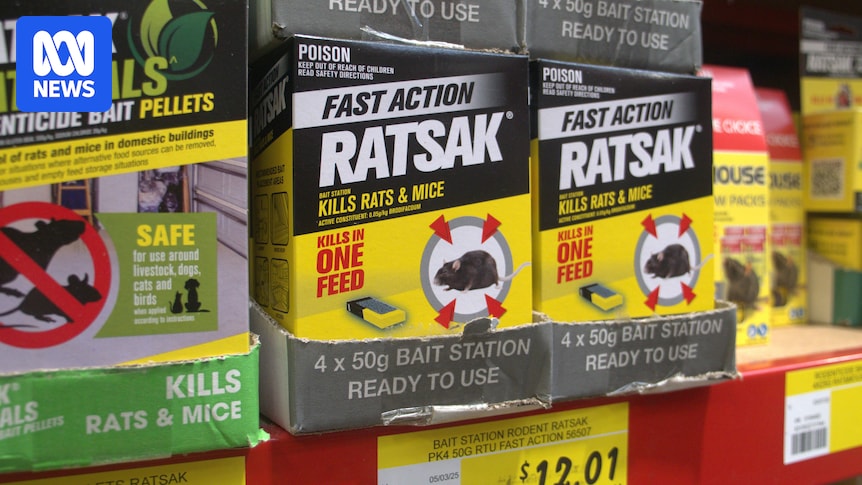
The Australian Pesticides and Veterinary Medicines Authority (APVMA) has released its draft plan to restrict some rat and mouse baits linked to scores of inadvertent poisonings of native wildlife.
Wildlife advocates had petitioned the APVMA to crack down on second-generation anticoagulant rodenticides (SGARs) since 2019, but have slammed the proposed regulations as “nonsense”, claiming they do not go far enough.
The draft recommendations include mandating labelling advising users to dispose of dead rats and warning about the dangers anticoagulant rodenticides can pose to native fauna, as well as limiting the size of bait packets that can be sold for domestic use.
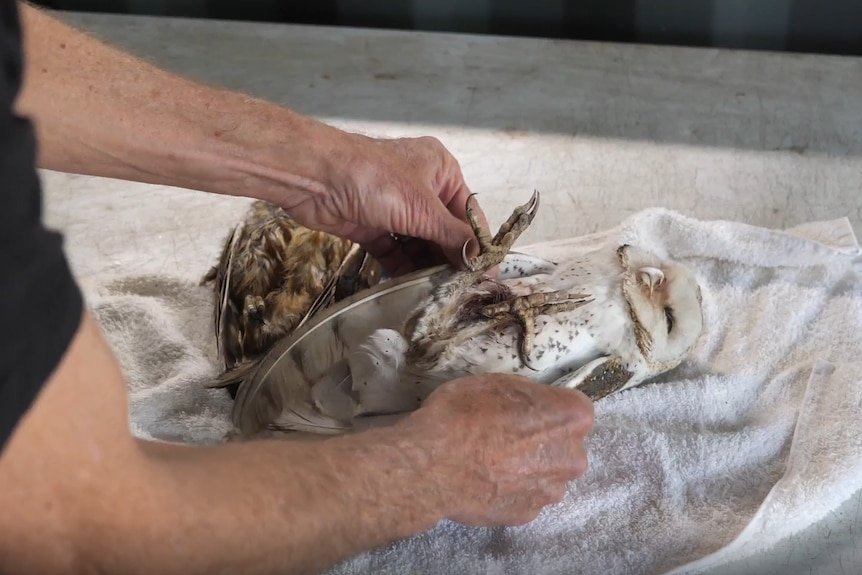
Carcasses have been collected for research to show the extent of the rat bait poisoning of wildlife. (ABC South West: Madigan Landry)
Proposed regulations ‘nonsense’
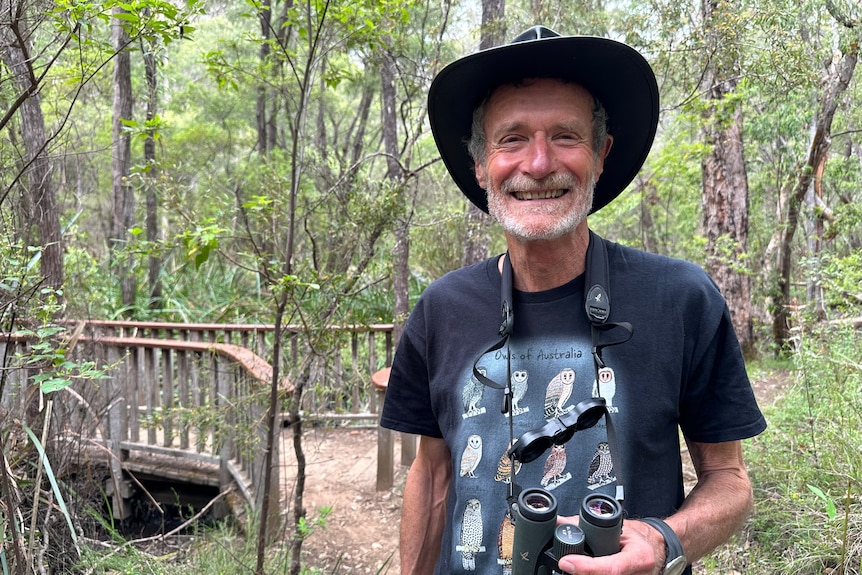
Boyd Wykes says he is not confident that label changes will prevent improper use of baits. (ABC South West: Madigan Landry)
Boyd Wykes, the coordinator of citizen science group Owl Friendly Margaret River, said the introduction of a label encouraging people to find dead rodents was pointless.
“These second-generation anticoagulants are going to kill a rat or a mouse over about a week,” he said.
“It doesn’t matter whether you’ve got the poison in a completely restricted place where only the rat or mouse can get it.
“[The rodent] is being eaten by predators while it’s still alive, it’s being eaten by scavengers when it dies, you don’t find where it is.”
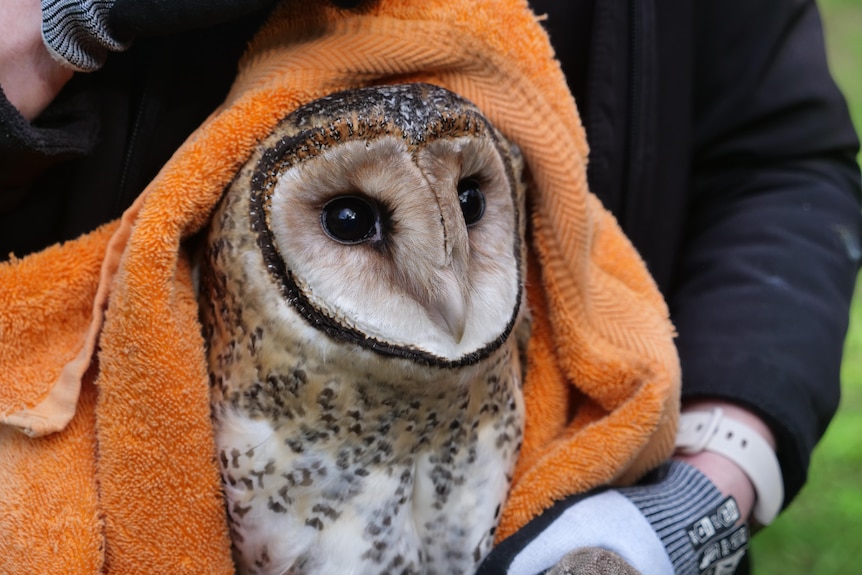
Owls die as a result of eating rodents that have consumed readily available rat poisons. (ABC South West: Madigan Landry)
The proposed label changes include instructions on using tamper-proof bait stations when placed outside.
“The idea is that you can put these things into tamper-proof bait stations … which won’t stop them being eaten by other stuff, it’s a nonsense,” Dr Wykes said.
“If a rat or a mouse can get in there, there’s a whole range of wildlife, including insects and other invertebrates.
“They’re not affected by an anticoagulant, so they’re heading out into the environment … and then anything that’s eating that is getting secondary poisoning.”
Regulator confident
The executive director for science and assurance for the APVMA, Maria Trainer, said the regulator was confident the changes would protect non-target species.
“The proposed decisions are intended to address the risks we’ve identified with respect to the use of the products and to ensure they can be used in a way that is safe and effective,” she said.
“They will be significantly restricted relative to the current conditions on the label.”
The APVMA’s draft decision has taken three years to develop. (ABC News: Ian Cutmore)
A suspension on the manufacturing and importing of anticoagulant baits was part of the draft proposal put forward by the APVMA, however, under a deemed permit, the regulator can issue instructions to product holders, which would allow domestic sales to continue.
Dr Trainer indicated instructions would likely align with the proposed regulations included in the draft decision surrounding packet sizes and label instructions.
Calls to pull products off shelves
Birdlife Australia’s manager of priority sites, Holly Parsons, said recognising the dangers SGARs posed was not enough.
“If the APVMA is acknowledging these products have a high risk to wildlife and to our pets, they should be removed from public sale,” she said.
“We’ve seen that has happened in other countries … there is international precedent here where other countries have decided these products should not be available and they’ve been withdrawn.”
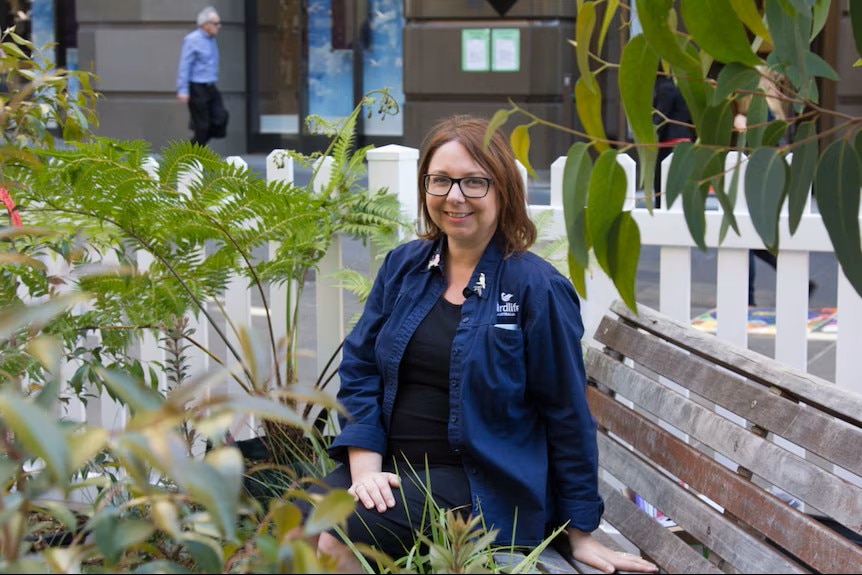
Holly Parsons says the removal of second-generation baits from domestic sale is necessary to protect wildlife. (ABC Sydney: Amanda Hoh)
Dr Parsons said Australia should follow suit.
“We want to make sure that we are not just putting poison out into the environment in unmitigated ways,” she said.
“Hopefully, we get a removal of public sale — that’s what we’re going to be pushing for.”
The APVMA’s proposal called for the removal of 31 products because they did not contain a dye or bittering agent, not because of their impacts on wildlife.