
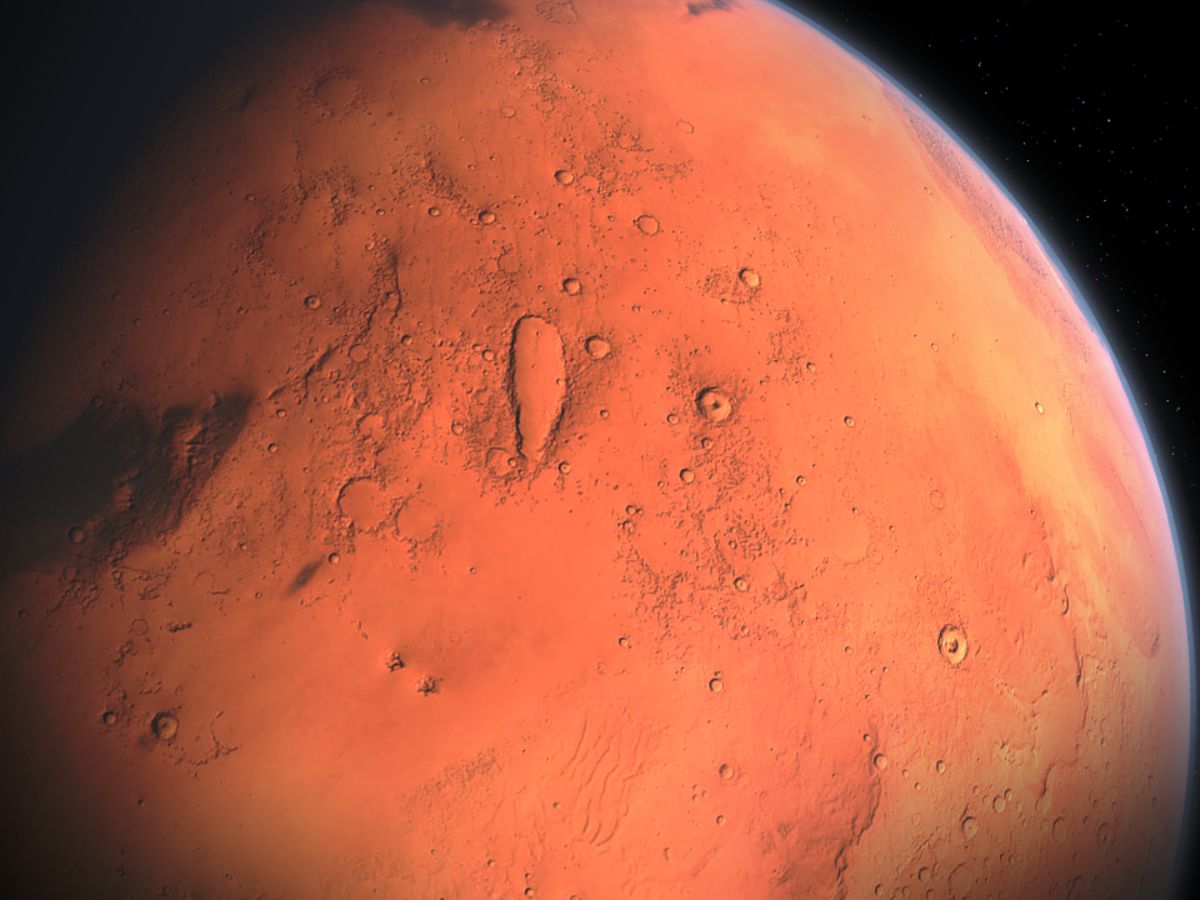
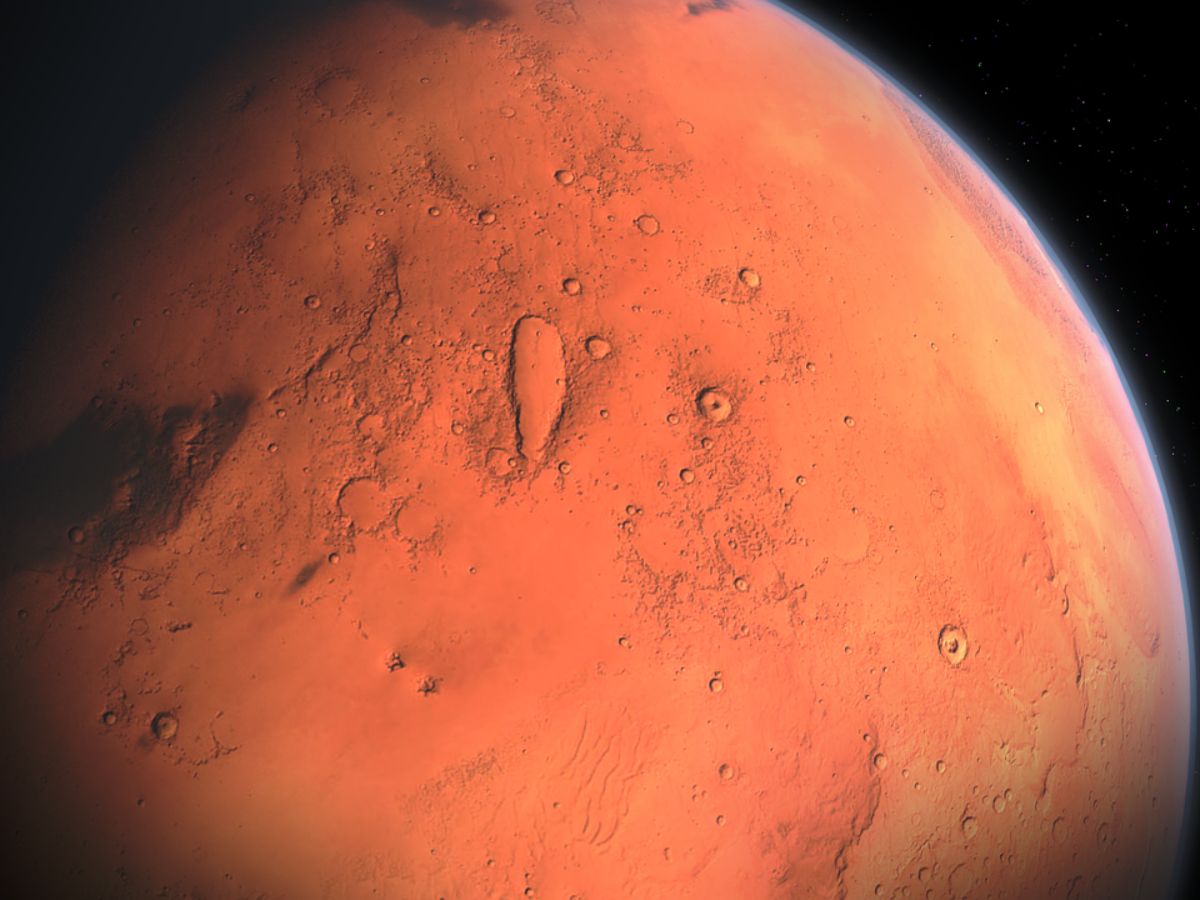
 An illustration showing the planet Mars and its atmosphere. (Image source: Aynur_zakirov – Pixabay)
NASA’s Mars Reconnaissance Orbiter has captured its 100,000th image of Mars, showing unique landscapes. And that’s not all, because scientists are also studying this image for future missions.
Mars is a planet that has fascinated humans for years, and numerous missions have been launched to study it. Today, several probes are orbiting this planet, and rovers are also present on its surface. But recently, NASA’s Mars Reconnaissance Orbiter took its 100,000th image of the red planet, revealing magnificent landscapes.
This probe has been orbiting Mars for more than 20 years. Its main goal is to map the surface of this planet, and for that, it has a remarkable asset, which is none other than the HiRISE camera. But the aim of these photos is not only to inspire astronauts. They also help identify the different surfaces of this planet and define potential landing sites as humans plan to go to Mars in the near future.
After more than 20 years of service, this probe has captured its 100,000th image, and it is quite exceptional. Taken on October 7, it shows the Syrtis Major region, located about 80 kilometers from the Jezero crater. But that’s not all, because we can also see numerous dunes with color variations. And this landscape is very different from what we see on Earth and also seems to be in perpetual motion.
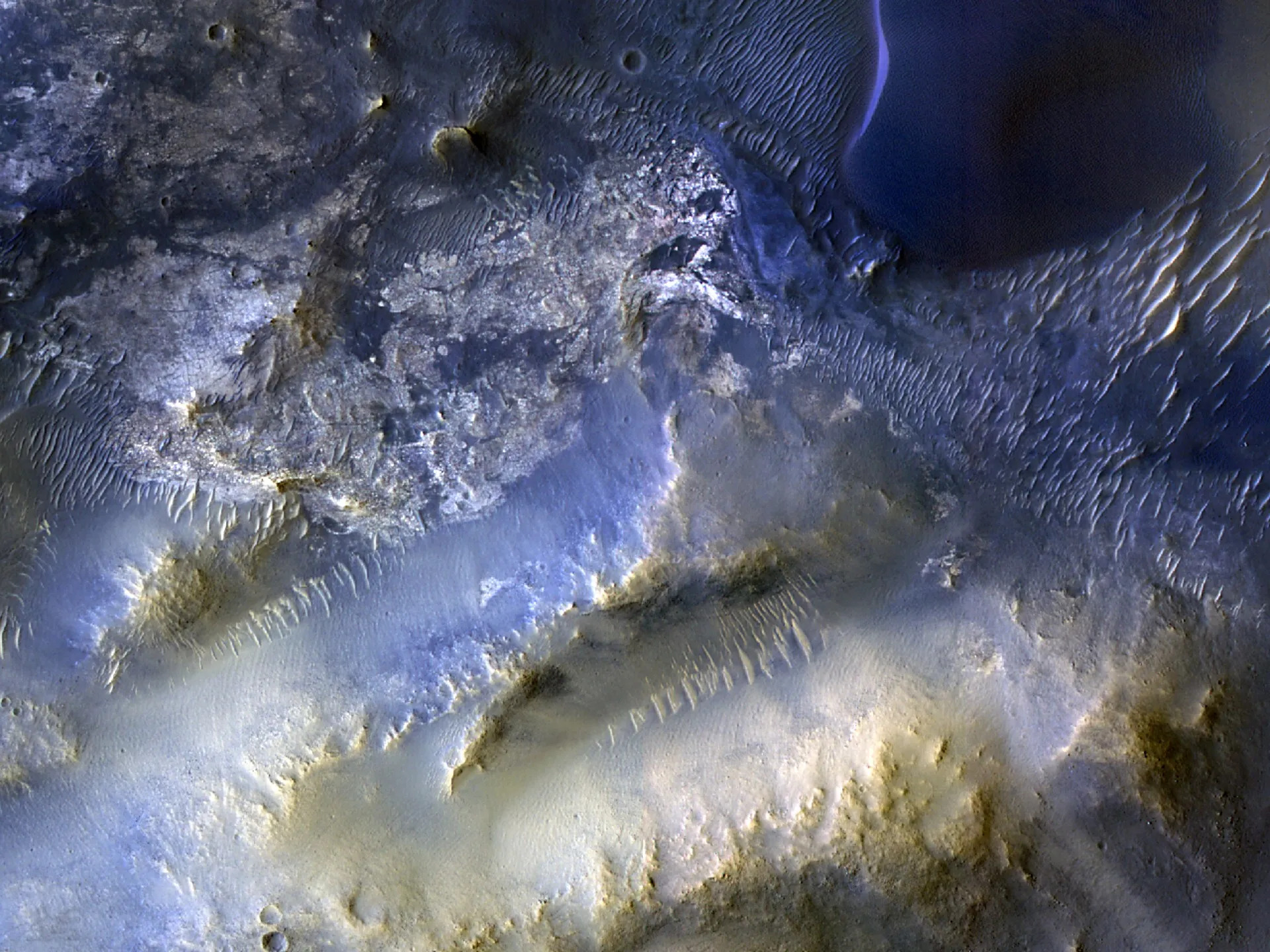 The 100,000th image captured by NASA’s Mars Reconnaissance Orbiter. (Image source: NASA/JPL-Caltech/University of Arizona)
On this subject, Leslie Tamppari, a scientist on the MRO project at NASA’s Jet Propulsion Laboratory in Southern California, explains:
“HiRISE hasn’t just discovered how different the Martian surface is from Earth, it’s also shown us how that surface changes over time. We’ve seen dune fields marching along with the wind and avalanches careening down steep slopes.”
Therefore, scientists analyze these images very carefully, as they could prove very useful for future space missions.
 Alexis Stegmann – Tech Writer – 442 articles published on Notebookcheck since 2025
I’ve been working in the field of web writing for several years, and I’m passionate about keeping readers up to date with the latest news on astronomy, technology, the world of video games and other exciting subjects. In particular, I’ve had the opportunity to work on a number of websites, which has enabled me to cover a wide range of subjects. In my personal life, I’m passionate about a wide range of subjects, including astronomy, video games, history and science. I’m also drawn to psychology, which is a subject that deserves greater documentation and recognition.