
Financial services company Netwealth has agreed to pay more than $100 million to more than 1,000 clients who invested in the failed First Guardian super fund through its platform.
The deal with the corporate regulator, announced on Thursday, comes after a similar deal with Macquarie over another failed fund, Shield Master Fund, in September.
Netwealth, which had previously claimed to have “complied with all relevant legal obligations”, admitted it failed to get enough information about First Guardian to understand the risk it posed to investors.
It has agreed to pay clients the face value of their First Guardian investment by January 30.
The settlement puts pressure on two other financial services groups, Diversa and Equity Trustees, through which clients invested in First Guardian and Shield.
Deep flaws in Australia’s $4.3 trillion system exposed
Both Diversa and Equity Trustees are being pursued in court by the Australian Securities and Investments Commission (ASIC), but have said they will defend the lawsuits.
On Thursday, Netwealth also agreed to a court-enforceable undertaking with the super sector’s other regulator, the Australian Prudential Regulation Authority.
The company has agreed to lift the standard of investment options it allows clients to choose from and hire independent experts to overhaul its procedures.
APRA also imposed additional license conditions on Equity Trustees that also require it to beef up its screening of investment options.
First Guardian and Shield, which collapsed in April, held combined assets once valued at $1.2 billion on behalf of about 12,000 people.
Their failure shocked Australia’s superannuation sector and has led to moves by ASIC to beef-up regulation of funds as well as calls for tougher laws.
Christian Eriksen, who invested $140,000 in First Guardian via Netwealth, welcomed the news that the company would pay investors.
He was also facing tax debts, he said the Australian Taxation Office (ATO) would not give him more time to pay.
“What an enormous relief I felt after the Netwealth announcement,” he told the ABC.
“It comes two weeks before my planned retirement and has lifetime ramifications.”
He said advocacy group Save Our Super would “continue to furiously advocate for the rest of the victims who all deserve this outcome”.
“I only hope that the other trustees see the writing on the wall now and stop defending the indefensible.”
So far, ASIC estimates that about 40 per cent of the money retail investors put into the collapsed funds will be repaid.
However, it is estimated that about $160 million was invested into Shield via Equity Trustees and around $300 million was sunk into First Guardian via Diversa’s super platform.
ASIC decides not to chase penalties
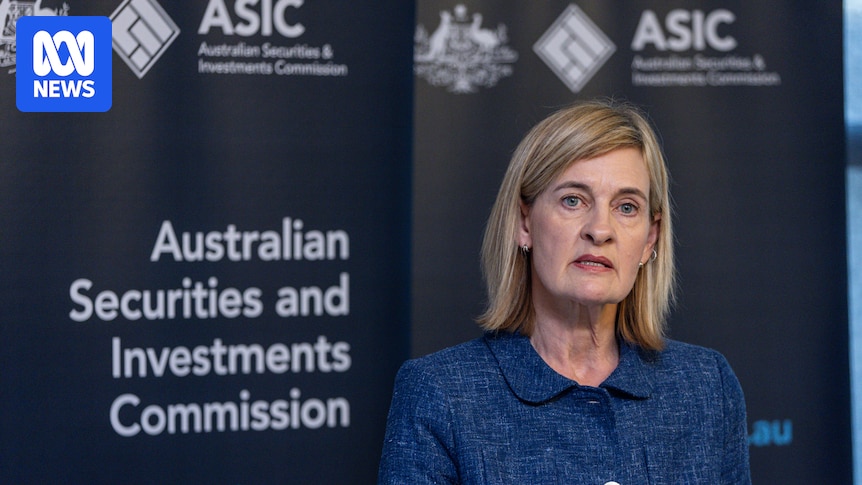
ASIC deputy chair Sarah Court said the regulator was continuing to investigate First Guardian and working to recover more money for investors.
“ASIC’s investigation will ensure Netwealth restores these members to the position they were in before they saw their savings eroded,” she said.
She said ASIC decided not to seek a monetary penalty from Netwealth due to “exceptional circumstances” that included the public interest in a speedy result and the company’s cooperation.
“The action we’ve taken in the last few months puts super trustees well on notice: they are gatekeepers for their members’ retirement savings, and ASIC expects them to take active steps to monitor the funds they make available on their choice platforms,” she said.
Call for greater protections for super savings
Netwealth chair Michael Wachtel said it had always been the company’s position that “affected members should be remediated as soon as possible, without having to wait for the recovery of funds by the liquidator or the completion of any ASIC investigations into the various parties involved in this matter”.
He said Netwealth had withdrawn an application it made to the Minister for Financial Services, Daniel Mulino, in October for the taxpayer to compensate clients who invested in First Guardian.
Netwealth had made this application under a superannuation law that allows funds hit by fraud or theft to ask for a government bailout.
Mr Wachtel said that, in the course of exploring the application to Mr Mulino, “it became clear that the only way to restore members in a timely manner was to reach an agreement with ASIC under which Netwealth would fund the compensation to affected members”.
The deal between ASIC and Netwealth still requires approval by the Federal Court.