
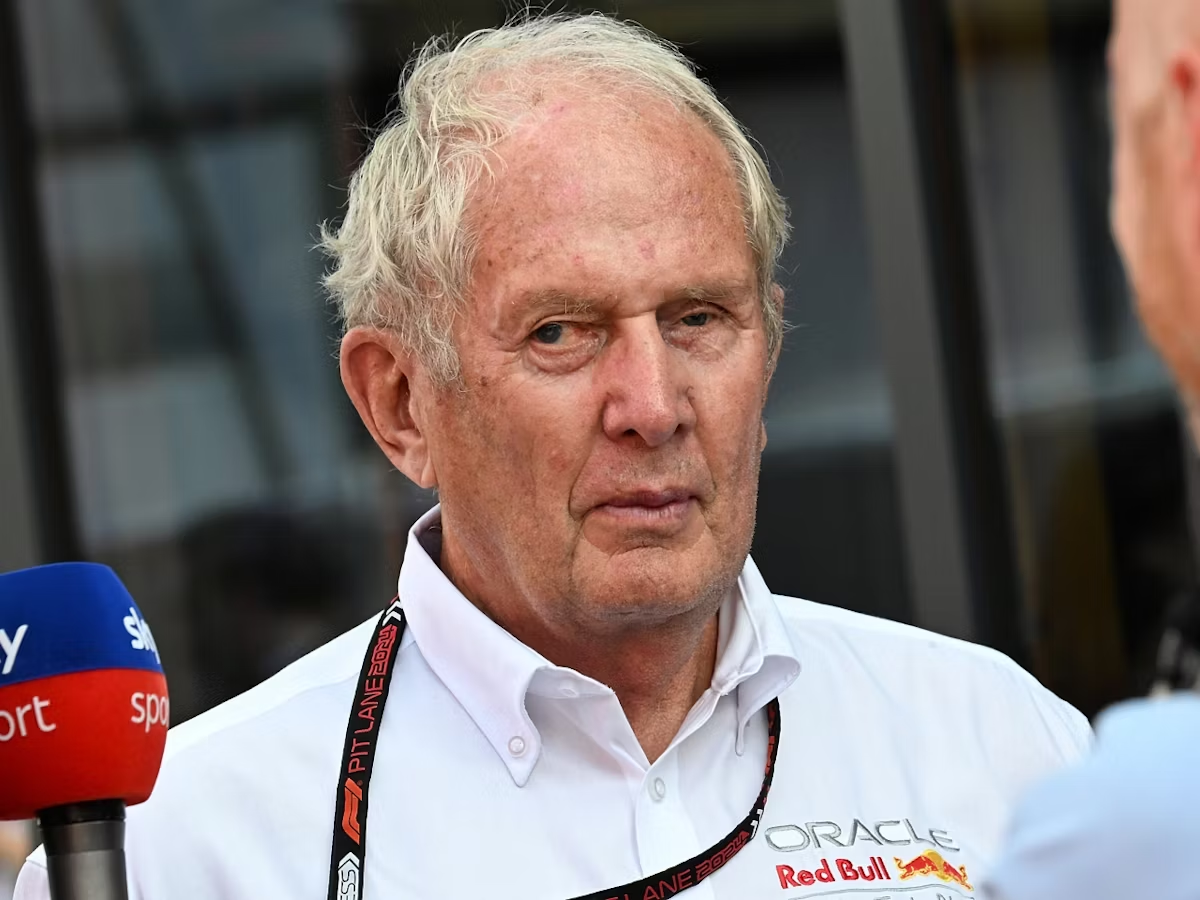

Marko reflects on Red Bull’s rise in Formula 1 – Dr Helmut Marko has played a central role in Red Bull Racing’s Formula 1 story, and during a recent appearance on ServusTV’s ‘Sport and Talk from Hangar-7’, the long-serving motorsport advisor looked back on how the team rose from outsider status to become one of the sport’s dominant forces.
Red Bull’s achievements under Marko’s guidance are considerable: 130 Grand Prix victories and eight Drivers’ World Championship titles. Speaking in Salzburg, the 82-year-old recalled the early days of the project alongside Red Bull founder Dietrich Mateschitz, stressing that success was never about individual brilliance alone.

FOLLOW TJ13 ⤴️
Markos’ proud moments
“There were so many great and proud moments,” Marko said. “But it was always teamwork, an incredible spirit, the so-called Red Bull spirit.”
He emphasised that Red Bull’s success came against some of the most established names in motorsport.
“We beat Ferrari, Mercedes, and Honda, the really big names. And coming from the provinces, we’re both from Styria, to holy England. We showed what’s possible when you have courage, enthusiasm, and, of course, the financial resources.”
F1’s calendar crisis: Races falling away as new promoters dry up
Searching for Red Bull’s next star driver
With Max Verstappen firmly established as the team’s current benchmark, Marko was also asked about the longer-term future and whether Red Bull could find another generational talent to follow in the footsteps of Sebastian Vettel and Verstappen.
Marko rejected the idea of directly replacing either driver with a copy of what came before.
“Back then, we weren’t looking for a new Sebastian Vettel, but a new winner,” he explained. “We’ll be looking then, too, who is the new star? You can’t copy someone else.”
He underlined that, while Vettel and Verstappen are both exceptional, their strengths extend beyond pure speed.
“Both Sebastian and Max are incredible drivers and have great abilities, but each has their own distinct personality,” Marko said. That individuality, he argued, is something Red Bull actively encourages, rather than suppresses.
Parting ways with Verstappen: the heartbreaking phone call
Red Bull Junior Program and driver individuality
Marko also used the opportunity to clarify Red Bull’s philosophy when it comes to developing young drivers. Contrary to perceptions of a rigid system, he insisted the Junior Program prioritises individuality rather than conformity.
“We don’t do any standardised training in front of the camera in the Red Bull Junior Program,” he said. “They should live out their own identity; that’s how everyone grew up.”
He pointed out that this approach has been consistent across eras.
“That was also the case with Sebastian and Max. With Sebastian, it then went more in the green direction. With Max, we don’t know yet.” For Marko, allowing drivers to grow naturally has been one of the programme’s defining strengths.
Red Bull’s recent appointment to replace Marko with Sebastian Vettel’s former race engineer, ‘Rocky’, would be big boots to fill, considering Marko’s track record when dealing with junior drivers.
The French engineer joined the team in 2006 as David Coulthard’s race engineer, before moving on to work closely with Sebastian Vettel. In 2015, Rocquelin was promoted to Head of Race Engineering, a role he held until 2022. Since then, he has increasingly focused on Red Bull’s junior program, working alongside Helmut Marko to develop young talent, including world champions like Vettel and Max Verstappen.
Dutch Grand Prix cancelled replaced with Portuguese Grand Prix
A change in how Marko follows Formula 1
Looking ahead, Marko indicated that his day-to-day involvement with Formula 1 will continue to evolve. Rather than constant travel, he plans to follow much of the championship from home.
“I’m setting up a workstation at home,” he said. “Then I’ll see which channel I like best. ServusTV doesn’t show all the races, after all.”
The comment suggests a more selective approach to attending Grands Prix in person, reflecting both practicality and personal preference.
McLaren Exit: ‘Piastri talks with rival team’ says insider
Which races Marko plans to attend in person?
Asked which races he might still attend on site in 2026, Marko made clear there is no fixed schedule.
“Since I’m under no obligation, I’ll see how the championship unfolds,” he said. “I’ll choose something that’s not too far away, and where the hype isn’t too intense.”
He described his approach as similar to that of a regular spectator. In the Middle East, Bahrain stood out as a preferred option, while in Europe, Barcelona remains a favourite. Other races are less appealing to him in person.
“I watch Monte Carlo on TV,” Marko said, while adding with a smile that at the Austrian Grand Prix in Zeltweg, he simply needs to “make sure I’m wearing sunglasses, so I can enjoy it in peace.”
Villeneuve rejects common Verstappen theory
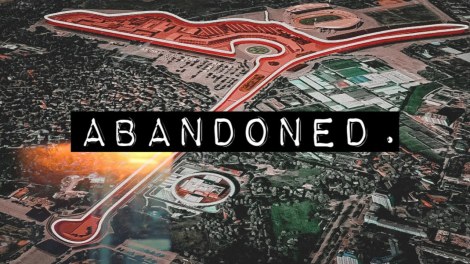
The global image of Formula One is that of a runaway success as the sport continues to grow from strength to strength. Next season will see the first new circuit added since Las Vegas back in 2023, although rumours that Madrid is behind schedule continue to circulate.
Yesterday it was announced that Portimao in Portugal will return to the F1 schedule for a two year run in 2027/8. Yet the pipeline once brimming with hopeful promoters brandishing unlimited cheques appears to be running somewhat dry.
As is often the case in modern F1, the Portuguese Grand Prix is being underwritten by the government of the country and given the exorbitant fees to host such an event, the commitment for now is for just two years.
Gaps appearing on the future F1 calendar
However, there are gaps appearing on the calendar and in 2027 there are currently only 23 confirmed F1 race weekends. Imola has said farewell this season, but Madrid replaces the final slot on the 2026 schedule. Barcelona loses the right to host the Spanish Grand Prix as the title for the race has been transferred to the Spanish capital.
The future of F1 in Barcelona is uncertain given their contract expires at the end of 2026. The promoters may be hoping for an extension to be agreed, although they’ve been set the task of huge infrastructure improvements to deliver by the FIA and FOM.
For 2027 the number of Grand Prix weekends cold fall to as low as 21, as the historic Belgian Grand Prix begins its bi-annual rotation on the calendar. The Las Vegas Grand Prix will also be out of contract, although it is thought to be just a formality that an extension will be agreed.
Currently there are no big F1 projects in the pipeline and even the hugely trailed new Saudi Arabia track with its 90 metre high banked turn one has not yet broken ground. Whispers are…READ MORE ON THIS STORY

Clara Marlowe has worked in motorsport journalism for over 15 years, writing features for established sports magazines and online outlets. With formal training in journalism and a reputation for human-interest storytelling, she highlights the often-overlooked figures behind Formula 1’s success.