
At 4:30am, while most of the city is still asleep, a group of paddlers gathers by Manila Bay in the Philippines.
The smell of salt and untreated wastewater lingers in the air, but for the University of the Philippines (UP) dragon boat team, it’s a routine they’ve learned to live with.
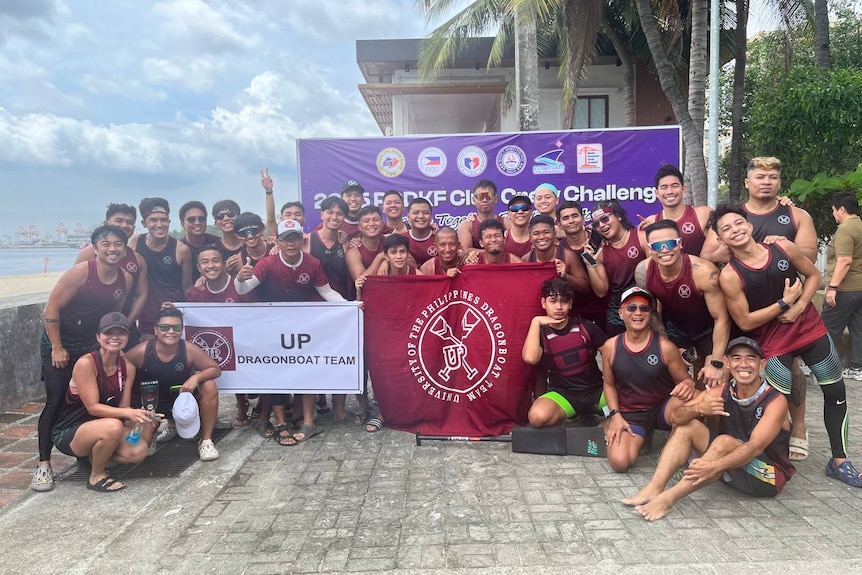
Three times a week this dragon boat team gathers to train by Manila Bay in the Philippines. (Supplied: The University of Philippines dragonboat team)
Three times a week, you’ll see them all sweaty or running out of breath, paddling in rhythm, building strength, focus, and discipline.
Dragon boat racing is a sport where teams compete to be the first to cross the finish line on a 200-500m or longer endurance course.
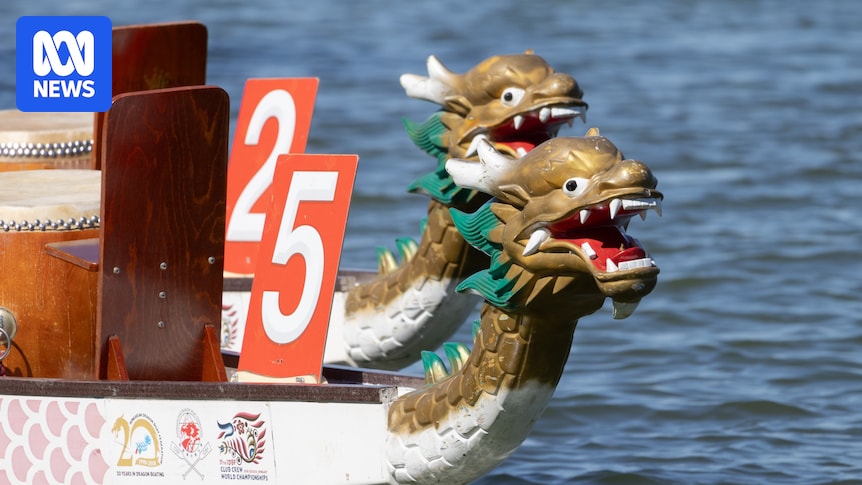
A standard boat carries 22 people: 10 pairs of paddlers, one lead, and one steersperson. Decorated with dragon heads and tails, the sport’s roots remain visible in every race.
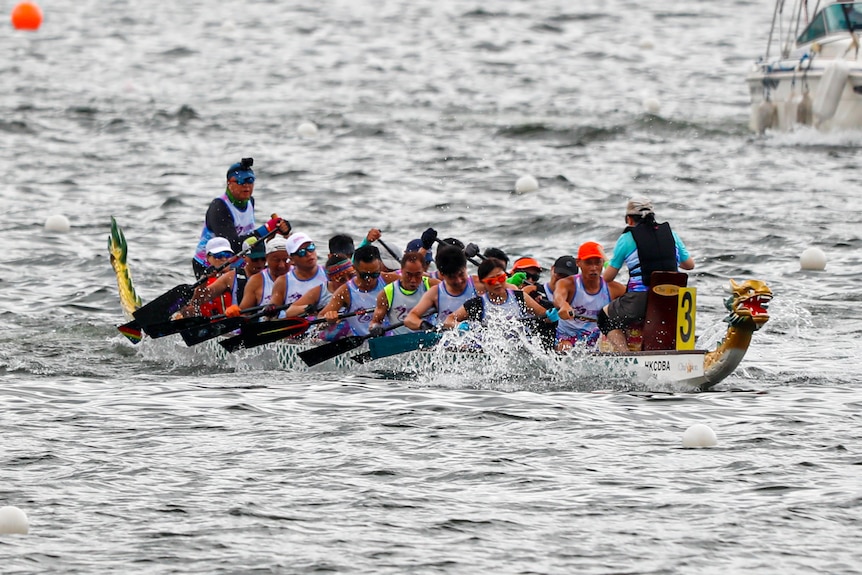
A standard boat carries 22 people. (Getty Images: Ceng Shou Yi/NurPhoto)
Though fun and fulfilling, dragon boat racing at UP lacks institutional support.
The team does not receive any funding because it is not recognised as an official sport under the university’s governing sporting body, The University Athletic Association of the Philippines (UAAP).
But while its members dream of what this funding could change, they continue to show up under difficult conditions for a community they take great pride in.
With borrowed resources, students self-fund competitions
Dragon boat training starts early on Tuesdays and Thursdays, and a few hours later on Saturdays — just before work or class begins.
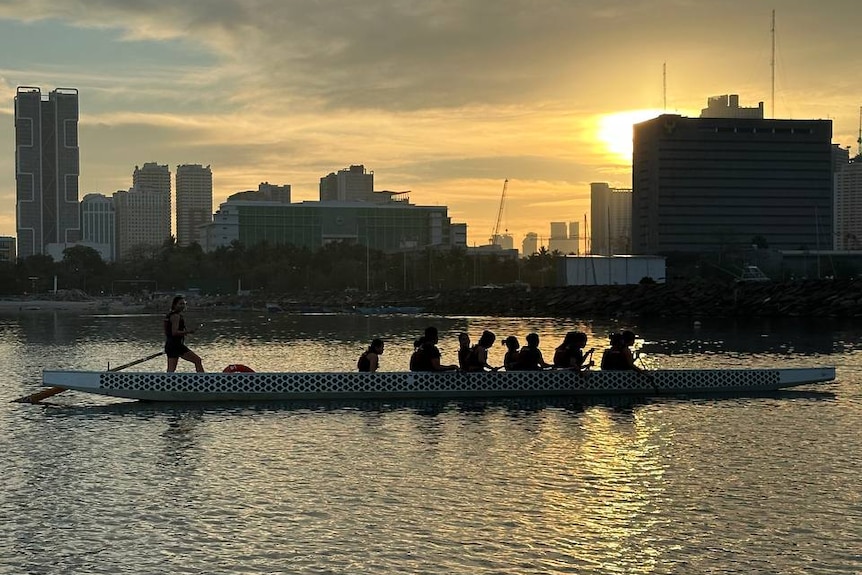
The team starts training as early as 4:30am so they can finish before classes begin. (Supplied: The University of Philippines dragonboat team)
Some paddlers rush back for 8:30am classes, while others squeeze in strength and conditioning independently at home or in nearby gyms.
For the team, the mindset has always been simple: use what’s available.
Whether it’s a shared paddle, an old life vest, or borrowed gear from a teammate, they make do.
This reliance on internal funds dictates their schedule, as all race expenses, from travel and accommodation to basic race fees, come from their own pockets.
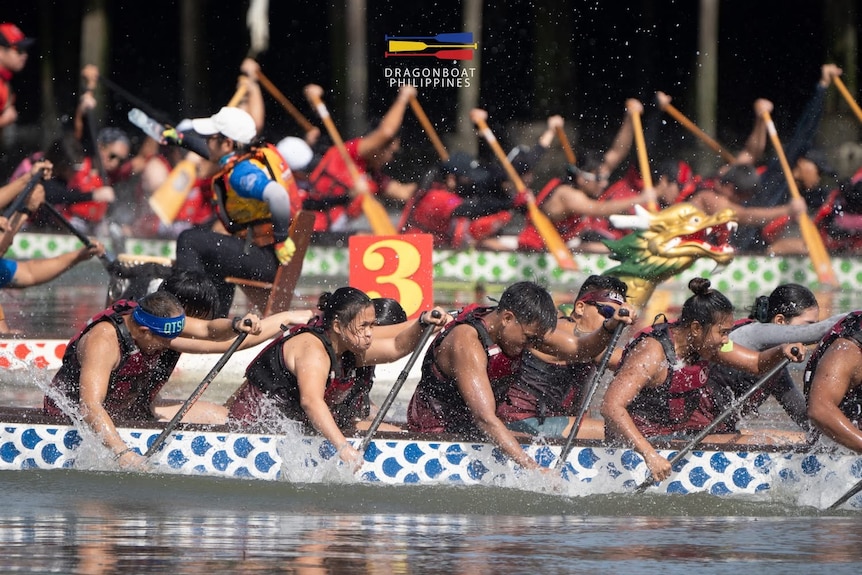
Many expenses such as travel and race fees have to be covered by the student athletes. (Supplied: The University of Philippines dragonboat team)
“When it comes to races, the team only operates within our means,” Micah Faith Marcial, president of the team, says.
“Because most costs come out of our own pockets, it naturally limits the races we can join.”
Without official funds, the UP dragon-boating team works to pool funds and reach out for sponsorships to sustain essential team needs like hydration and recovery support.
This is in stark contrast to the UP’s varsity athletes. Varsity athletes are those who represent the university in UAAP-recognised sports. They receive meals, housing, allowances, and full access to sports equipment and facilities.
Meanwhile, organisations like UP Dragonboat can only apply to use precious facilities when available.
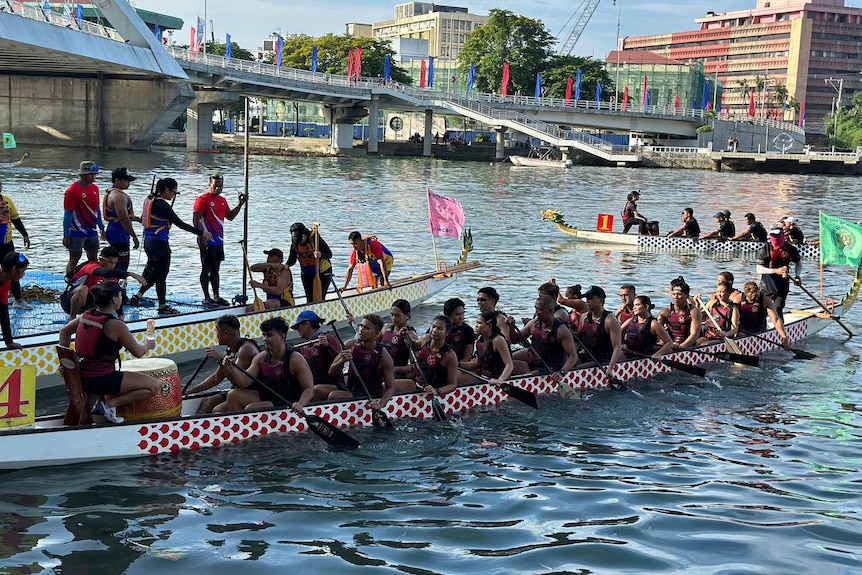
Without official funds, the team works to pool money. (Supplied: The University of Philippines dragonboat team)
In a statement provided to the ABC, a spokesperson for the Office of Athletics and Sports Development said “even our varsity teams experience difficulties in securing training schedules, as most venues are shared with academic classes or prioritised for other sports”.
“We recognise the ongoing challenges faced by our athletes due to the limited facilities and resources available,” the statement said.
“Some gyms remain usable only during daylight hours because of power constraints. While we strive to provide adequate space for all, the current set-up still requires us to give priority to our varsity programs.”
Pride driving community of dragon-boaters
As an unfunded sport, the UP team relies on its members’ commitment to the community and culture of dragon-boating.
Part of that culture is welcoming people from all fields, ages, and fitness levels. There’s no concept of seniority — only commitment. As long as you keep showing up and improving, there will be a seat for you.

The UP team embraces and welcomes people from all fields, ages, and fitness levels. (Getty Images: SeongJoon Cho/Bloomberg)
Paddler Sydney Pichay, who has self-funded overseas trips, argues the “pride of fellow Filipinos” makes their efforts “worth it”.
“In our recent Hong Kong race, a Filipina we met on the bus was so happy to see us representing UP that she handed us money out of pure pride,” he said.
Another UP member, Aira Christine, speaks fondly of the team’s reputation after they finished sixth with a mixed-gender crew.
“When people hear ‘Team UP,’ they’re always amazed at how we managed to survive back-to-back 500-meter heats, even against uniformed teams known for their intense physical training,” she said.
World archery champion Sheetal Devi shoots with her feet
“In the under-24 division, most boats were all-male, but our team had only four men — and we still ranked sixth out of 16 teams.”
Junior team captain Roland Danielle Lusterio echoes Christine’s sentiment, arguing there is a “special kind of pride in carrying the UP name in races, especially abroad”.
According to Marcial, it is that pride that translates into the team’s motivation.
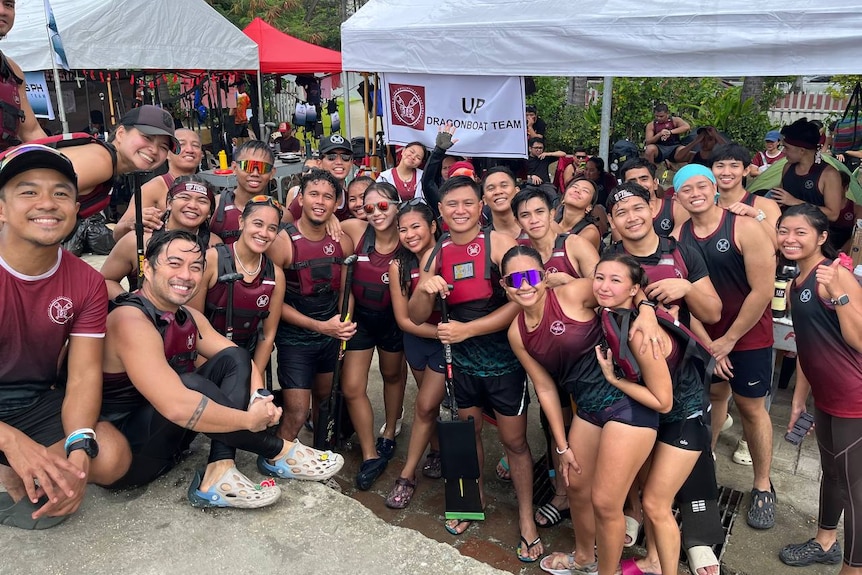
Roland Danielle Lusterio says the dragon-boating team has a special pride in their craft. (Supplied: The University of Philippines dragonboat team)
“As a competitive team that carries the name of the university, everyone wants to do their best not just for themselves but for the purpose of doing it well for the UP community, to paddle well with honour and excellence,” he says.
Quinn Barcarse is a student journalist and athlete drawn to the stories that live between victories and defeats. In sports journalism, she’s found joy in uncovering how games mirror connection, character, and community.
Quinn is part of ABC International Development’s Women in News and Sport Initiative, funded by the Australian Department of Foreign Affairs and Trade through the Team Up program.