
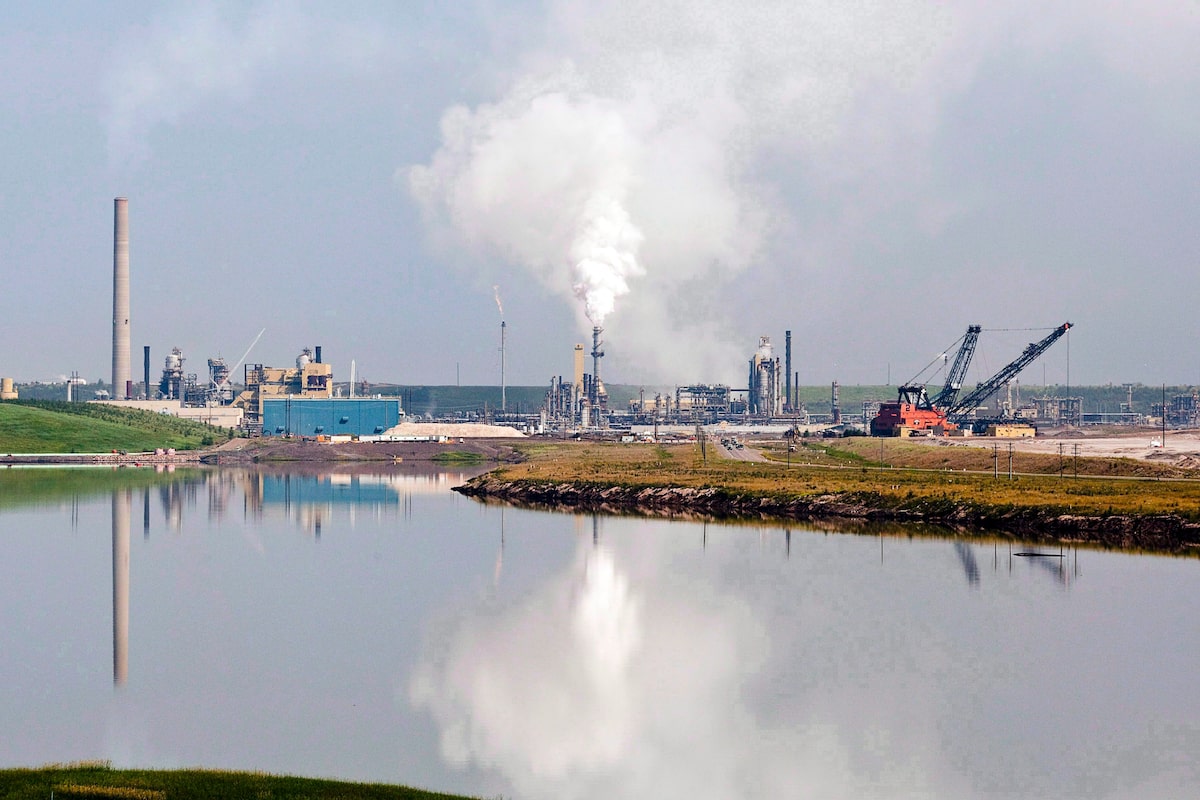
A tailings pond near Fort McMurray, Alta. The first comprehensive assessment of the region’s water quality highlighted areas that ‘may need further investigation.’Jeff McIntosh/The Canadian Press
Surface water across Alberta’s oil sands contains high levels of dissolved metals such as arsenic, cadmium, iron and aluminum, according to the first comprehensive assessment of the region’s water quality.
The report by the Oil Sands Monitoring Program, released Thursday afternoon, concluded that in-depth water analyses didn’t show “obvious widespread impacts” linked to oil sands activity. But, it said, the results highlight areas that “may need further investigation,” particularly where levels “flag potential concerns for different components of human or ecological health.”
The objective of the report was not to evaluate risk to humans, wildlife or aquatic species. Rather, it was to compare water quality between monitoring sites across the oil sands region and report on environmental conditions.
Ottawa releases more stringent methane rules for oil and gas producers, landfills
U.S. startup partners with Canadian producer on carbon capture study in Alberta oil sands
Twenty groups participate in the Oil Sands Monitoring Program, including Indigenous communities, several oil sands producers, federal and provincial regulators and the University of Calgary.
The report’s aim was to provide information to help understand the current state of water quality and quantity in the oil sands area, and how much it has been changing over time and from one place to another.
Its conclusions come from various indicators of water quality taken at 157 monitoring sites across the region. It compared surface water quality data against guidelines, and examined trends of what has been found in the water, and where.
The report used data gathered over three time periods to help gain a clearer picture of long- versus short-term changes – 1977 to 1997, 1998 to 2022, and the full data record.
In all, the analysis considered more than 2.5 million individual measurements.
Water quality “didn’t show a consistent pattern of change when comparing sites upstream and downstream of oil sands activities on the Athabasca River,” the report said.
However, some of the smaller tributaries that flow into the Athabasca – especially those in the surface mining area – showed “some increases that may require further investigation.”
The Muskeg River was a striking example. Water taken from the river “stood out with more parameters increasing over time,” the report said, including a rise in metals and ions such as nickel and sulphate.
Where exceedances did happen, they mostly involved metals, especially cadmium, iron, manganese, aluminum and arsenic, the report found. Those can occur naturally in the environment – particularly in the oil sands region, which is steeped in crude – but high levels can also point to human activity.
Measurements of aluminum, cadmium, iron, mercury and dissolved oxygen were commonly twice the level set out in guidelines to protect aquatic life. Values for total cadmium, thallium and uranium were two orders of magnitude above their guidelines for human health, though they occurred rarely.
“More work is needed to understand whether the sources of these metals are natural or industrial, both upstream and downstream of oil sands operations, particularly in the Steepbank and Ells River,” the report said.
It also examined how water flows have changed in the region.
While it found no consistent patterns between changes upstream and downstream, there has been a rise since 1990 in the number of days when water levels fall below navigation indicators, especially in the fall.
“Further study is needed to understand what’s causing these changes, whether it’s climate, seasonal rainfall and temperature, or human activity,” the report said.
Rebecca Schulz, Alberta’s Environment Minister, said in a statement that the findings reflect the province’s commitment to transparency, scientific excellence and environmental leadership.
“Albertans can be confident that our water is safe and that our energy sector is committed to responsible development,” she said.