
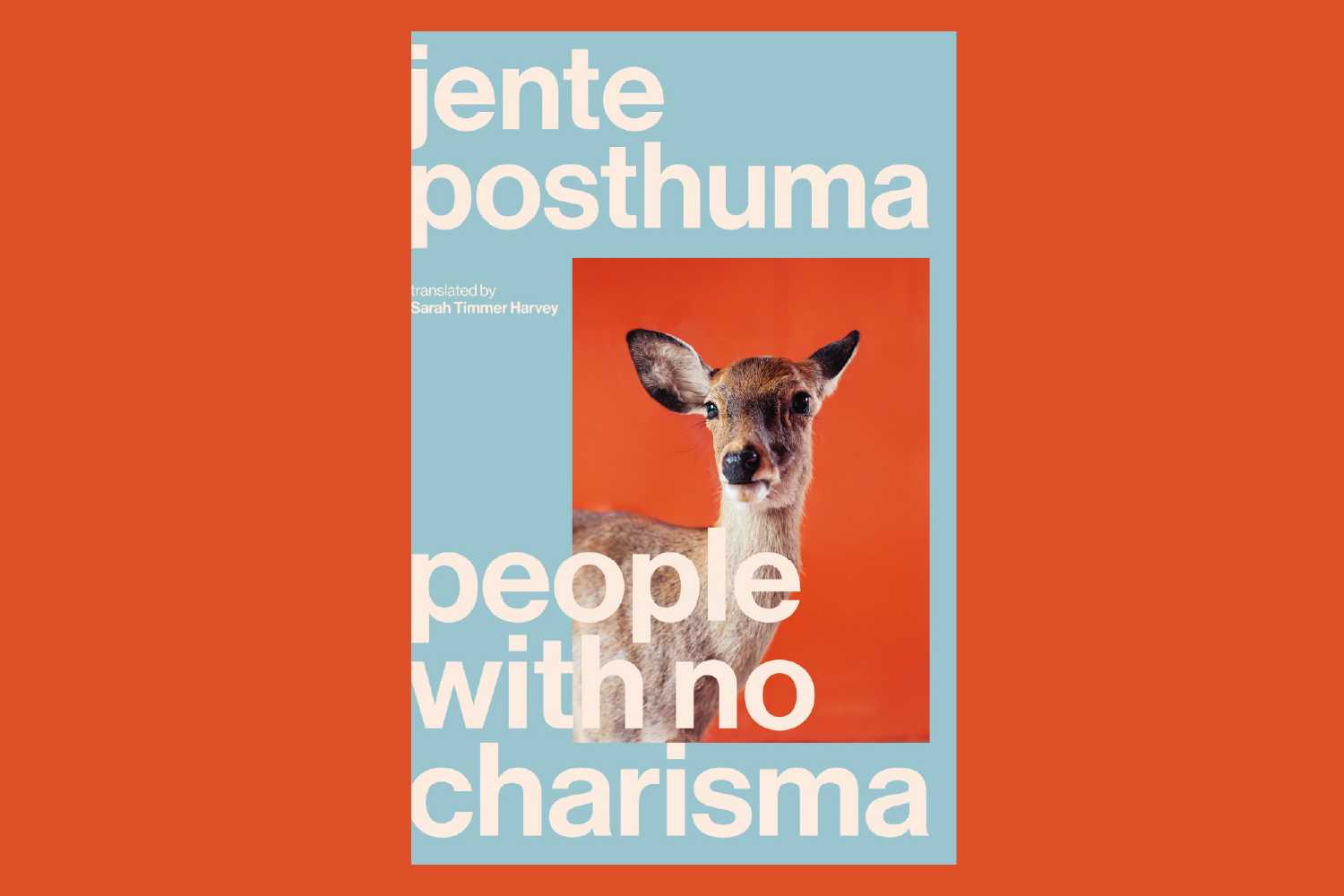
This is Jente Posthuma’s first novel, but it is being published in English after her second novel received international acclaim. I like to read things in order, but this isn’t really about me. This is about People with No Charisma, which you should read.
Within this novel — until she herself becomes a wife and mother — the unnamed protagonist speaks to us with a genderless, at times masculine narrative voice, which contrasts the complex femininity of her mother. In this, we feel the shadow of the mother’s expectations, the chasm of their differences. The main strength of the text is its atmospheric complexity, and the deftness with which it handles this. You can feel scenes coming from chapters away. Short, simple sentences change the way we read every line that follows. Each scene of the novel opens like a present, ending with a final line that ties it up like a bow. The process of reading is much like the unbearable, ceaseless onslaught of life.
I read a lot of this novel in the park next to university. While I read the first few chapters, there was a man sitting, eyes closed, facing the sun. He sat there for a long time. The sun, heat, and fire exist in this novel differently to how they exist in real life. The mother is obsessed with tanning her legs in the sun. The daughter likes to be in the shade. Since the mother died, the father heats things by microwave only: reheating or defrosting, never cooking. The family used to live near a pyromaniac who smoked cigarettes and burned his family’s house to the ground.
The world of this book opens as the world parents construct for their children. This world is one where an eight year old goes alone to the theatre to see her mother’s sex scene in Faust. Where a child is told to exude charisma.
Memories are told with distance, with a small, thoughtful smile. The adults who once made up our world are observed through new eyes, now that we are older. There is a darkness to this process. Humour, too. The prose is sparse and it’s hard to describe why passages which, if quoted here, would be bleakly depressing, are comforting in their intense, considered honesty. It’s something to do with the context of the whole novel that envelops such passages; the thing about novels that makes reviewing them much more difficult than recommending them. The man is still sitting in the park, eyes closed, doing nothing but being in the sun. I’m writing the review as I read, and as I’m doing all this he’s sitting. Some girls are giggling nearby. One of them has dyed red hair.
“God watched from a distance in his white disco suit. Why doesn’t he do anything, I thought…”
In several memories, the protagonist’s mother is holding Against Interpretation by Susan Sontag while walking on the beach. It’s a photograph or video of her, that’s why the memory is so specific. Against Interpretation ends with the line, “In place of hermeneutics we need an erotics of art.” I wish Posthuma had included a specific line from the essay in her novel, so I would be clearer on what the novel was actually saying and actually meant and thus felt more secure in my interpretation of it. There is another line in the essay where Sontag says “We must learn to see more, to hear more, to feel more.” Shying away from a direct interpretation, I think those lines have something to do with the novel. Why else would she reference the essay, if it didn’t have meaning? A nudge in the direction of meaning, that’s all I hope for. But I digress.
The novel is sort of about grief, in that it is about someone’s life, and grief is inherent to life. Posthuma writes something interesting and new about both topics, life, and grief. I looked up and the sun-man was gone. He had been there for seven hours. This is autofiction. The book feels like a secret. This novel makes you feel seen, as though your more intelligent self is telling you jokes about your own life in a way only you can. At least, it made me feel like that. I actually don’t know you. Maybe things will be different for you.
“My mother hated it when I called her a liar. She said it felt like the ground falling away beneath her feet. Which is why I decided to believe all her lies.”
People With No Charisma was published by Scribe on 29th July 2025.