
As 2025 draws to a close, we can look back on a year when economic inequality became firmly entrenched on the Australian political agenda, writes Carl Rhodes.
WHEN THE YEAR began, polls were already showing that cost-of-living was the number one issue for Australian voters. No surprise there. Inflation had eroded the spending power of everyday Australians to such an extent that income inequality had reached a 20-year high.
By the time federal election campaigning kicked off, three years of relentless price hikes, from housing and groceries to power and medical services, had bitten hard.
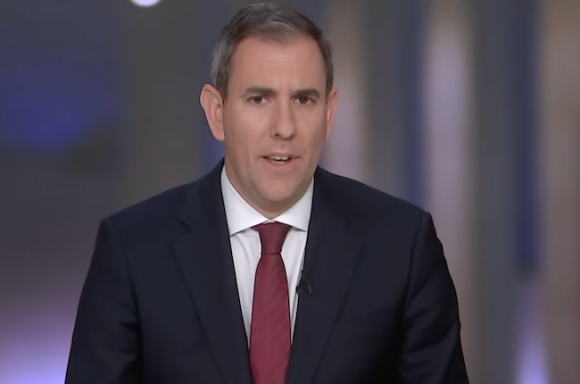
As he called the election on 28 March, Prime Minister Anthony Albanese declared:
“Only Labor is acting on the cost of living.”
The reality remains stark. Poverty rates have climbed to 14.2%. The number of Australian billionaires doubled in a decade.
Headlines spoke of crisis:
ABC’s headline:
‘Australia is in a cost-of-living nightmare’
The Guardian’s headline:
‘We need leaders brave enough to tackle inequality for all’
Sky News’ headline:
‘Cost of living will leave one in five Australians without food at Christmas’
By August, when the federal government convened its Economic Reform Roundtable, intergenerational inequality had risen to the top of the agenda. Once a shorthand for destitution, in 2025 inequality had become the lived reality of middle Australia.
Big Business joins the debate
If proof was still needed that inequality had gone mainstream, it arrived earlier this month when the Australian Financial Review published the results of its annual Chanticleer poll. More than 50 of Australia’s top corporate leaders weighed in on how to tackle intergenerational inequality, a striking departure from the usual growth-at-all-costs rhetoric.
Commonwealth Bank (CBA) chief executive Matt Comyn drove the point home, echoing the bank’s earlier submission to the Economic Reform Roundtable:
‘The compact central to Australian life is eroding.’
The long-standing promise that “by working hard and contributing to Australia today, people will be better off tomorrow and pave the way to a brighter future for generations to come” is slipping away.
AMP CEO Alexis George argued that inequality is corroding social cohesion, while SGH chief Ryan Stokes insisted that a reasonable cost of living must be a reality, not an “aspiration that drifts further away each year.”
Practical ideas emerged. Housing affordability dominated, with proposals to cut taxes on new homes, boost productivity on building sites, and incentivise living outside major cities. Others pushed for shifting the tax base from personal income to consumption, strengthening retirement planning, and lifting skills and training.
The elephant in the room: Redistribution
That Australia’s corporate elite are now debating inequality marks a profound and welcome shift. But let’s be clear, one glaring omission stands out in the AFR’s commentary on the Chanticleer poll.
Decades of tax and wage policies have created an Australia where a growing share of wealth is concentrated in the hands of a minority at the expense of working people. Despite this, the corporate advice in the AFR barely whispered about raising wages or taxing wealth as part of the solution.
The World Inequality Lab’s 2026 World Inequality Report, released just two days before the AFR’s coverage, drove home this point. Drawing on research from more than 200 scholars, the report paints a sobering picture: global wealth is growing, but it’s being hoarded by the few.
Australia’s story is no less stark. The 20th century was defined by progress towards economic equality. The income share of the top 10% fell from nearly 50% in 1900 to 25% by the late 1970s. Since then, the tide has turned. Today, the top 10% enjoy 35.2% of all income and a staggering 57.3% of all wealth.
Professor Thomas Piketty, co-author of the report, was blunt:
‘We need to change the rules. You have to put limits on how much private individuals can accumulate.’
His solution centres on progressive taxation, including annual wealth taxes on extreme wealth holders.

A time for bold action
Matt Comyn was right: Australia’s long-established social contract that hard work will lead to a better future is breaking.
The CBA chief was also spot on when he said:
“…the next generation may be the first in modern history in Australia to be financially worse off than their parents.”
In a move unexpected from the business community, CBA is now on the record stating that the “next wave of tax reform debate… should include the appropriate levels and role for… wealth taxes.” The job now is to make that happen, but so far there has been little progress.
The World Inequality Report makes the stakes clear. We are past the point where upskilling or productivity tweaks will make much difference. Tackling this crisis requires the kind of bold structural reform that corporate Australia has historically spent its lobbying dollars to defeat.
This shift requires rewriting the rules of the economy to place hard limits on private accumulation and embedding aggressive redistribution into the heart of fiscal policy.
It might be easy for CEOs and politicians to lament the loss of social cohesion from the comfort of an AFR poll or parliamentary meeting room. It is much harder for them to support the higher corporate taxes, wealth levies, and wage growth necessary to fix it. If the elite are serious about saving the social contract, they must stop describing the problem and start paying for the solution.
Carl Rhodes is Professor of Business and Society at the University of Technology, Sydney. He has written several books on the relationship between liberal democracy and contemporary capitalism. You can follow him on X/Twitter @ProfCarlRhodes.