
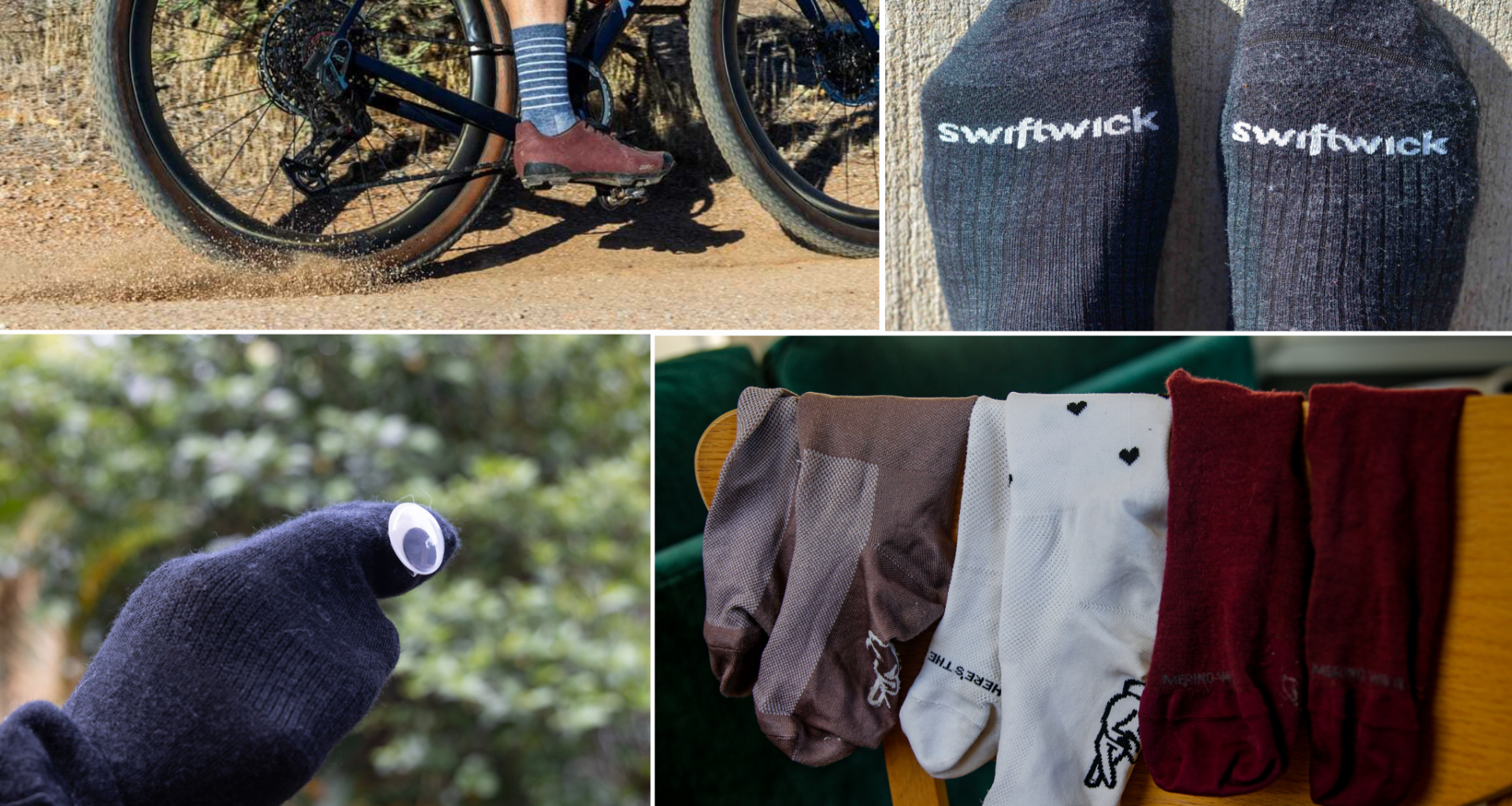

Though not quite as crucial for avoiding blisters and discomfort as running socks, cycling socks also need to be good quality and made for the purpose, making them one of the most important – if somewhat consumable – pieces of apparel. Too thick and your shoes will be too tight, and your toes will go numb and cold. Too thin, well, that’s less of an issue, especially in the summer.
But of all cycling apparel, socks are also some of the most divisive, plagued with unwritten rules. Many frown upon ankle socks (unless you’re a triathlete), but at the same time, cycling socks should not be too long either, and in the summer, according to many, they should be white. However, those rules are rather silly, and the truth is that you should wear socks that you like and that fit you, whether those are the cheap regular cotton socks that you get from your local supermarket or high-end running socks. Whatever keeps your feet happy.
In this installment of Collective Favourites, we dive into the obvious questions of what should cycling socks actually do, which fabrics and constructions are available, what lengths are available, what to wear when it’s freezing, and whether waterproof socks are any good. As always, we share our staff faves, as well as yours.
Socks 101 – Materials, length, and fit
In short, good socks should move sweat away from your skin, dry quickly, and not add bulk that messes with the fit of your cycling shoes. That sounds basic, and it really is, but when you look at the options out there, it might be tricky to figure out what you should buy.
Most cycling-specific socks are made with a flat toe seam to prevent rubbing, a sculpted heel cup to reduce bunching in the back of the shoe, and a tighter midfoot band that keeps the sock from sliding. Some socks add reinforcement to the heel and toe for a longer lifespan.
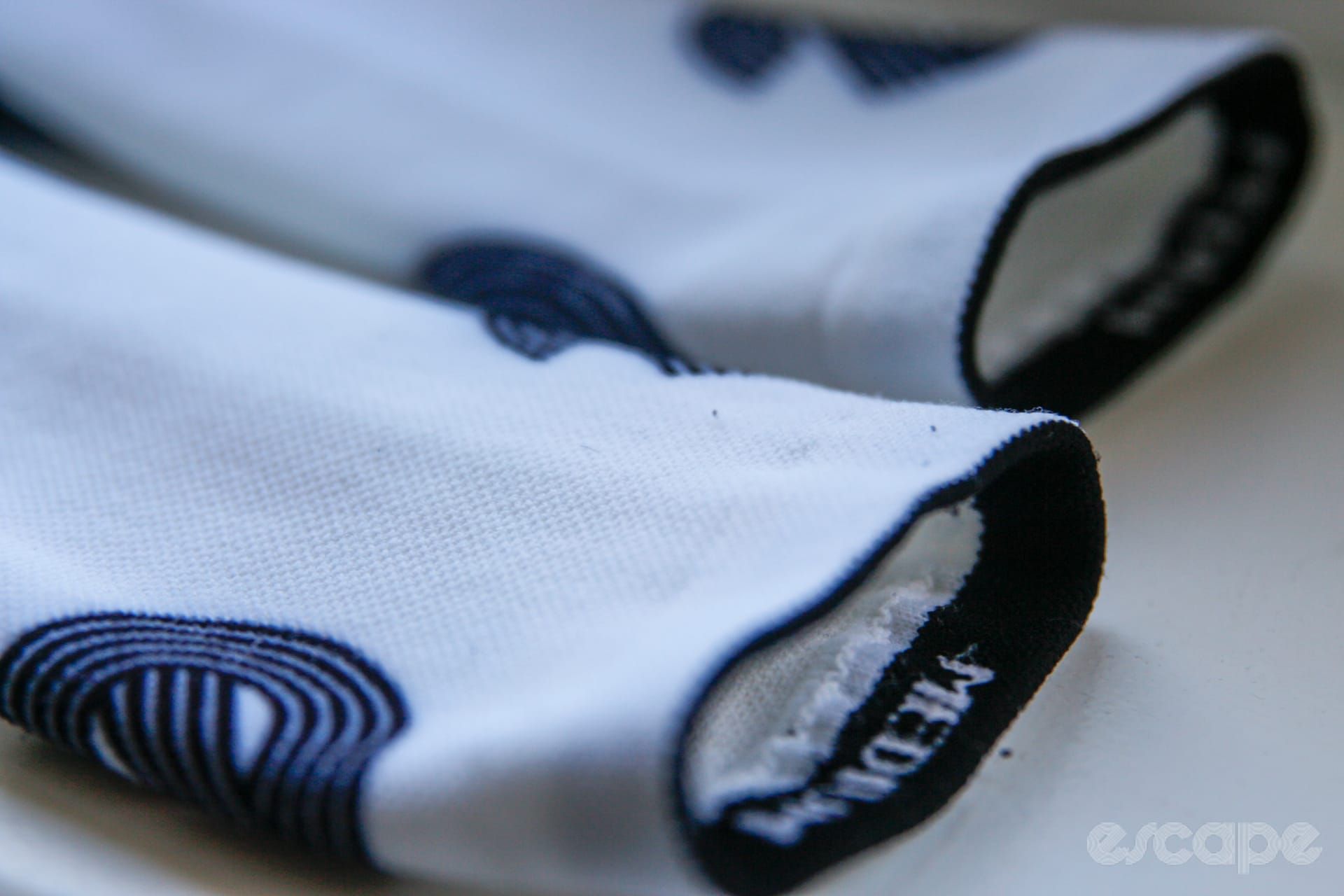
White socks are a staple for cyclists, but there are a variety of designs to choose from.
In terms of use case, cycling socks can broadly be split into two camps: warm-weather and cold-weather socks. Warm-weather cycling socks are more often made with fine-knit, synthetic materials, usually nylon (polyamide) for strength, with a bit of elastane for stretch and a snug fit. However, when it comes to wicking and drying, the ventilation of your cycling shoes also plays a big part.
Merino cycling socks are something of an in-between item. Although they are woolly, there are also thinner Merino socks that keep your feet comfy but not necessarily toasty. The benefit of Merino is that it continues to insulate when damp, resists odour better than synthetics, and feels more comfortable across a wider range of conditions. That said, the best “Merino” cycling socks are blends: wool for handfeel and thermo-regulation, nylon for durability, and elastane for shape. The popular DeFeet Woolie Boolie socks, for example, have 70% Merino wool content, which is topped up by 27% Nylon (polyamide) and 3% Lycra (elastane).
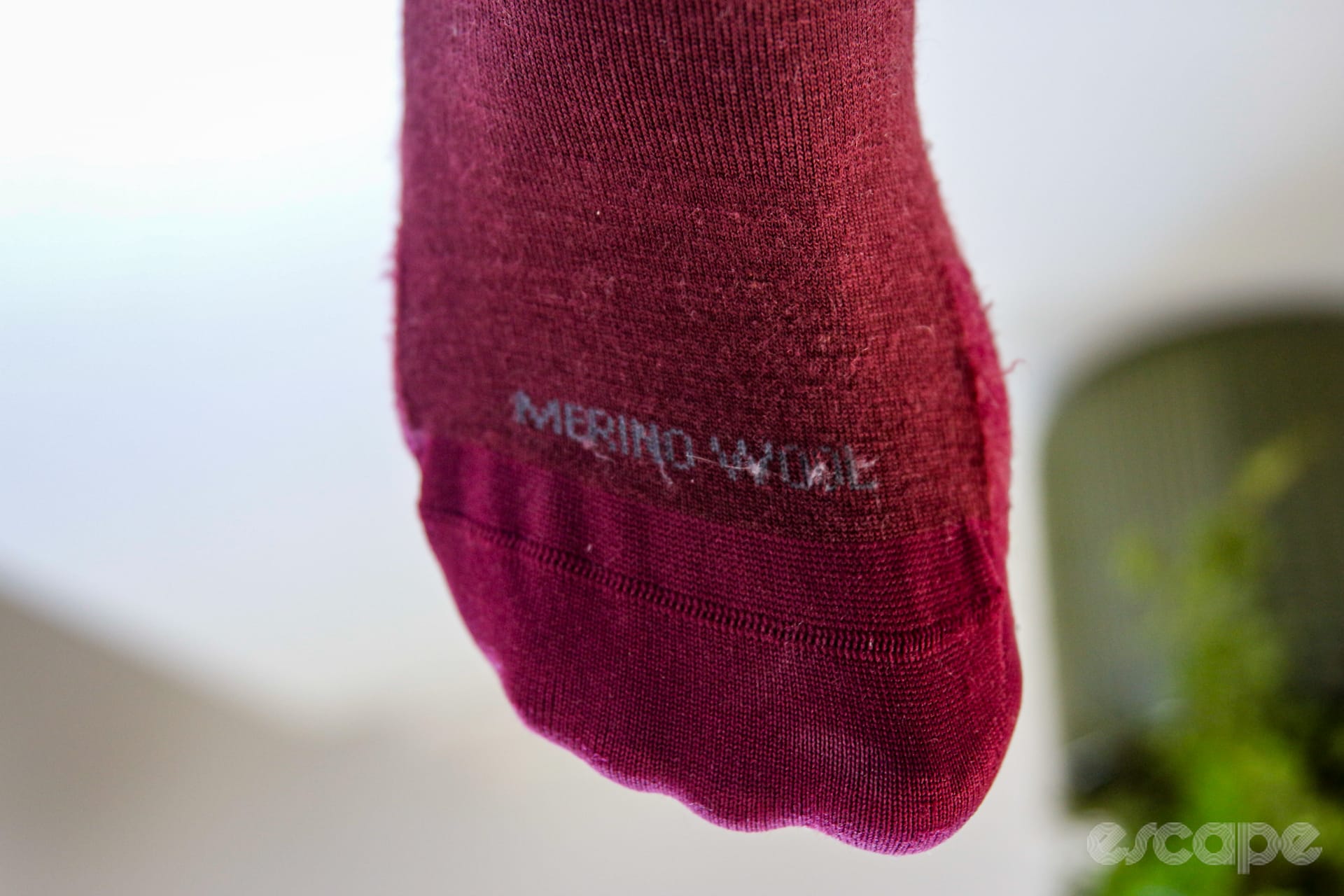
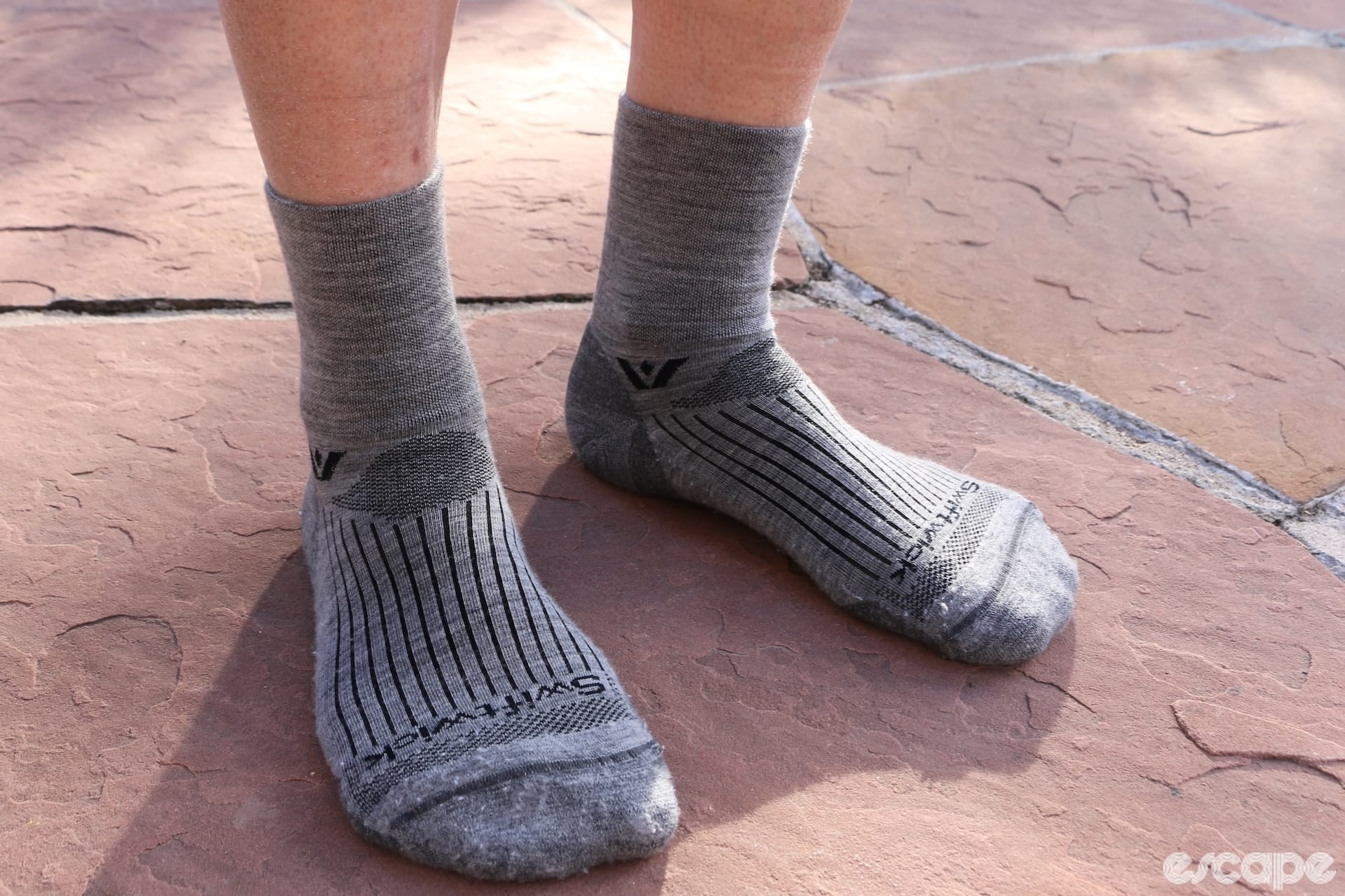
If you’ve been put off wool because of old, loose hiking socks, the modern Merino blend socks are another story altogether, and because of the added synthetic materials, they retain their shape and fit much better.
For cold weather, most manufacturers make the sock thicker, and you can get either synthetic insulation or natural wool insulation. Layering is a great way to add warmth, and much like with your gloves, you can layer your regular summer socks with a thinner Merino sock.
There’s technically a third camp for the truly foul days, too: laminated waterproof socks. More on those in a minute.
Thickness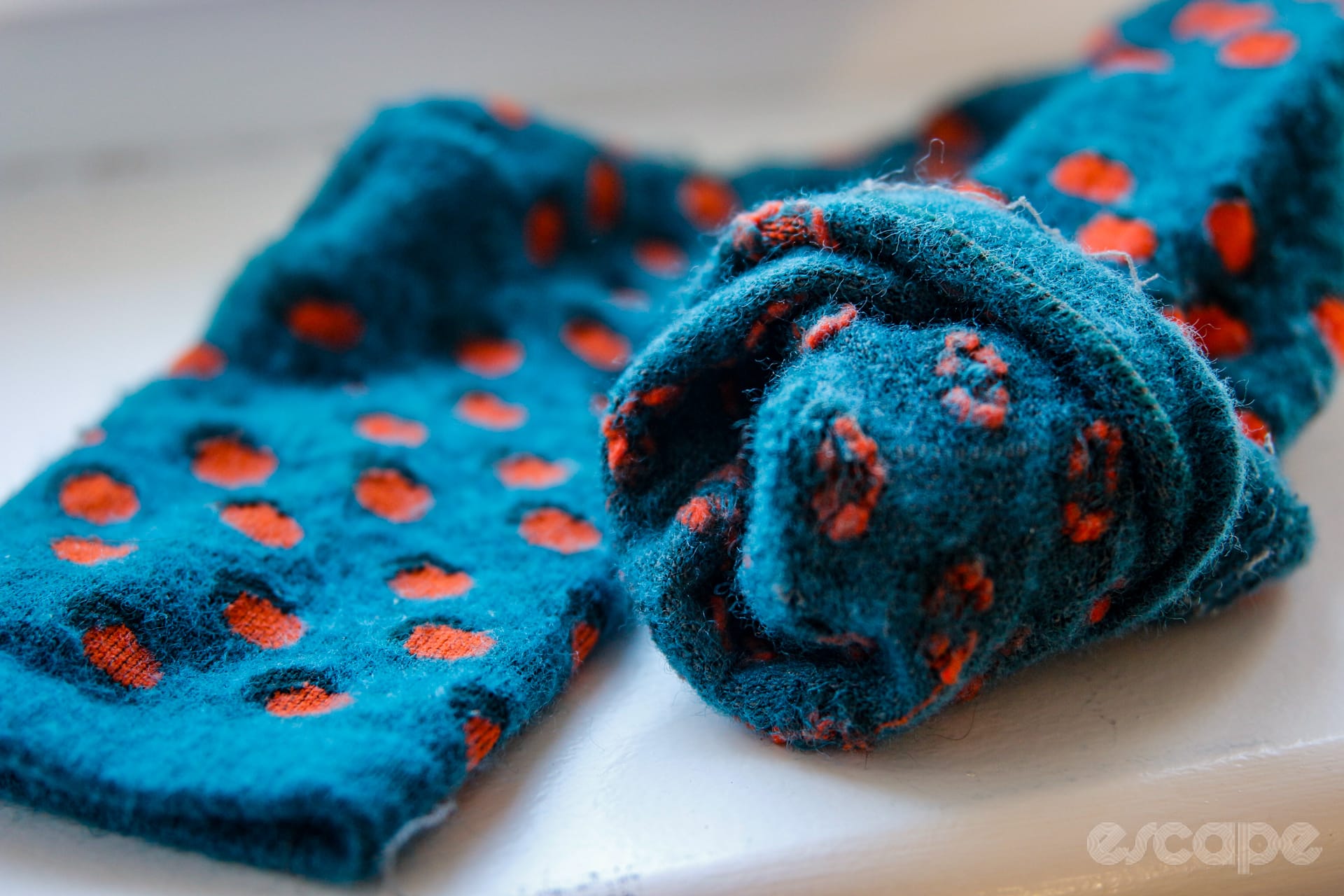
Winter socks are usually thicker and made with either wool or synthetic, insulating material. Summer/mid-season socks are thinner.
While it would be really easy to just layer your socks into three layers of warm socks when the temperature drops, most cycling shoes won’t allow you to do that. Your shoes should fit relatively snugly, so that your feet don’t move around when pedalling, and this means that there is likely no room for very thick socks.
If your shoes are a great fit for summer, then you can keep a thin, high-ventilation sock as your default and add insulation on the outside (toe covers, oversocks, light booties) when it cools down. If you know you’ll swap to a warmer sock in autumn, you could also consider adding warmer insoles.
This post is for paying subscribers only
Subscribe now
Already have an account? Sign in
Did we do a good job with this story?
👍Yep
👎Nope