
Two seafood companies that conduct trawling in WA’s Pilbara region have launched legal action in the WA Supreme Court against the state government’s new demersal fishing restrictions.
Earlier this month, the WA government announced a suite of reforms to commercial and recreational fishing of demersal species in an effort to recover the state’s at-risk fish stocks.
The new reforms include a permanent ban on demersal trawling in the Pilbara, the only zone in WA where the practice takes place.
Demersal fish, also known as ground fish, live and feed on or near the bottom of the ocean and include popular species like dhufish, pink snapper and red emperor.
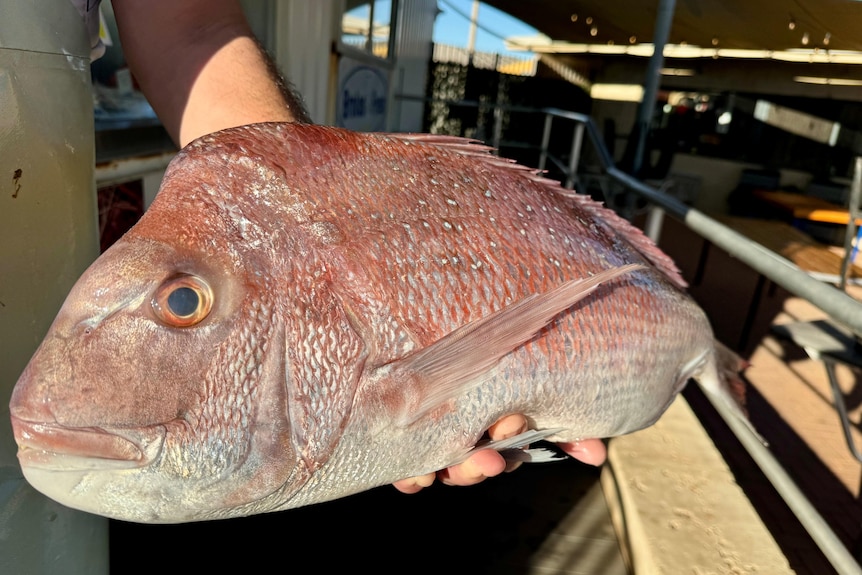
The measures are aimed at protecting demersal fish stocks like pink snapper. (ABC Midwest & Wheatbelt: Joanna Prendergast)
The legal action against the government’s reforms was launched by Sea Harvest Pty Ltd, an Australian subsidiary of South African global fishing and food company, Sea Harvest Group, alongside West Australian seafood company, Seafresh Holdings Pty Ltd, which trades as Westmore Seafoods.
Both companies are involved in trawling in the Pilbara, where about 40 per cent of all demersal fish in the state are caught by three trawling licence holders.
‘Unexpected decision’
In a statement, the two companies said the legal action was “… not about resisting sustainability measures but about ensuring fisheries management decisions are evidence-based, consultative and proportionate, and do not casually devastate regional jobs, local food supply and long-standing commercial investment”.
Shock demersal fishing ban impact
“The unexpected decision by the minister [Jackie Jarvis], despite proactive engagement with her and offering practical solutions, came as a complete surprise,” Sea Harvest Australia chief executive Danie du Toit said in the statement.
“The decision effectively means that a legitimate and approved foreign direct investment has been expropriated without consultation or compensation, which raises some serious concerns regarding sovereign risk, protection of property rights and Australia as an investment destination for global companies.
“Banning a fishing method that’s globally recognised and certified as most efficient and sustainable in the context of food security considerations simply makes no sense.”
Seafood supply chain risk
Sea Harvest Marine executive director Richard Duncan said the government’s decision would affect “far more than fishing vessels”.
Fishing industry ‘drowning’ amid ban
“It has significant flow-on impacts across the seafood supply chain — including fish processors, wholesalers, retailers, transport and logistics operators, refrigeration and cold-storage businesses — and ultimately the many Western Australians who rely on locally caught seafood,” he said.
Mr Duncan said it also undermined an active demersal recovery plan for the region introduced in 2024, designed to stabilise and, over the medium term, regenerate stocks while allowing businesses to continue operating.
“The plan was less than 15 months old and still in phase one,” Mr Duncan said.
“Yet a permanent closure has been imposed without any public assessment of whether the agreed recovery measures are working.”
Trawling ‘no longer acceptable’
Trawling is a commercial fishing method where a large net is dragged along the sea floor to catch fish.
The practice was thrust into the spotlight in David Attenborough’s documentary, Ocean, in which the naturalist rails against the large-scale destructive impact of bottom trawling on marine ecosystems.
When making the announcement about the reforms, Fisheries Minister Jackie Jarvis said she believed most West Australians would agree trawling was no longer acceptable.
“Trawling for demersals also results in the death of various marine life including a number of dolphins each year, as well as the critically endangered sawfish species,” Ms Jarvis said at the time.
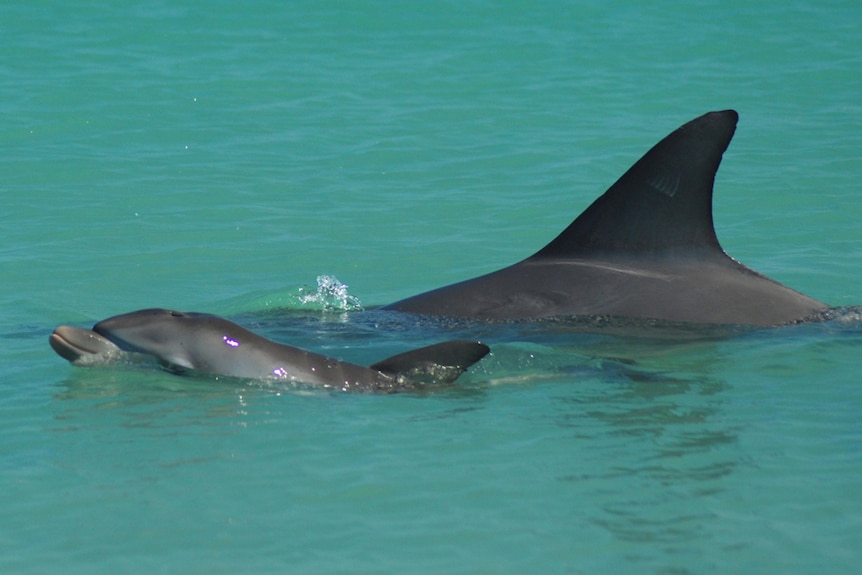
Marine life like dolphins can die as a result of trawling. (AAP: WA Department of Environment and Conservation)
WA Fishing Industry Council chief executive Melissa Haslam has said repeatedly that trawling in WA was already operating under strict conditions.
Ms Haslam also took offence by the way it was portrayed in Attenborough’s documentary, arguing it overlooked the strict regulations and sustainable practices of Australia’s trawl fisheries.
“When they show footage of trawling over the ocean floor that’s causing terrible damage, I will guarantee you that footage was not taken in Australia or any other world-leading country that has highly regulated fishing practices,” she said earlier this year.
Legal action last resort
The demersal trawling ban is set to take effect on January 1 — and while restrictions had been looming for some time, many in the industry said the extent of the government’s bans were unexpected.
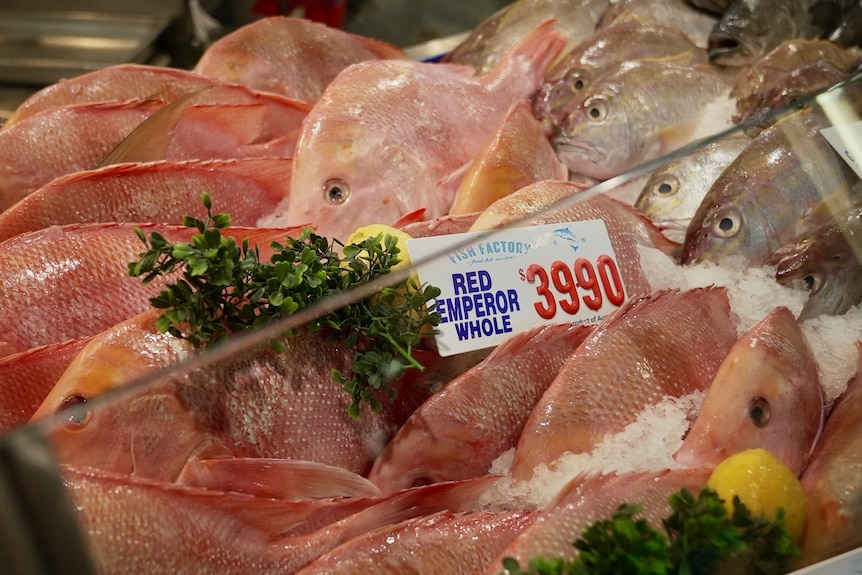
Critics claim the restrictions will drive up the price of demersal fish such as red emperor. (ABC News: Mark Leonardi)
In its media statement, Sea Harvest said it tried to engage with the government after the new restrictions were announced, “but no consultation process was made available before the ban was formally gazetted”.
“We are asking the government/minister to make decisions that are grounded in current science, honour existing agreements, and recognise the importance of fishing to the social and economic fabric of regional Western Australia,” Mr Duncan of Sea Harvest said.
“Sea Harvest had no option but to seek to overturn the ban through the court before the holiday period to mitigate immediate and irreversible impacts on workers, businesses and supply chains.”
A spokesperson for the state government said it could not comment on the matter that was before the courts.
Strict fishing bans for Perth, WA beginning this month
But the spokesperson provided “further information” on the fishing reforms, saying they were announced following the latest stock assessment, which revealed demersal fish species like dhufish and snapper were at risk and severely over-fished in some parts of WA.
“These reforms were developed after extensive consultation with industry and the community, including the State Government Fishing Forum, and at follow up meetings since,” the response stated.
“The state government is also providing a $29.2 million Fisheries Support Package to assist the commercial and recreational sectors across the state adapt to the reforms and offer alternatives for fishers.”
The matter is listed to be heard in the WA Supreme Court on Monday.
Loading