
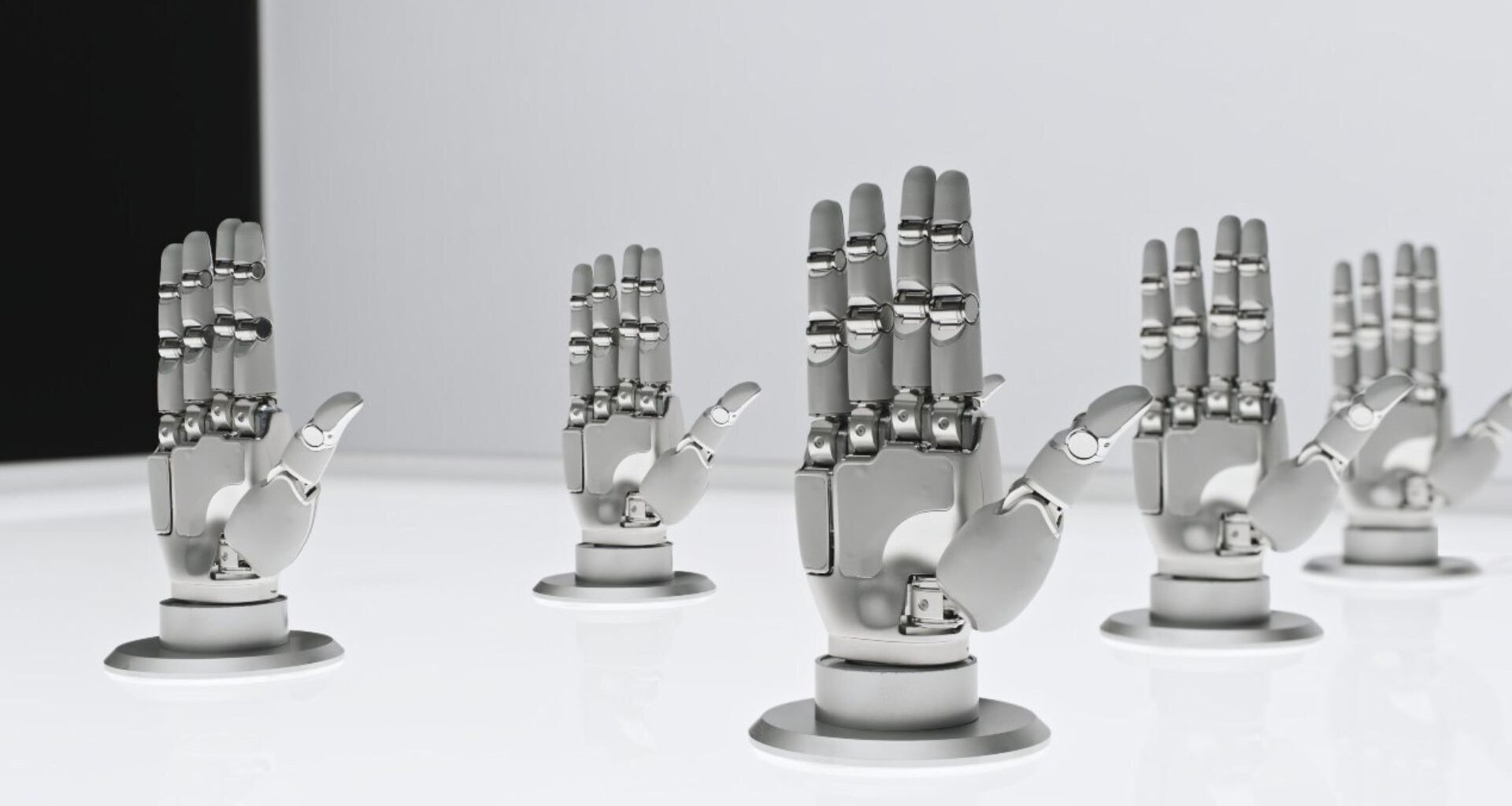
Sharpa Robotics has moved its flagship dexterous hand, SharpaWave, into mass production, marking a major milestone for the fast-growing general-purpose robotics market.
The Singapore-headquartered company said manufacturing has shifted to a rolling production process, supported by automated testing systems that verify the durability of thousands of microscale gears, motors, and sensors inside each hand.
While initial shipments began in October, the scale-up comes ahead of SharpaWave’s debut as an Innovation Awards Honoree at CES 2026 in Las Vegas.
Designed to match human size and dexterity while delivering exceptional strength and precision, SharpaWave has attracted early orders from global technology firms.
Dexterity goes industrial
Sharpa Robotics says moving its flagship SharpaWave hand into mass production marks a critical step toward its goal of making general-purpose robots practical and widely deployable. The Singapore-headquartered company aims to manufacture robotic hands and core components with the consistency and reliability of mission-critical systems, such as aircraft engines and automotive platforms.
To achieve this at scale, Sharpa has built highly automated reliability and endurance testing systems that continuously validate the performance of thousands of microscale gears, motors, and sensors embedded within each device.
According to the firm, the testing infrastructure is designed to ensure long-term accuracy, durability, and agility, addressing one of the key barriers to deploying dexterous hardware outside controlled laboratory environments, reports Humaoids Daily.
Sharpa’s strategy centers on what it describes as robotics’ most difficult challenge: the hand. A highly capable robotic hand enables machines to interact naturally with human-designed tools and spaces, eliminating the need to redesign environments.
With sufficient dexterity, robots can perform tasks ranging from delicate object handling to tool operation across settings such as hospitals, hotels, retail spaces, and homes.
SharpaWave is engineered with 22 active degrees of freedom and integrates the company’s proprietary Dynamic Tactile Array technology, enabling near-human levels of manipulation and control.
Each fingertip combines a miniature camera with more than 1,000 tactile pixels, delivering visuo-tactile sensing that can detect forces as small as 0.005 newtons. Six-dimensional force sensing supports adaptive grip control and slip prevention, allowing the system to respond intelligently to both fragile and heavy objects.
Built for developers
Sharpa Robotics says it has designed SharpaWave to accelerate adoption across both industrial and research environments by pairing advanced hardware with an open, developer-friendly software ecosystem.
Claimed to be the “world’s most advanced,” the dexterous robotic hand runs on an open-source software stack, enabling researchers and engineers to integrate it quickly into existing workflows without proprietary lock-in.
At the center of this ecosystem is SharpaPilot, the company’s control and development application. SharpaPilot is fully compatible with widely used simulation platforms, including Isaac Gym, Isaac Lab, PyBullet, and MuJoCo, enabling seamless transitions between simulation and real-world deployment.
The platform also includes extensive reinforcement-learning examples, supporting rapid experimentation, training, and task adaptation.
On the hardware side, SharpaWave has been certified to withstand 1 million uninterrupted grip cycles without failure, underscoring its focus on durability and long-term reliability.
Each joint is fully backdrivable, a design choice that improves resilience to external impacts while enhancing safety during human-robot interaction. This mechanical compliance helps protect both the system and its surroundings in dynamic or unpredictable environments.
SharpaWave also integrates active safety features, including compliance controls and intelligent protection strategies that reduce the risk of damage from accidental operations or misuse.
According to Sharpa, together, the software tools, high-fidelity simulation models, and safety mechanisms form a comprehensive cross-platform development suite that shortens development cycles and bridges the gap between laboratory research and real-world robotic applications.