
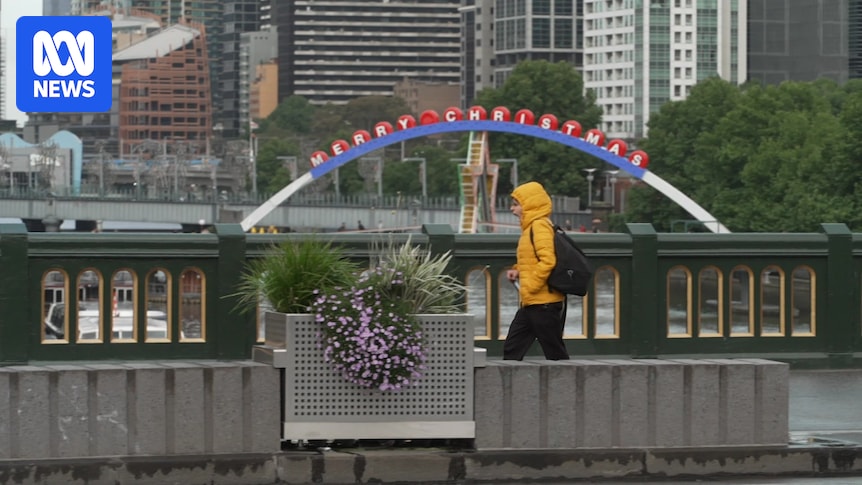
When it comes to Christmas Day, Melburnians generally split into two groups: those who like cool and comfortable weather for a warm Christmas lunch, and those who are hanging out for a summer scorcher and a lazy afternoon by the pool.
There is no middle ground.
With a breezy, cloudy top of just 17 degrees Celsius forecast for the big day, and a possible shower as well, it’s looking more like Christmas pudding and custard, instead of pool noodles and floaties.
How unusual are cool Christmas Days in Melbourne?
There’s no doubt about it — Christmas this year will be on the chilly side.
If we don’t end up climbing past the forecast 17C, it will be Melbourne’s fourth-coldest Christmas Day since temperature records began in 1855.
It would also be a serious departure from Christmas Day last year, which reached a very warm and sunny top of 33C.
Melburnians endure coldest start to December in decades
But, looking at the numbers, swings like this are common for the city.
Much like December as a whole, Melbourne’s Christmas Day weather can be a bit of a mixed bag from year to year — swinging between cool to mild one year, and very warm to hot the next.
Whilst the city’s average Christmas Day temperature since records began in 1855 is 25.6 degrees, “average” summer weather on Christmas day is hard to come by.
Take a look at the data from the last 10 Christmas Days in Melbourne.
Going further back, our coldest Christmas Day came in 2006, when Melbourne reached only 15.4C.
There were showers and wintry hail, and even a white Christmas in the state’s alpine areas.
Melbourne’s hottest Christmas Day was in 1907, when we hit 40.7C.
Interestingly, Melbourne has had only two Christmas Days above 40C since records began.
What will Christmas Day 2025 look like across Victoria?
Despite cool-to-mild conditions in a moderate southerly breeze, the good news is that Christmas Day is looking dry for much of the state.
Some areas south of the Great Dividing Range could see the odd light shower on a mostly grey sky day, but across the northern plains it will be mostly sunny.
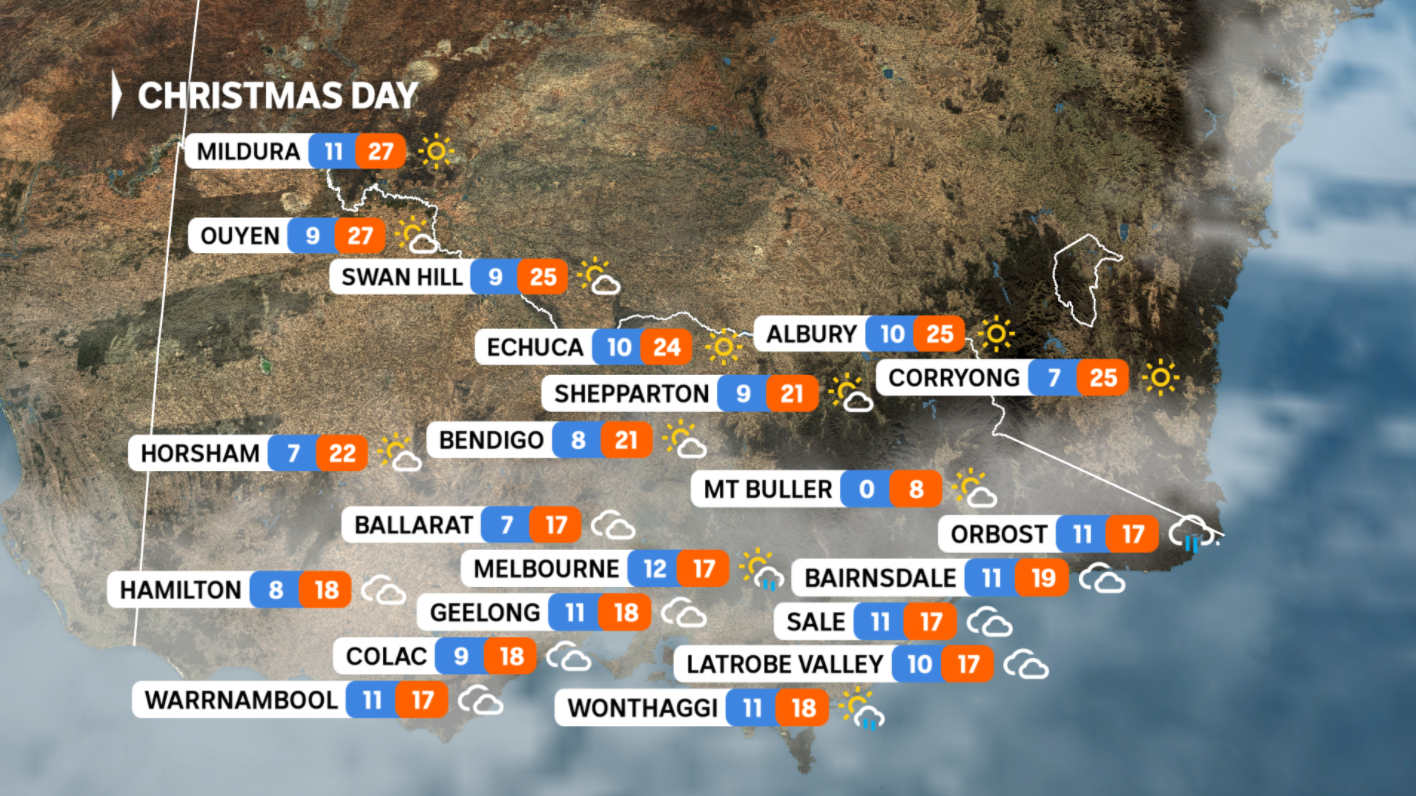
Christmas Day weather is looking dry for most of the state. (ABC News)
Southern Victoria will have a mostly grey sky day, but across the northern plains it will be mostly sunny with a moderate southerly breeze.
Across the south, we’ll struggle to get much above 17C or 18C, but temperatures will climb into the 20s further north, topping out at around 26C or 27C degrees along the Murray River.
What’s behind the cold start to summer?
December is always a bit of a rollercoaster in Victoria.
As heat builds over the interior at this time of year, it battles against the much cooler air mass still lying over the Southern Ocean.
That means that some Decembers end up looking more like high summer, while others feel more like late spring.
Over recent weeks, the belt of high pressure that usually sits to our south at this time of year has been much further north than normal.
That’s allowed cold front after cold front to move up from the Southern Ocean, bringing renewed pulses of polar air to south-east Australia.
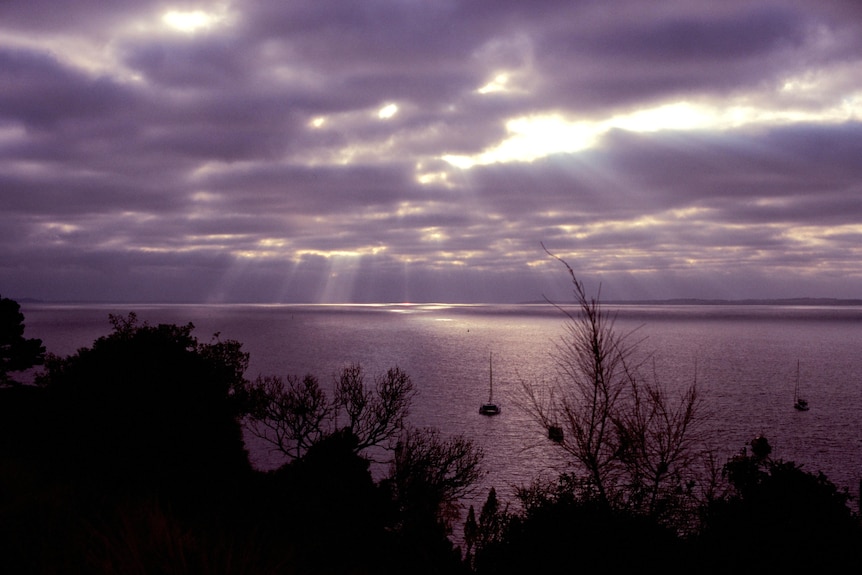
Cloudy skies will settle over most of southern Victoria on Christmas Day. (ABC News: Samantha Jonscher )
What’s more, these pulses are even colder than we’d typically expect at this time of year: colder-than-normal sea surface temperatures to our south add extra bite to the chilly south-westerly winds as the air mass passes over on its way towards Victoria.
Despite these conditions, Melbourne is only just below average for the month so far in terms of maximum temperatures (yes, really!).
Thanks to a few very hot days mixed in with the cooler weather, Melbourne’s average maximum this December is sitting on 24.1C, not far off the long-term (1991-2020) average maximum of 24.8C.
What’s the outlook after Christmas?
The good news is that the cooler weather will mostly be behind us once we pass the holiday period.
It’s cool again for Boxing Day, but after that, we’ll swing back toward some warm to hot days ahead of the new year.
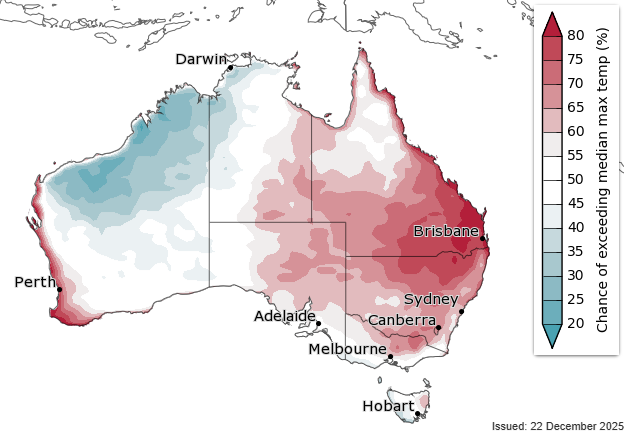
The chance of above median maximum temperatures for the two weeks, 3 to 16 January 2026, is higher in Victoria. (Supplied: Bureau of Meteorology)
Beyond New Year’s Day, the Bureau of Meterology’s current long-term outlook suggests around a 50 to 70 per cent chance of above-average days in the first half of January, and a similar chance of drier-than-normal conditions for parts of Victoria.
So if warm summer weather is your thing, grin and bear through jumpers and jackets this week, and look forward to rocking the floaties and pool noodles after Christmas!