
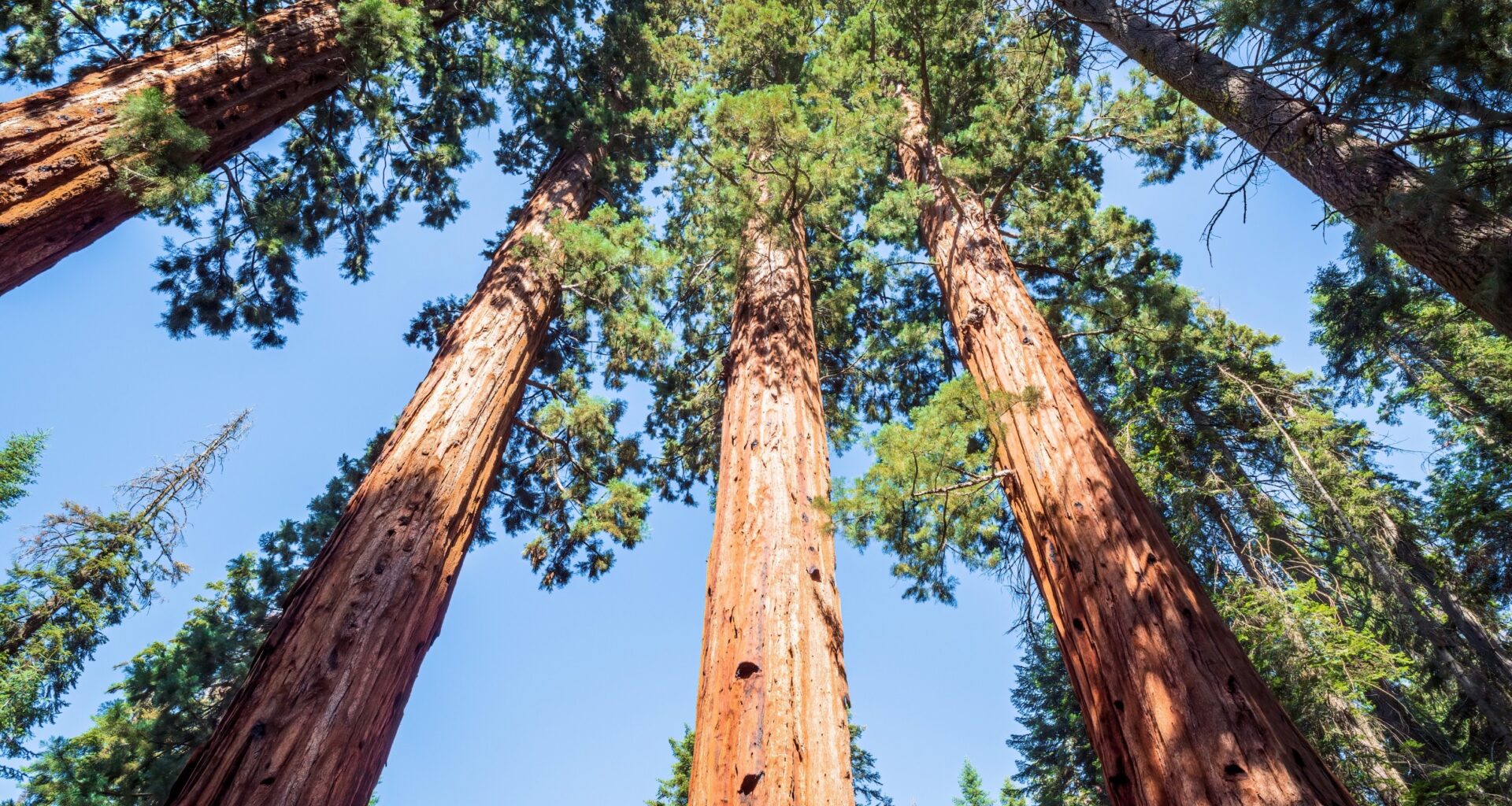
Walking through a forest shows how tall plants can grow. Trees rise high above the ground, with leaves reaching up toward sunlight.
Height helps plants survive, but it depends on internal systems that carry water and nutrients through the plant. These systems did not appear all at once.

The first plants on land stayed very close to the ground and had simple structures. Scientists have spent many years trying to understand how these small plants eventually became tall trees.
A fossil plant that is more than 400 million years old is now helping to explain how this change happened.
Early plants stayed small
When plants first colonized land, size was a serious limitation. Early species lacked roots, leaves, and internal transport tissues, which meant water and nutrients could only move short distances.
This early design restricted growth and confined plants to damp environments where resources stayed close at hand.
For much of the last century, researchers believed this problem had a straightforward solution.
According to the traditional view, algae gave rise to moss-like plants, and those plants eventually evolved into vascular species with dedicated transport tissues. This sequence seemed logical and easy to follow.
Genetic research has complicated that story. Recent studies suggest that the earliest ancestor of land plants did not resemble mosses or vascular plants.
This finding raised new questions about what that ancestor looked like and how its internal tissues worked.
Fossil explains how trees grow
The Rhynie Chert in northern Scotland preserves some of the best early plant fossils ever found. Among them is Horneophyton lignieri, a small plant discovered in the early twentieth century.
Early studies described its internal tissues as a primitive version of modern vascular systems.
Modern imaging has changed that view. Researchers revisiting the fossil with advanced microscopes noticed features that earlier studies could not resolve.
These details suggested that Horneophyton followed a different internal design altogether.
“Unlike modern plants, which transport water and sugars separately, Horneophyton moves them around its body together,” explained study lead author Dr. Paul Kenrick. “This kind of vascular system has never been seen before in any living plant.”
The discovery of this vascular system reshaped how scientists interpret early plant evolution.
One shared plant pathway
Modern plants rely on two separate tissues for transport. Xylem carries water and minerals upward, while phloem distributes sugars produced during photosynthesis. This separation allows plants to grow tall and support large bodies.
Horneophyton worked differently. Its internal tissues moved water and sugars through the same cells. This approach limited efficiency but represented a clear step beyond the simplest land plants.
When Kenrick and his colleagues examined the fossil in three dimensions, the structure became clear.
“Using confocal laser scanning microscopy, we were able to create 3D models of Horneophyton’s inner structure,” said Kenrick. “They clearly showed that this plant had a novel conducting tissue that comes from an earlier stage of the vascular system’s evolution.”
The plant relied heavily on transfer cells, which move substances between neighboring cells. This setup worked only across short distances, explaining why Horneophyton remained small despite its internal complexity.
How trees grew taller
This unusual structure offers insight into how vascular systems evolved. Evidence now suggests that sugar transport appeared before efficient water transport.
Early plants may have first solved the challenge of distributing food internally, then later developed tissues that could move large volumes of water upward.
“Its vascular system appears to be made mostly of transfer cells that were moving both water and sugars around,” said Kenrick.
“It suggests that phloem-like cells seem to have evolved first, and that the xylem only came later. A system like this can only work in small plants.”
Horneophyton fits neatly into this sequence, occupying a middle ground between the earliest land plants and later vascular species.
Competition and change
The Rhynie Chert preserves several plant species that lived side by side. Some of these plants already displayed more advanced internal systems.
Asteroxylon, for example, had clearly separated xylem and phloem, which allowed it to grow taller than Horneophyton.
This separation offered a major advantage. Plants that could grow taller and form trees accessed more light and spread more easily across land.
Over time, species with fully divided transport systems came to dominate terrestrial environments.
Horneophyton followed a different path. Its mixed system soon became outdated, leaving no direct descendants. Still, its fossil record captures a crucial stage in plant history.
Rethinking early tree growth
Many early plant fossils have been interpreted through modern assumptions, which sometimes obscured their true nature.
Revisiting these specimens with new tools has revealed how experimental early plant evolution really was.
“These plants have been known about for a long time, but they’ve tended to be shoehorned into pre-existing categories that don’t fit them,” said Kenrick.
“By putting aside our existing ideas and looking at them with modern technology, we can see that their tissues are very different from what we expected.”
Each re-examined fossil adds depth to the story of how plants reshaped Earth. Long before forests existed, small plants tested different solutions to life on land, and one of those experiments now helps explain how the planet became green.
The study is published in the journal New Phytologist.
—–
Like what you read? Subscribe to our newsletter for engaging articles, exclusive content, and the latest updates.
Check us out on EarthSnap, a free app brought to you by Eric Ralls and Earth.com.
—–