
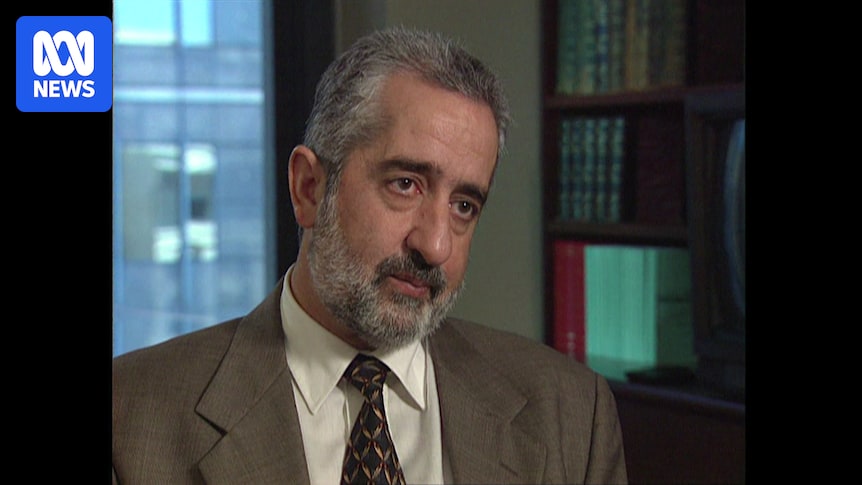
Nick Bolkus, the long-time Labor senator for South Australia who was a minister in the Hawke and Keating governments, has died aged 75.
The Labor stalwart was one of South Australia’s longest-serving senators, first elected in 1980 and not retiring until 2005. He also played an influential role in shaping Australia’s migration policy in the 1990s.
He was elevated to the Hawke ministry in 1988 as minister for consumer affairs and continued to serve under prime minister Paul Keating as minister for immigration and ethnic affairs, where he is remembered for his contribution to multicultural Australia.
Prime Minister Anthony Albanese led the tributes on Thursday, saying the Labor family was mourning “one of our great sons”.
“Nick Bolkus came to public life as a young man with a young man’s idealism and sense of urgency and he held true to those principles and that sense of purpose right through his long and distinguished career,” Mr Albanese said in a statement.
“Fittingly for the first Greek Australian to serve as a Cabinet minister, Nick Bolkus was a passionate believer in democracy and the rights and responsibilities of citizenship.
“In every portfolio he served, he sought to reform the instruments and power of government to better serve the aspirations and rights of everyday Australians.”
Mr Bolkus passed away peacefully on Christmas morning, SA Premier Peter Malinauskas said earlier today.
“Nick was deeply respected across the political divide,” Mr Malinauskas said in a statement.
“He was a formidable intellect, a tireless advocate for the Labor Party and a generous mentor to many. He was much loved by his family, colleagues and friends.
“South Australia has lost a dedicated servant and the Labor Party has lost one of its great champions.”
Mr Malinauskas sent his condolences to Mr Bolkus’s family, including wife Mary and daughters Mikayla and Aria, the latter a candidate for SA Labor at next year’s state election.
During his time as immigration minister, Mr Bolkus allowed thousands of Chinese nationals who arrived in Australia before the 1989 Tiananmen Square massacre in Beijing to permanently settle, along with their relatives.
Mr Malinauskas said that decision was “grounded in humanity and moral leadership that continues to resonate today”.
“While his public record is extensive, Nick was particularly proud of allowing tens of thousands of Chinese citizens to remain in Australia following the 1989 Tiananmen Square massacre,” he said.
Born in 1950, Mr Bolkus was a lawyer and research officer before he was elected to parliament.
Mr Malinauskas said Mr Bolkus’s involvement in Labor politics began at a “remarkably young age” when he hand-delivered letters for Labor MP Don Dunstan in 1966 (Mr Dunstan would later become premier).
After his career in federal parliament, Mr Bolkus continued to play an influential role in the Labor Party as chair of the it’s local fundraising arm, SA Progressive Business.