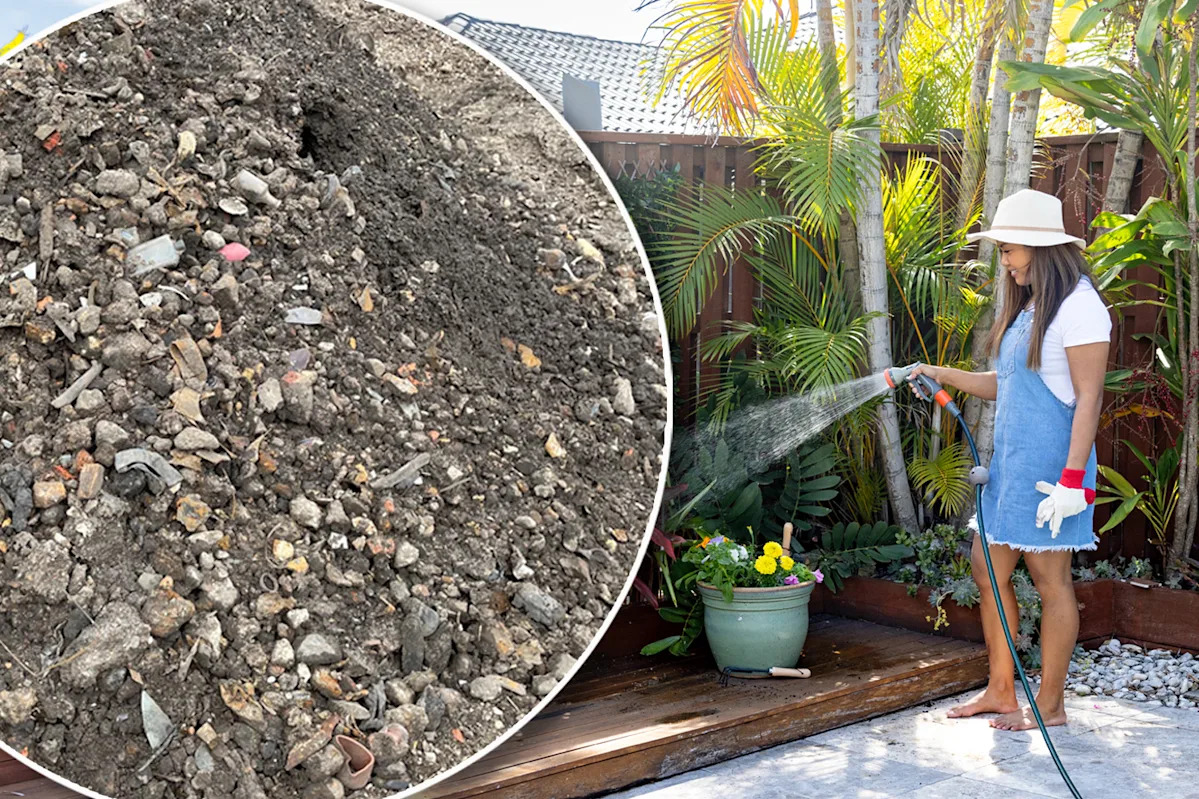
As Christmas draws to a close, many Aussies will make the most of the rest of the summer holidays by doing a little home improvement and trying their hand at a bit of DIY.
But residents are being reminded that accepting an offer that seems too good to be true may very well end up costing them. It comes as offers of free soil are inundating social media.
Victoria’s Environmental Protection Agency warned property owners they have an obligation to know what soil they are accepting, or they could be liable for its removal.
This week, the authority issued over $6,000 in fines to contractors advertising free and “clean” soil to unwitting homeowners, despite the soil containing both asbestos and chemical contaminants.
“If you accept soil that has not been independently tested, you risk being held responsible if it turns out to be contaminated,” EPA Executive Director of Operations Rachel Gualano warned.
“Soil can be contaminated with heavy metals, hydrocarbons like fuel and oil, industrial chemicals, asbestos and other waste which can harm plants, animals and human health, as well as contaminate land and groundwater.
“Contaminated soil is costly to treat or dispose of, and unscrupulous operators could be trying to reduce their costs at your expense.
“Your property might be a cheap option for a dodgy operator, leaving you with the real costs for clean-up if the dodgy dumper disappears.
“For transporters, even those sub-contracted, to transport soils, you may pick up from someone saying it is clean, but you’re responsible for ensuring it is.”
How to dispose of contaminated soil
Contaminated soil can only be disposed of at a licensed landfill and everyone in the waste chain, including transporters and receivers, have a duty to understand what was in any soil they were handling.
EPA advises landowners to take the following steps before accepting soil on their site:
Understand where the soil is coming from. Soil from industrial and commercial sites have a higher risk of contamination.
Ask for proof that the soil is clean, including laboratory results. If in doubt, avoid it.
Have a signed contract with the supplier that specifies the volumes and quality to be received.
Keep soil from different sites separate and keep good documentation to prove what has been placed where.
Visually check every load for contamination – reject soil that contains waste of any kind or doesn’t look or smell right.
The $6,000 in fines included a Mornington contractor fined $4,070 and a Tuerong contractor $2,035.
Do you have a story tip? Email: newsroomau@yahoonews.com.
You can also follow us on Facebook, Instagram, TikTok, Twitter and YouTube.